Understand New Jersey Notary Seal Requirements
If you are a notary public in the Garden State, you know how important it is to follow the rules. Among the many tasks you handle, meeting New Jersey notary seal requirements stands at the top of your priority list. Your notary seal is not just a simple stamp, it is a symbol of authenticity and legal compliance. In many cases, the presence of a proper seal can be the deciding factor in whether a document is accepted as valid. Although that may sound intimidating, taking a few simple steps can help you fulfill your obligations while serving your community with confidence.
A notary seal for New Jersey typically includes specific identification details, such as your name and your title as a notary public. It also helps to visually demonstrate the legitimacy of your notarization. Whether you are a seasoned notary or you have just received your commission, it is essential to keep up with the latest requirements and best practices. By ensuring your seal meets the standards set by state law, you protect yourself from potential legal pitfalls and give you and your clients peace of mind.
In the sections below, you will learn what your seal must include, how to use it properly, and how to keep it secure. You will also discover tips and insights that can help you stay up to date on regulations and maintain a trustworthy reputation. With the right preparation, you can perform notarial acts accurately while meeting the exact requirements of the state of New Jersey.
Recognize Legal Standards
When it comes to notary seals, New Jersey law lays out several requirements. You may already know some of them, but it never hurts to have a refresher. Existing legislation is designed to ensure that each finalized notarial act is easily verifiable. Here are the core elements you need to keep in mind:
Identification of Your Title
- The seal must indicate that you are a “Notary Public.” This helps distinguish your official capacity from that of other professionals who may also verify documents.
- When you use your seal, double-check that the text remains legible, because unclear impressions can cause authenticity issues.
Inclusion of Your Name
- Your legal name should match the name on your commission paperwork. Do not forget to update your seal if your name changes for any reason.
- The clarity of your name is crucial for recordkeeping. A smudged or partially inked imprint can create confusion down the line, so apply your seal with firm but even pressure.
Specific Wording Requirements
- Some seals include phrases like “State of New Jersey” or other relevant wording. Although the core text often remains the same, the exact phrasing can evolve with updates to New Jersey law.
- Always verify current guidelines through official resources. If in doubt, you can consult the New Jersey Division of Revenue or another appropriate state office to confirm mandated language.
Legibility and Durability
- Your seal must produce a clean, clearly visible imprint that will last on the document for the required retention period.
- If your seal is worn out, damaged, or producing faded impressions, invest in a new one right away. A faulty seal can undermine the acceptance of your notarized documents.
By familiarizing yourself with these legal standards, you are taking an important step toward accuracy. If you ever find yourself unsure about an update, consult the latest notary manuals or administrative codes. Staying informed is the key to proper notarial conduct.
Explore Key Components Of A Notary Seal
A well-crafted notary seal is designed to offer both clarity and authenticity. However, you have various seal types and configurations available, so understanding their components will help you choose the best option for your day-to-day tasks.
Shape and Size
Circular vs. Rectangular
- Circular stamps are quite common in New Jersey, but rectangular ones are also widely recognized. Your preference may rely on comfort or clarity, as either shape is acceptable if it follows state guidelines.
Impression Dimensions
- An overly large or small stamp can fail to convey the necessary details. Aim for a moderate size that leaves the text easy to read. Typically, you want a diameter or impression size suitable for standard notarization spaces on documents.
Ink Colors
Standard Black
- Black ink is the most popular notary ink color due to its high contrast on paper. Your impressions are more likely to remain legible, even after many years.
Other Options
- Depending on your preference, you can choose different ink colors. However, check your local rules. Some states limit color choices or recommend standard black to prevent confusion.
Embossers vs. Ink Stamps
- Embossers
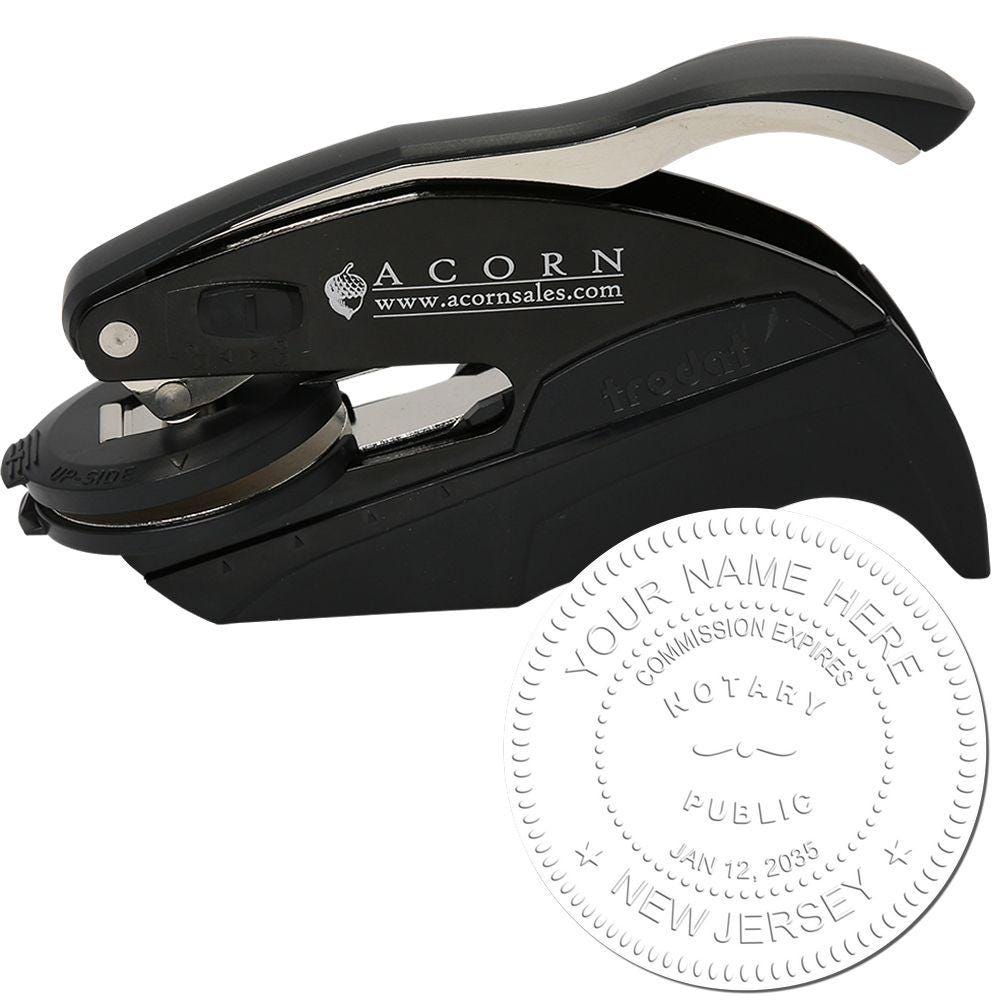
An embosser raises the paper’s surface, creating a tactile imprint without traditional ink. While they look official, an embosser alone may not fully satisfy modern recordkeeping requirements if a photocopy or scan is needed. In those cases, the raised impression can be hard to reproduce.
- Ink Stamps
An ink stamp usually provides a bolder, more easily scanned impression. If you are planning to notarize documents that need frequent duplication, an ink stamp might be more convenient.
- Dual Usage
Some notaries opt to use both an embosser and an ink stamp, especially for highly important or ceremonial documents. This approach can elevate perceived authenticity while still providing a readable mark.
By considering these components, you can select a seal style that meets both your preference and compliance needs.
Secure And Use Your Seal Correctly
Your notary seal is a vital tool, and correct usage secures the legal weight of your notarizations. Proper storage and handling also protect you from fraudulent use. You owe it to yourself, and to the individuals who rely on your services, to keep the seal safe at all times.
Usage Guidelines
- Positioning On The Document
Place the seal near your signature and any other required notation, such as the completion date. Keep enough clear space around the seal so the entire impression shows.
- Document Surface
Ensure the paper is on a soft surface, such as a firm stack of documents, so the seal impression comes out crisp.
- Avoid Overlapping Text
Do not stamp over signatures or critical text. Overlapping can obscure details and lead to rejection by the receiving party.
Storage And Protection
- Store In A Secure Location
Keep your seal in a locked drawer or cabinet when you are not using it. This precaution limits the chance of unauthorized access.
- Inspect Regularly
Check the rubber or metal die for wear and tear to ensure your impressions remain consistent.
- Replace Promptly
If your seal is broken, missing, or stolen, replace it as soon as possible. Acting quickly reduces liability risks and helps you comply with legal requirements.
By taking these steps, you maintain greater control over the integrity of your notarial acts. You also uphold the trust placed in you by the State of New Jersey and the community you serve.
Renew And Update When Necessary
Like most official credentials, your notary commission and seal do not last forever. While New Jersey notaries typically hold a commission valid for several years, it is important to plan ahead to avoid any interruption in service. Renewal might also require updating your seal to match new legal guidelines. Failing to do so could lead to invalid notarizations and potential legal consequences.
Monitor Your Commission Expiration
- Adding a reminder in your calendar or planner is a reliable way to stay on top of renewal deadlines. If you miss renewing your commission, you must stop performing notarial acts until you are reauthorized.
- Check the official state website for updated renewal application forms and deadlines. Requirements may change over the years, so stay informed.
Update Your Seal After Renewal
- Every time you renew, verify that your seal still contains accurate information. If your name or commission date has changed since your original issuance, you will need a new seal.
- If you switched ink color or shape during your last term, reconfirm that everything is still compliant.
Keep Track Of Regulatory Changes
- Notary regulations in New Jersey can evolve. New laws might alter what needs to appear on your seal or how you affix it to documents.
- Following local notary associations and reputable industry updates can help you stay in the loop without the guesswork.
Active awareness of expiry dates and regulatory changes helps you avoid last-minute scrambles. Instead, you can approach each renewal cycle with confidence and readiness.
Partner With A Trusted Supplier
Where you purchase your seal is just as important as the details it must display. A reliable supplier does more than just sell you a stamp, it helps you choose the best product, keeps you up to date on any notary requirements, and offers customer service if something goes wrong. That is why choosing a provider with a proven track record matters.
Acorn Stamps is a top supplier of New Jersey notary stamps and New Jersey notary seals. When you work with a family-owned and operated company that has served the industry for 60 years, you gain the expertise and reliability that come from years of practical experience. You can also take comfort in knowing you have stellar customer service on your side, plus super fast turnaround for any new or replacement seals.
What To Look For In A Supplier
- Product Range
Check that the supplier offers both traditional ink stamps and embossers. You may even find specialized designs that combine both options for unique preferences.
- Customer Support
Look for companies that will help you choose the right seal for your commission and answer your questions about notary rules in New Jersey.
- Quality And Longevity
Whether you go for a pre-inked or self-inking stamp, a high-quality tool ensures clear imprints that last for many uses. This is crucial when you notarize multiple documents each day.
A trusted supplier can be a tremendous resource as you navigate the specifics of your notary career. From sealing your first document to renewing your commission years later, having a supportive vendor at your side makes each step smoother.
Strengthen Your Notary Practice
Beyond the basics of buying a seal and knowing how to stamp documents properly, you can strengthen the overall quality of your notarial services with a few extra considerations. By being thorough, you reassure your clients and grow your professional reputation.
Maintain A Notary Journal
- While not always mandatory, keeping a journal of all notarizations can help you reference details quickly. It also adds a layer of accountability and transparency.
- Record the date, the document type, the signer’s details, and any unique observations or special circumstances.
Learn About Electronic Notarization
- Electronic notarization is on the rise in many states. Although New Jersey may have specific rules for remote online notarization or eNotary seals, staying informed about these developing options can prepare you for the future.
- If eNotarization becomes widely accepted, you might need to adapt your tools and workflow. Proactively exploring this area keeps you one step ahead.
Educate Your Clients
- Many people you assist may not fully understand what notarization involves. Taking a moment to clarify your role and the purpose of the notarial act helps avoid misunderstandings.
- Provide quick tips: remind them to bring valid identification, avoid signing before meeting with you, and be aware of the differences between acknowledgments vs. jurats.
Stay Connected With Other Notaries
- Join local or national notary groups. Networking with peers is a great way to share experiences, gain referrals, and keep up with changes in the law.
- Some groups offer continuing education courses and newsletters to keep you proactive about new legislation and best practices.
By integrating these guidelines into your daily activities, you will not only meet the new jersey notary seal requirements, but you will also excel at every notarial act you perform.
Frequently Asked Questions
Do I Need To Include My Commission Expiration Date On My New Jersey Notary Seal?
Yes, your commission expiration date helps verify that you are authorized to conduct notarizations, but confirm whether your local county or commission guidelines require it on the seal or merely near the seal. Always check the most recent legislation to be certain you are meeting the correct standard.
Can I Use An Electronic Notary Seal In New Jersey?
Electronic or remote notarization has specific rules that differ from traditional in-person notarization. While some states have fully embraced eNotarization, New Jersey’s framework may still be evolving. If you plan to offer electronic services, research any state-approved technologies and obtain an electronic seal that aligns with current regulations.
What Happens If My Seal Impression Is Not Clearly Visible?
A poorly visible seal can cause a notarized document to be rejected. If your stamp’s impression is faint, consider re-inking or purchasing a new stamp from a reputable supplier like Acorn Stamps. It is also wise to ensure the document is placed on a firm, level surface and that you apply consistent pressure each time you stamp.
Is A Raised Embossment Alone Acceptable?
Although an embossed seal may look extremely professional, it can be difficult to replicate in a photocopy or scan. For official clarity, you might want to use an ink stamp in addition to your embosser. Depending on the receiving agency, an inked seal might be preferred for better visibility and verification.
Where Is The Best Place To Buy A New Jersey Notary Seal?
It is best to choose a supplier that understands your state requirements and can customize a seal that meets legal standards. Acorn Stamps has specialized in New Jersey notary stamps and seals for decades, provides superior customer service, and offers a fast turnaround time so you can continue your duties without delay. Their long-standing track record as a family-owned company since 1964 reflects trust and expertise.
By staying current on new jersey notary seal requirements, you maintain the trust of everyone who uses your services. Whether you are renewing your commission, updating your seal, or delving into newer technologies like eNotarization, sticking to clear guidelines helps you fulfill your role responsibly. Embracing best practices not only safeguards your reputation but also keeps you confident in your ability to serve the public effectively.