Exploring The Significance Of A Montana Notary
If you are considering becoming a Montana Notary Public or are simply curious about Montana notary requirements, you are in the right place. Performing notarial acts is a vital responsibility that upholds the integrity of important documents across business, legal, and personal settings. By obtaining a Montana notary commission, you position yourself as a trusted figure who can verify signatures, administer oaths, and help prevent fraud. In this article, you will uncover the fundamental steps, best practices, and professional considerations that come with serving in this respected role.
Understanding A Notary Public’s Role
As a Montana Notary Public, you confirm the identity and willingness of a signatory involved in legal or official documents. You also ensure that these signers understand what they are signing and are not being coerced. This protection is crucial for a well-functioning society, especially in matters such as affidavits, real estate transactions, and financial agreements.
- Validating documents: Checking signer identity and awareness.
- Administering oaths: Certifying that statements are made truthfully.
- Witnessing signatures: Certifying the authenticity of a document.
Montana has its own regulations and standards for notaries, making it essential for you to grasp these requirements before beginning your commission.
Meeting The Core Montana Notary Requirements
Preparing to serve as a notary in Montana involves several key steps. Although the guidelines are not overly complicated, it is important to understand each detail so you can become a knowledgeable and compliant notary.
Checking Your Basic Eligibility
Montana sets forth a few prerequisites before you qualify for a notary commission. You should:
- Be at least 18 years old.
- Be a resident of Montana, or have a place of employment in the state if you reside in an adjoining state.
- Be a United States citizen or permanent legal resident.
- Have no felony convictions or notary offenses on your record.
These criteria ensure that notaries are responsible and capable of carrying out official duties impartially and ethically.
Reviewing Educational Requirements
Montana requires prospective notaries to complete a mandatory training component or pass an exam. This training gives you the foundational knowledge about the laws, responsibilities, and ethical standards that govern notarization in Montana. Knowledge-based training not only prepares you for the application but also helps you avoid costly mistakes once you begin your notarial work.
Obtaining A Surety Bond
Another crucial step involves purchasing a surety bond. This bond exists to protect the public from errors, omissions, or misrepresentations you might inadvertently commit. In Montana, you are required to obtain a $25,000 notary bond. You will typically pay a modest premium based on the bond’s value and your creditworthiness. Bond companies can differ in fees and terms, so you may want to shop around to find a suitable option for your needs.
Completing Your Commission Application
Once you have verified that you meet all Montana notary requirements, it is time to embark on the application process. This step establishes your official standing with the state and legitimizes your ability to perform notarial acts.
Filing Through The Online System
Montana provides an online portal where you can submit your application, bond details, required fees, and proof of completing educational requirements. You will then need to wait for your application’s approval, which, if properly completed, generally does not take very long.
Setting Up Your Business Details
In addition to the core application, you might choose to outline how you plan to conduct your notary services. Will you handle notarial acts as part of your job, or do you intend to offer services independently? Although not officially required, having a clear plan helps you manage expenses like purchasing notary supplies and helps you present yourself as a professional to potential clients.
Honing Your Responsibilities And Best Practices
Once commissioned, you have an obligation to carry out your responsibilities attentively and ethically. Even the smallest oversight can lead to significant legal implications, so conscientiousness is key.
Checking Identification Properly
Part of your role is verifying someone’s identity:
- Request a valid photo ID (driver’s license, passport, etc.).
- Confirm the ID matches the person’s physical appearance and signature.
- Examine the expiration date to ensure the ID is current.
If something seems off, you are within your rights to refuse to notarize until you are confident your verification is correct.
Recording Transactions In A Journal
Although Montana law may not mandate detailed journaling of every notarial act, maintaining a record is highly advisable. By keeping a notary journal, you create a paper trail that can protect both you and your client should disputes arise. Adequate records typically include:
- Date and time of notarization.
- Type of document notarized.
- Name and signature of the signer.
- Type of ID used.
Review the latest state guidelines for specific journaling recommendations to ensure you meet industry standards.
Ensuring No Conflict Of Interest
You can only oversee notarial acts where you have no personal or financial interest in the transaction. For example, if a document grants you some benefit, it compromises your impartiality. In such cases, it is best to refer the notarization to someone else. Plus, remaining neutral reinforces the trust people place in you as a notary.
Choosing The Right Montana Notary Stamp And Seal
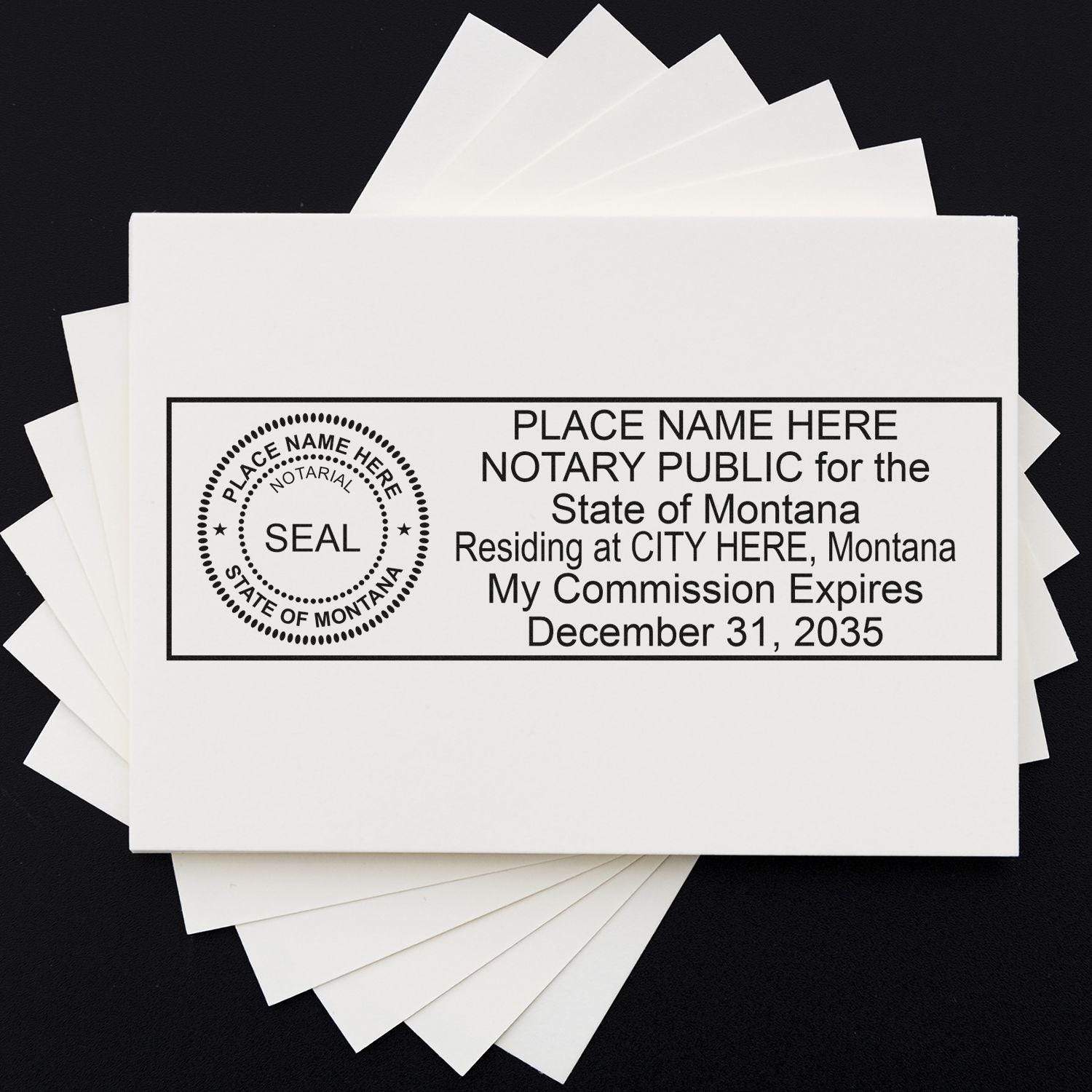
A signature alone does not suffice in verifying most documents. In Montana, you need an official notary stamp or seal that features specific details like your commission name and expiration date. Securing a quality notary stamp or seal is more than just meeting a statutory requirement; it is an investment in your professional image.
Specifications For Your Stamp Or Seal
Montana law specifies that your notary stamp must include:
- Your full name exactly as it appears on the commission.
- The wording “Notary Public” and “State of Montana.”
- Your commission expiration date.
The impression itself should be sharp, legible, and produced in ink readable on various types of paper. A worn or illegible seal can cause documents to be rejected, so stay mindful of its condition.
Working With Acorn Stamps
Choosing the right supplier for your Montana notary stamp and seal matters. Acorn Stamps, a family owned and operated business since 1964, offers a range of quality notary supplies designed to meet Montana’s specifications. With decades of experience, you can count on stellar customer service, super fast turnaround, and a product that will hold up under consistent use. Whether you need a cost-effective self-inking stamp, a traditional trim-line stamp, or an elegant desk seal, Acorn Stamps can customize your order to accurately reflect your official name, commission information, and design preferences. If you are unsure about which style best suits your workflow, the knowledgeable team at Acorn Stamps can guide you toward an option that will serve you well for years to come.
Maintaining Your Commission And Professionalism
Becoming a Montana Notary Public is not a one-and-done process. You must actively maintain your commission, stay current with regulatory updates, and uphold a professional standard that earns people’s trust.
Renewing Your Commission
Montana commissions typically last four years. Before yours expires, mark your calendar to renew on time. You will need to file a renewal application, post a new surety bond, and possibly verify your training status. You do not want to let your commission lapse, especially if notarizing documents is part of your day-to-day work.
Handling Your Seal Responsibly
Because your notary stamp or seal carries legal authority, you must store it in a safe place that only you can access. Unauthorized use of your seal can compromise your professional standing and endanger the validity of countless transactions. If your stamp or seal is lost, stolen, or otherwise compromised, report it to the Secretary of State immediately and follow the prescribed procedures to secure a replacement.
Expanding Your Expertise With Continuing Education
While Montana might not require extensive ongoing testing, continuous learning benefits both you and your clients. Notarial laws can evolve over time, and staying informed helps you navigate changes confidently.
Why Additional Training Helps
Continuing education can:
- Refresh your understanding of notarial best practices.
- Reveal the latest legislative updates that affect how you notarize.
- Provide a professional edge that sets you apart in the marketplace.
If you are serious about growing your notary services, additional training can be a valuable tool. You can also join professional associations that keep you updated on changes affecting Montana notaries.
Looking Ahead To Career Opportunities
A notary commission can open doors beyond simply witnessing documents. By positioning yourself as an expert in your field, you may explore opportunities like becoming a loan signing agent, offering mobile notary services, or partnering with legal offices. These specialized roles can bring in additional income, and they also expand your professional network across multiple industries.
Partnering With Businesses
Many businesses need notarizations for documents like contracts, insurance claims, or real estate agreements. By establishing yourself as a reliable partner, you can become the go-to notary for local offices. Your commission, combined with top-tier notarial supplies from Acorn Stamps, sets you apart as someone who invests in quality and precision.
Expanding Into Remote Notarization
Remote notarization has seen an uptick in various states, although its guidelines in Montana can be subject to specific rules and technological requirements. If remote notarization is permitted, you can explore secure online platforms that allow you to serve clients statewide.
Frequently Asked Questions
Below are some of the most common questions about becoming and serving as a Montana Notary Public.
How Long Does It Take To Get Commissioned?
You can generally expect the process to take a few weeks. Timing depends on how quickly you gather your bond, complete the necessary training, and submit the application.
Do I Need A Special License To Offer Mobile Notary Services?
Montana does not require a separate license for mobile notary work. However, you should verify you have reliable transportation and schedule flexibility to meet clients at various locations.
Can I Notarize For Family Members?
While Montana does not outright ban notarizing for family members, doing so often risks a conflict of interest. If you have a direct financial stake in the document’s outcome, it is recommended to decline that notarization.
How Do I Renew My Notary Commission?
Renew by submitting a new application, a fresh $25,000 surety bond, and any required fees before your current commission expires. Monitor deadlines closely to ensure no lapse occurs.
Where Can I Get Quality Notary Supplies?
Acorn Stamps is a premier source for Montana notary stamps and seals, offering friendly customer service, quick deliveries, and products that comply with Montana regulations. By following Montana notary requirements and adopting professional best practices, you elevate your notarial services to a higher standard of reliability. Whether you are just beginning or are already commissioned, your commitment to diligence, continuing education, and quality supplies, like those from Acorn Stamps, will help you build a solid reputation. As you grow in your role, remember that good preparation, consistent attention to detail, and ethical execution are the keys to succeeding as a Montana Notary Public.