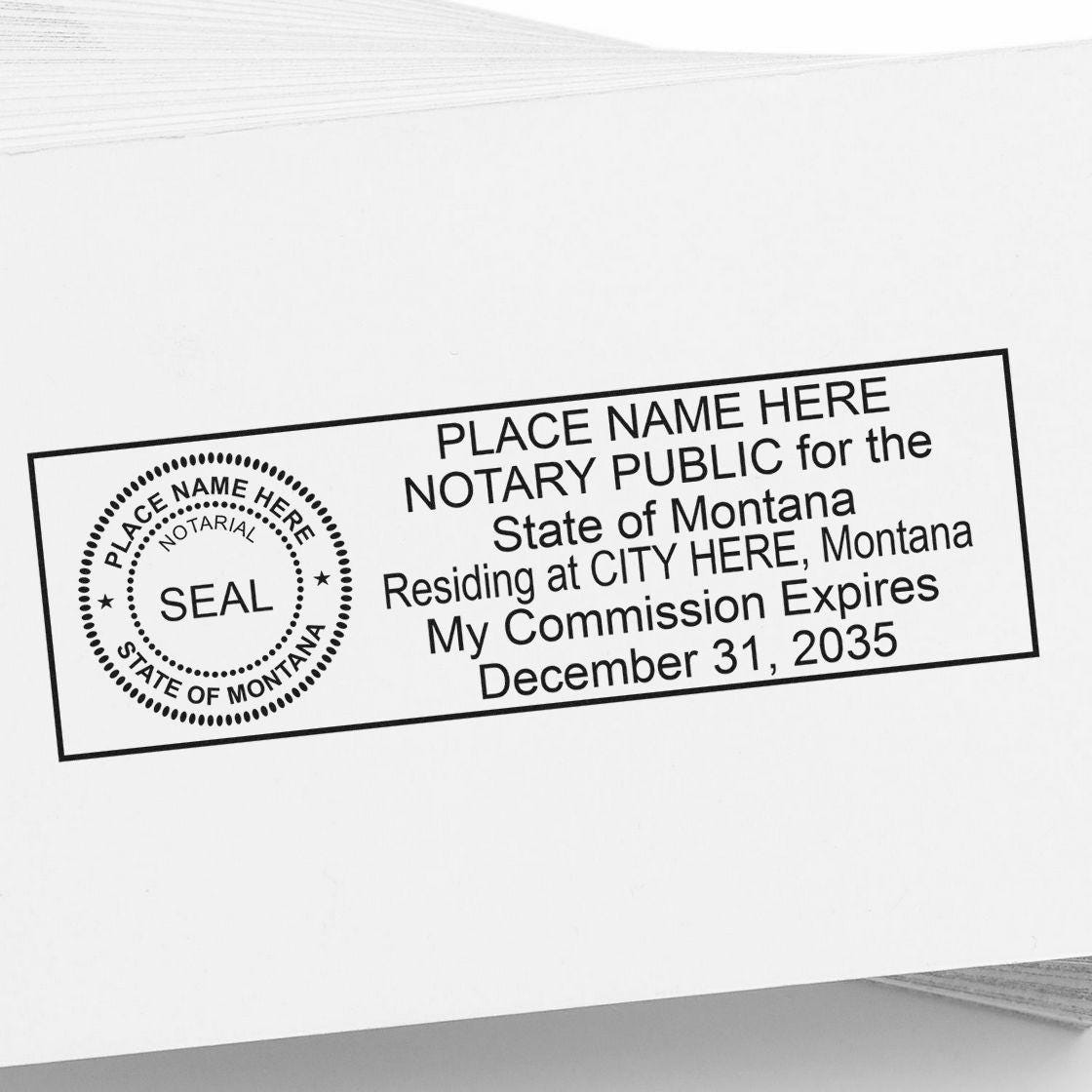
Whether you are brand-new to serving as a Montana Notary Public or looking to refresh your knowledge, understanding Montana notary stamp requirements is vital to your success. Your notary stamp authenticates the documents you sign, confirms your authority to the public, and ensures trust in every notarization you perform. In this guide, you will discover what goes into a proper Montana notary stamp, how to care for your stamp, and how to meet state guidelines with confidence.
Understand Montana Notary Basics
Before diving into stamps and seals, you should clarify your overall responsibilities as a Montana Notary Public. A successful notary appointment is more than simply placing your stamp on documents. It is about protecting transaction integrity, verifying identities, and ensuring that legal documents are signed without coercion or fraud. As a Montana notary, your commission is issued by the Montana Secretary of State. You are responsible for carrying out notarization in accordance with Montana Code Annotated (MCA) guidelines. Whether you notarize property deeds, affidavits, or other official paperwork, the process typically involves:
- Verifying the signer’s identity
- Confirming that the signer is acting of their own free will
- Administering an oath (if applicable)
- Completing your notarial certificate and applying your stamp
Your notary stamp is a quick, clear indicator that you have performed the steps properly. By investing time in understanding your role, you will feel more prepared to meet the demands of Montana’s notarial standards.
Pick The Right Stamp
When it comes to Montana notary stamp requirements, you have several options for shape and style, such as traditional stamps or self-inking devices. While personal preference matters, ease of use and long-term reliability are key. In Montana, you typically need to include all necessary elements (like your name, title, and commission information) in legible letters. You also need to make sure your seal impression will stay consistent through hundreds, or even thousands, of notarizations.
Key Steps For Choosing A Stamp
- Decide on self-inking or pre-inked: Self-inking stamps have a built-in ink pad that re-inks the stamp every time it is pressed, while pre-inked stamps press ink directly onto the paper. Both are portable and help reduce clutter, but some notaries find pre-inked stamps last longer before needing a refill.
- Confirm required text: Double-check Montana’s guidelines for the exact wording and elements to include. This step ensures your stamp aligns with state regulations.
- Opt for durability: Look for a high-quality housing and material that stands up to frequent use. You will perform notarizations for the duration of your commission term, so sturdy construction is beneficial.
Reliable stamps make your job easier. The right model saves time, reduces smudging, and produces a neat, readable imprint. A dependable notary stamp also reflects your professionalism.
Include Required Elements
Montana has specific rules about what must appear on your notary stamp in order for it to meet official standards. These rules ensure that your stamp impression clearly identifies you and your legal authority. Although you should always consult official state resources to confirm the latest requirements, here are the basic elements you will likely need.
- Your Name: The name on your stamp must match the name under which you’re commissioned. If your legal name changes during your commission, you will probably need to update your stamp.
- The Title “Notary Public for the State of Montana”: This wording lets others know exactly which state grants your authority.
- Your Commission Expiration Date: The expiration date confirms your commission is active and valid.
- Your Notary ID or Commission Number: This number is assigned by the Montana Secretary of State, helping track your activity and confirm your identity.
Depending on the type of stamp and the most current Montana regulations, you may need to incorporate additional text. Always check that the information is spelled correctly and fits in the design of your seal. If your seal is missing any required components, it can render a notarization invalid.
Maintain Legibility And Cleanliness
Even the best-quality Montana notary stamp can produce unclear impressions if it isn’t well-maintained. Ensuring your stamp is constantly in good working order helps preserve the integrity of your notarizations.
Tips For Crisp Imprints
- Practice your stamp placement: Test your stamp on scrap paper to confirm a neat result. If you notice smearing, apply lighter or more even pressure.
- Check ink levels frequently: If the image begins to fade, it might be time to re-ink or replace the ink pad. Working with a low-ink stamp can lead to unreadable seals.
- Keep your stamp clean: Dust and residue can accumulate on the surface of the die or ink pad. Gently wipe your stamp with a soft cloth or follow the manufacturer’s instructions for cleaning.
Legibility is essential, so verify that the entire impression, from your name to the expiration date, is visible. This clarity reassures clients, signers, and recipients that the notarial act is valid.
Store And Safeguard Your Stamp
Your Montana notary stamp is an official representation of your commission, so you will want to protect it carefully. If someone else gains access to your stamp, they could misuse or forge notarizations, leading to serious legal complications for you. By storing your stamp securely, you protect both yourself and the public.
- Keep it under lock and key: Whenever possible, store your stamp in a locked drawer, cabinet, or safe.
- Do not lend it to others: Never pass your stamp around an office. If you share workspace, ensure you secure your stamp after each use.
- Maintain accountability: Note how many times you use your stamp each day and in what context. This practice helps you detect any misuse or missing elements quickly.
Additionally, it’s a good idea to follow best practices for your notary journal. Some notaries keep the journal in the same secure location as the stamp, so every notarial act remains easily traceable.
Renew Or Update Regularly
Your notary commission in Montana lasts for a specific term, typically four years. When that term approaches its end, you will need to renew your commission if you wish to continue serving. This renewal process may involve updating your notary stamp. If any details, such as your name or your expiration date,change, you must get a fresh stamp to reflect the correct information.
Renewal Considerations
- Begin early: Start your renewal paperwork a few weeks before your commission expires. This ensures a seamless transition, so you are never caught without a valid stamp.
- Order a new stamp promptly: Once your renewal is approved, get your updated stamp in advance to avoid any interruption in your notary service.
- Dispose of the old stamp properly: Once your previous stamp becomes invalid, discard or destroy it. You do not want outdated or incorrect information floating around.
Paying attention to deadlines shows attention to detail, which reflects well on you as a notary. Staying current with your commission status bolsters public trust.
Common Pitfalls To Avoid
Even the most responsible notaries can occasionally make mistakes. Fortunately, a little awareness goes a long way in preventing costly errors. Here are some pitfalls to steer clear of when using and managing your Montana notary stamp.
- Incomplete Document Vetting
Failing to properly identify the signer or overlooking required fields in the document can invalidate your work. Always ensure the forms are complete before stamping.
- Using An Illegible Stamp
A stamp that does not show your full name, commission number, or expiration date can raise legal questions and might not meet Montana notary stamp requirements.
- Not Tracking Changes
If you legally change your name mid-commission, you must update your stamp to match. Any mismatch between your legal name and the name on the stamp can cause confusion.
- Leaving Your Stamp Unattended
A stolen stamp opens the door to fraudulent notarizations. If your stamp goes missing, you could face serious problems if it is used without your knowledge.
- Missing The Renewal Window
Overlooking your commission expiration date can leave you scrambling to file renewal paperwork, and possibly unable to perform notarizations until your new commission is active.Avoiding these pitfalls is part of your responsibility to uphold the integrity of the notarial system. When you stay organized, meticulous, and up to date, you protect signers and yourself.
Leverage Acorn Stamps
When it comes to selecting a dependable supplier for your Montana notary stamp and seal, you want a company that is known for quality, speed, and exceptional guidance. That is where Acorn Stamps comes in. Our family-owned business has been serving notaries nationwide since 1964, over 60 years of commitment to superior workmanship and customer service.
Why Choose Acorn Stamps
- Top Supplier For Montana Notaries: Our team understands Montana notary stamp requirements inside and out, and we are ready to provide you with compliant, top-notch products.
- Stellar Customer Service: Have questions about your order, need advice on the right stamp model, or need a quick refill? We stand by to help you with fast, friendly support.
- Super Fast Turnaround: We know you need your stamps quickly, especially during peak notary seasons or commission renewals. That is why we pride ourselves on delivering orders in a timely manner.
- Family Owned And Operated: For six decades, we have refined our craft and kept customer relationships at the heart of our business. We genuinely care about helping you succeed.
Reputable stamp suppliers can simplify your life so that you can focus on performing thorough notarizations, rather than worrying about whether your stamp will meet state expectations. When you are ready to update your notary supplies, you can count on Acorn Stamps to have exactly what you need.
Frequently Asked Questions
Below are five common questions from Montana Notary Public professionals. Reviewing these FAQs can help you avoid confusion and streamline your notarial duties.
Can I design my own Montana notary stamp if it contains all the required text?
Yes, as long as the design meets Montana notary stamp requirements and includes all mandatory elements (your name, the title “Notary Public for the State of Montana,” your expiration date, and your commission ID). That said, most notaries find it easier to order a stamp from a reputable provider that already follows state guidelines.
What happens if I notice a typo on my stamp after receiving it?
If you discover a mistake on your new stamp, perhaps a misspelled name or incorrect commission date, cease using it right away and order a correct version. Using a stamp with an error can invalidate your notarizations.
Do I need both a notary stamp and an embosser?
Montana typically requires an ink stamp that is clearly legible on a document. An embosser is sometimes used as an additional security measure or for decorative purposes, but the key is to ensure the inked impression meets state standards. Always verify the current rules if you decide to use an embosser in addition to your stamp.
How do I properly dispose of an old or expired stamp?
To discard an outdated stamp, first make sure it can no longer be used. You might remove or destroy the rubber die so that it is illegible, or slice it so it cannot produce a recognizable impression. This step protects both you and the public from any fraudulent use of an invalid stamp.
Am I allowed to notarize documents for family members?
Notarizing a document for a family member can sometimes be considered a conflict of interest. Montana law does not outright forbid it, but if you stand to gain financially or personally from a notarized document, you should avoid serving as the notary. When in doubt, consult official guidance or have a neutral third party notarize the document.
By keeping these considerations in mind, you will stay aligned with Montana notary stamp requirements and protect your notarial commission. Your expertise ensures the validity of important transactions, fosters trust in the legal process, and upholds the highest professional standards.