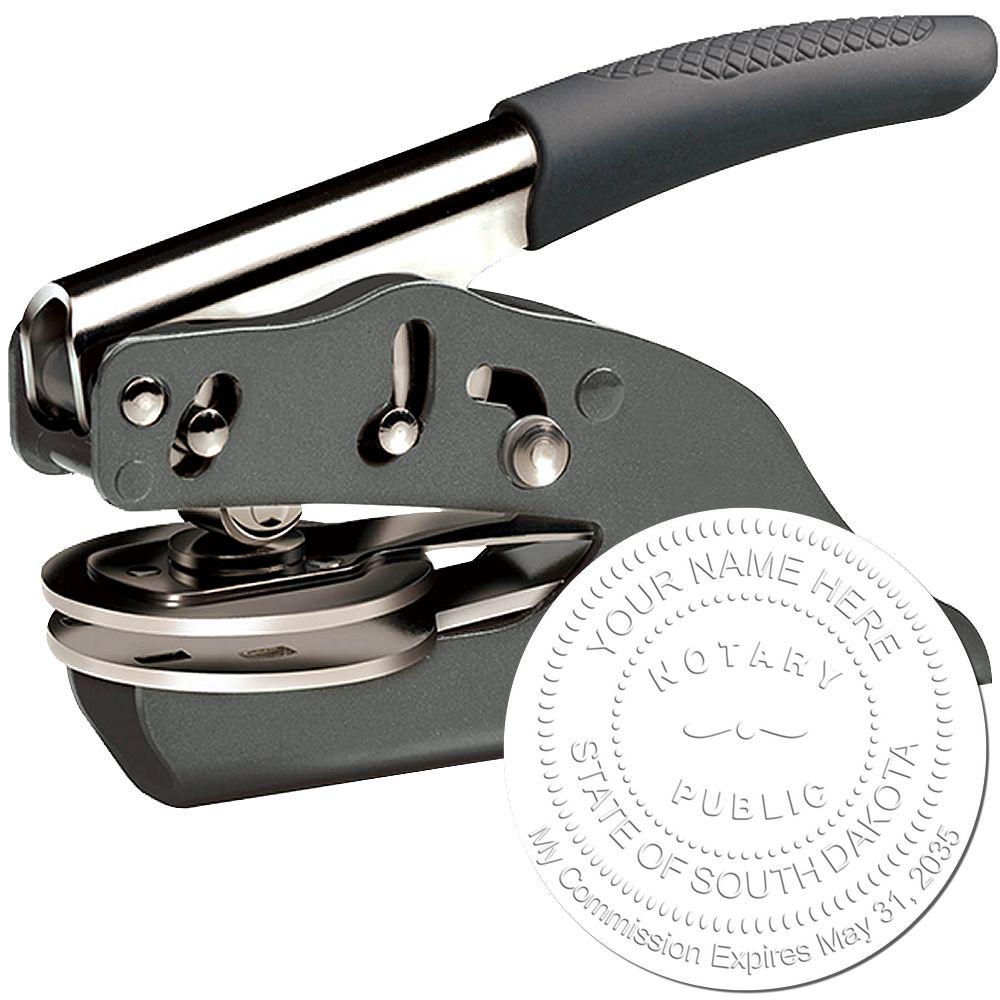
When you serve as a South Dakota Notary Public, having the right south dakota notary seal embosser is more than just a formality. It signals trust, authenticity, and professionalism to the individuals who rely on your notarial acts. In a state committed to airtight legal processes, your notary seal embosser plays a central role in verifying documents, giving clients and employers peace of mind that everything is above board. Moreover, choosing the correct embosser helps you fulfill South Dakota’s notarial guidelines, ensuring that each impression is crisp, legible, and meets legal requirements. Below, you will discover how to find an embosser that aligns with state regulations, how to maintain it for long-term use, and why Acorn Stamps is a trusted source for your notary supplies.
Understand the Importance of a Notary Seal Embosser
A notary seal embosser is a handheld device that leaves a raised imprint on paper. This imprint provides a physical “stamp” of authenticity on notarized items. While some might assume an inked notary stamp is enough, an embosser adds an extra level of security. Raised imprints are more difficult to forge because they produce a tangible change to the document’s surface.
Why an Embosser Matters
- A raised seal shows clear professional credibility.
- South Dakota requires official notary information to be clearly visible.
- Embossed seals are harder to alter or tamper with.
When you are working with personal wills, property paperwork, sworn statements, or other important documents, you want to convey that everything has been inspected with the highest care. An embosser helps you do exactly that. It also reassures individuals who rely on your services since they can quite literally feel that a document has been properly notarized.
Check South Dakota Requirements
Before you invest in any specific embosser, you need to check the rules set out by the South Dakota Secretary of State. While many general notary embossers might look fine at a glance, they may not meet the specifications currently in place for your commission.
Basic Guidelines
- Ensure your embosser includes the exact name you provided on your notarial application.
- Include the words “Notary Public” and “South Dakota” in the design.
- The seal or embosser should have clear, legible letters.
Keep in mind that notary regulations can change over time. It is prudent to regularly confirm that your embosser remains compliant with any updated state requirements, especially if you renew or modify your notary commission.
Verify Commission Details
It is worth double-checking the details on your commission certificate. Any discrepancy, such as a missing middle initial or a shortened name, could lead to confusion or questions about authenticity. A small oversight might mean having to reorder your embosser. By being precise from the beginning, you save time, money, and potential headaches.
Distinguish Different Embosser Types
Not all embossers are created equal. A variety of sizes, shapes, and handle mechanisms exist. Understanding these distinctions helps you select a long-lasting product that aligns with your day-to-day notary tasks.
Hand-Held vs Desktop
- Hand-Held:
Portable and easy to store in a bag or briefcase. Ideal if you cover a wide geographic area or attend off-site signings. Usually lighter, though it may fatigue your hand if you emboss a large volume of documents in one session.
- Desktop:
Heavier and designed for repeated embossing with less strain on your hands. Not as portable, so best if you do most of your notarizing in one office or workspace.Generally more durable and can handle thicker documents.
Pocket Seal vs Long-Reach Seal
- Pocket Seal:
Compact device that fits easily in your purse or briefcase. Great for notaries on the go who need a convenient, space-saving solution. Might have limitations on how far you can place the impression from a document’s edge.
- Long-Reach Seal:
Allows you to emboss further into a page, which can be helpful if certain documents specify a specific seal placement. Tends to be a tad bigger and heavier, but also more versatile. Consider how you typically perform your notarial duties. If you regularly travel to multiple offices, a hand-held or pocket seal might be the way to go. If you mostly work at a desk, a desktop embosser with a long-reach imprint could benefit you more.
Choose the Right Plate Layout
Once you have pinned down the style of embosser you prefer, it is time to develop the actual layout that will appear as an impression. This layout matters because it identifies you as a licensed notary in South Dakota and ensures that each notarized document carries the proper notarial language.
Key Elements to Include
- “State of South Dakota” or “South Dakota”
- Your legal name exactly as it appears on your commission
- The words “Notary Public”
- Any additional required wording mandated by South Dakota law
Because everything must be distinct, you will want a design that positions the text neatly around the seal. Certain seal makers will automatically configure these elements for you, but it helps if you know which details you must include. Remember, clarity is crucial. If your seal is crowded or difficult to read, it can undermine the document’s validity.
Aesthetics vs Practicality
Naturally, you might want your seal to look visually appealing, but do not sacrifice legibility or compliance in the process. Minimalist layouts with crisp font styles tend to work best. Consider also the diameter of the embosser, usually around 1⅝ inches or 2 inches, so that the impression fits properly on standard documents without looking cramped.
Maintain and Store Your Embosser
Your south dakota notary seal embosser is more than just a piece of office equipment. It is the heart of your notarial duties. To keep it in prime condition, you will want to adopt a simple maintenance regimen.
Cleaning the Embosser
- Periodically wipe down the metal parts with a soft cloth to remove any residue or dust.
- Avoid abrasive cleaning agents that might scratch the metal or dull the impression plates.
- Check for signs of rust or corrosion, especially if you live or work in a humid environment.
Proper Storage
- Store your embosser in a protective case or pouch to prevent damage.
- Keep your embosser out of reach of unauthorized persons.
- If you have multiple notarial tools (like an ink stamp), store all of them in the same secure spot for quick access.
Storing your embosser carefully not only prolongs its life but also protects you from unscrupulous use if it falls into the wrong hands. Safeguarding it is part of your responsibility as a notary.
Benefit From Acorn Stamps
Finding the right supplier is almost as important as finding the right embosser design. When you are ready for your new or replacement south dakota notary seal embosser, consider Acorn Stamps.
A Top Supplier With Family Roots
Acorn Stamps is family owned and operated since 1964, which means you are getting six decades of craftsmanship and experience behind every product. A longstanding family business typically signals strong values, personalized care, and a direct commitment to customer satisfaction.
Stellar Customer Service and Fast Turnaround
When you order your notary seal embosser from Acorn Stamps, you do not just receive a generic, off-the-shelf product. Instead, you get your seal quickly and accurately, often with faster shipping than competitors. Should you have specific personalizations or questions, the support team is known for being knowledgeable, open, and eager to assist. This means you can look forward to fewer delays and more confidence in your final product.
Trusted by Thousands of Notaries
Over the years, notaries from all corners of South Dakota have turned to Acorn Stamps for high-quality seal embossers. The consistent praise for durability, clarity, and compliance with state guidelines speaks volumes about the company’s reliability. You can feel comfortable knowing countless other South Dakota notaries found what they needed, professionally served their communities, and renewed or replaced their seals with ease.
Frequently Asked Questions
Below are five common questions that may help you weigh your options and get the most from your embosser.
Do I need both an embosser and an ink stamp?
Although state requirements vary, many notaries in South Dakota prefer to have both. An ink stamp ensures clarity on photocopied documents, while an embosser provides extra security and authenticity. Having both can be beneficial, but make sure you meet or exceed South Dakota’s regulations for either form of notarization.
How often should I replace my embosser plates?
Generally, embosser plates will last for many years without requiring replacement, especially if you maintain them well. However, if you notice the impression is getting faint, or if your name or commission details change, you will need to update your embosser. Always verify that your embosser reflects the current information on your notary commission.
What if my name changes during my commission term?
You must order a new seal or embosser reflecting your new legal name. This ensures that your seal stays valid. Not updating it could invalidate any documents you notarize with incorrect or outdated personal details.
Which is better: a hand-held embosser or a desktop version?
It depends on your workflow. A hand-held embosser is portable and ideal if you travel frequently to notarize documents, whereas a desktop embosser is sturdier and more comfortable for high-volume, stationary use. Many notaries use both, depending on the types of assignments they handle.
Where should I store my notary embosser to keep it secure?
Keep your embosser in a locked drawer, safe, or secured cabinet. Treat it like any sensitive tool that could be misused if lost or stolen. This security measure helps you maintain the integrity of your notarial acts and prevents unauthorized use of your seal.
Choosing the right south dakota notary seal embosser does not have to be overwhelming. By focusing on state guidelines, personal preferences, and trustworthy suppliers like Acorn Stamps, you can invest in a seal that reflects your professionalism and commitment to protecting the public’s interest. When you prioritize the right layout, maintenance, and security measures, you set yourself up for a smooth, efficient notarial practice. Your notary seal is more than a mark on paper, it is a testament to your integrity and dedication to the notarization process.