If you’re looking to become or remain a notary public in Utah, it’s essential to understand the ins and outs of Utah notary requirements. By staying on top of your responsibilities, you’ll protect yourself legally and help ensure every notarized document holds up under scrutiny. Below, you’ll find a friendly guide that walks you through each step, from basic qualifications to renewing your commission. You’ll also discover how to select the right notary supplies and maintain accurate records, so you can serve your community confidently and professionally.
Understand Utah Notary Requirements
It helps to begin with a basic overview of what being a notary public in Utah entails. A notary public is a state-appointed individual who witnesses the signing of important documents and verifies the identity of those involved. This role safeguards against fraud and ensures the authenticity of signatures on everything from real estate agreements to affidavits.
You’ll have several legal obligations, including administering oaths, taking acknowledgments, and verifying signatures. Fulfilling these tasks properly is essential for maintaining public trust. In Utah, the notary commission typically lasts four years, after which you’ll have to renew based on the current notary guidelines.
Why These Requirements Matter
- Preventing Fraud: Thorough identification checks can help reduce instances of false signatures or identity theft.
- Legal Reliability: Properly notarized documents hold up in court, protecting everyone involved from legal risks.
- Public Confidence: Effective notaries contribute to a trustworthy environment for businesses, real estate transactions, and more.
Meet Basic Qualifications
Before you can notarize documents in Utah, you have to meet certain criteria that confirm your eligibility. While requirements can fluctuate over time, these are typically the core standards you need to satisfy.
- Be at least 18 years old
- Be a lawful resident of Utah or have a place of employment or practice in the state
- Be able to read, write, and understand English
- Not have any felony convictions, or convictions involving moral turpitude that could disqualify you from holding office
You’ll confirm your eligibility through the Utah notary application process. Meeting these basic qualifications is the first step toward becoming a recognized notary public in the state.
Know Your Legal Standing
If you have a criminal history, it doesn’t necessarily mean you’re automatically ineligible. Minor offenses may not prevent you from serving as a notary. However, you’ll want to review the latest state guidelines or consult with a legal professional to understand any limitations you might face.
Fulfill Application Steps
Once you confirm you meet Utah’s qualifications, it’s time to apply for your commission. The state requires a formal application process to verify your identity, background, and intent to carry out notarial acts responsibly.
Complete an Approved Course
You may need to complete a mandatory notary training course before submitting your application. Utah often mandates this training so you understand essential procedures like stopping fraud, verifying signer identity, and properly using your notary stamp. Check the Utah government website for the most up-to-date list of certified course providers.
Pass the Notary Examination
Passing a notary exam is a critical part of showing you’re prepared. You’ll be tested on Utah notary requirements, state regulations, and how to handle challenging situations in real-world scenarios. When studying, pay attention to identification protocols and the rules regarding the notary journal.
Submit Your Application and Fee
After finishing the course (if required) and passing your exam, you’ll submit the official application to the appropriate Utah state office. You’ll also need to pay a filing fee. The state’s notary division website usually provides clear instructions on how to file, either online or via mail.Application Checklist
- Proof of age and residency/employment in Utah
- Course completion certificate (if required)
- Examination results
- Filing fee (confirm the current amount with the state)
Obtain Essential Tools
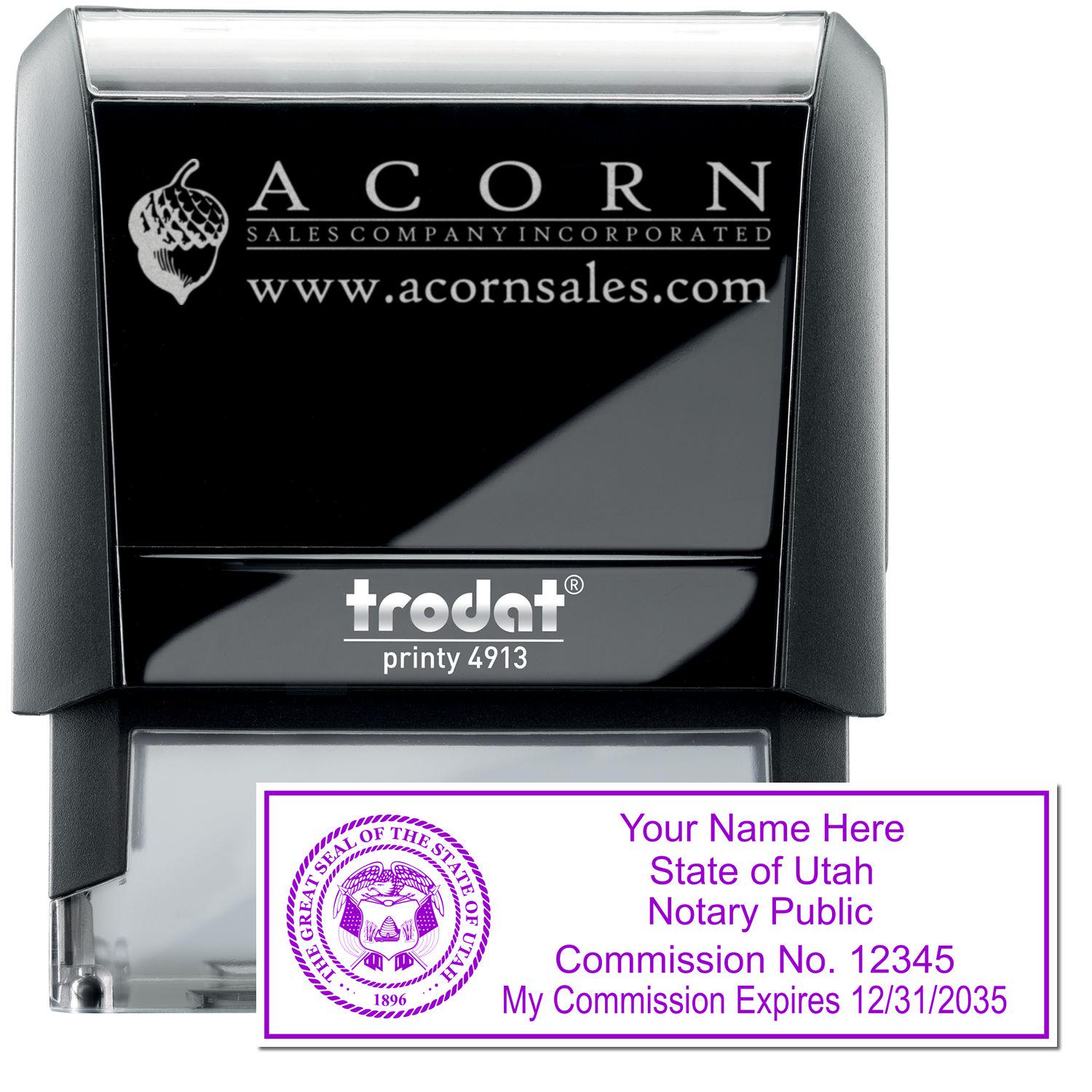
Meeting Utah notary requirements also means having the right supplies. A well-crafted notary stamp or seal helps verify your official status when witnessing signatures. You’ll likely need a notary journal to document every transaction too.
At Acorn Stamps, you can find Utah notary stamps and seals that meet all necessary state standards. Our family-owned and operated company has served notaries for over 60 years. Whether you need a self-inking stamp, pre-inked stamp, or traditional embosser, you’ll see how a reliable notary seal can make your job easier and more efficient.
Why Your Supplies Matter
- Professional Appearance: A clean, clear stamp or seal reassures clients that you’re providing an official service.
- Compliance: Utah regulations specify the type and format of a notary seal, so using the proper tools is part of following the law.
- Durability: A high-quality stamp or seal can handle multiple documents per day if needed, saving you from constant replacements.
Choosing a Journal
A notary journal is where you record the details of each notarial act. For every notarization, you’ll note the date, type of document, and the parties involved. It’s a legally recognized record that can protect you if any of your notarizations are ever questioned.
- Format: Spiral-bound, hard-bound, or electronic
- Required Fields: Date, time, signer’s identification, type of notarization, document type, and any fees charged
- Storage: Keep your journal secure to maintain signer privacy
Follow Notarial Duties
While having the correct supplies is essential, the heart of your role lies in performing your duties according to Utah law. You’ll be certifying the authenticity of signatures, confirming identities, administering oaths, and much more.
General Duties Overview
- Verify Identity: Confirm the signer’s identity with government-issued photo IDs like a driver’s license or passport.
- Inspect Documents: Check that the document is complete, with no blank spaces that could be altered later.
- Witness Signatures: Ensure the signer appears before you in person and willingly signs.
- Administer Oaths or Affirmations: If required, read out the official statement, and have the signer confirm under penalty of perjury that the document’s content is truthful.
Avoiding Common Pitfalls
- Notarizing Blank Documents: Always make sure all sections are filled.
- Overstepping Your Authority: Notaries aren’t attorneys and may not provide legal advice unless otherwise licensed.
- Failing to Keep Records: Consistent documentation in your journal is your safeguard against misplaced claims or lawsuits.
Maintain Accurate Records
Keeping thorough, accurate records is a crucial part of meeting Utah notary requirements. Your notary journal, and any supporting documentation, helps prove you did your job correctly. It’s often your first line of defense if someone challenges the validity of a notarized document.
Record-Keeping Best Practices
- Consistency: Record every notarization immediately.
- Legibility: Ensure handwriting is clear, or choose an electronic journal if allowed.
- Privacy: Store your journal in a secure location. If you switch from paper to digital records, confirm that your chosen platform meets Utah’s legal requirements.
- Backup: If you’re maintaining digital copies, create secure backups in case of technical failures.
Renew In Time
Every Utah notary commission has an expiration date, usually after four years. Failing to renew could leave you unable to conduct any notarial acts until you’re re-commissioned.
How to Renew
- Monitor Your Timeline: Mark your calendar at least three months before your commission ends.
- Check Requirements: Utah’s renewal requirements may be similar to your initial application, including a fee and potentially a refresher course or exam.
- Update Your Supplies: If your stamp or seal is worn out, you might need to order new notary tools with the extended expiration date reflected on them.
Stay Compliant
Keep in mind that changes to Utah’s notary laws can happen over time. It never hurts to stay updated by joining notary associations, subscribing to newsletters, or networking with other professionals in your area. By doing so, you’ll proactively ensure your service remains within state regulations.
Explore Additional Resources
When you’re a notary, knowledge is power. Troubleshooting tricky signings or spotting potential fraud often comes down to staying informed. Whether you pick up best practices from state-run resources, legal websites, or from your colleagues, continual learning can boost your confidence and the quality of your service.
- Utah Notary Division Website: The official source for updates and forms.
- Professional Workshops: Periodic training sessions that delve deeper into complex scenarios (like notarizing for people with language barriers).
- Notary Associations: Online forums or local groups can help you discuss real-world challenges and solutions with peers.
Frequently Asked Questions
Below are five questions often asked by newly commissioned (and even experienced) notaries. Reviewing these will help you handle everyday scenarios with clarity and confidence.
Can You Notarize for Family Members in Utah?
Generally, it’s discouraged to notarize documents for close relatives. Utah law doesn’t automatically forbid notarizing for a family member, but if you have a direct financial or beneficial interest in the transaction, you should recuse yourself to avoid conflicts of interest.
What Identification Is Acceptable?
Acceptable forms of ID typically include driver’s licenses, state ID cards, passports, and military IDs. Always ensure the ID is current and bears a recent photo and accurate signature.
Do You Need to Keep a Journal?
Yes. Maintaining a notary journal is strongly recommended and often required for good practice. It’s your best record in case of disputes or legal inquiries. Make sure every notarization is documented promptly and accurately.
Can You Dispense Legal Advice?
No. Unless you’re also an attorney licensed to practice law, you cannot provide legal advice. Direct clients to seek help from a qualified attorney if they have legal questions about their documents.
What Happens if Your Stamp Breaks or Goes Missing?
Your notary stamp must remain secure since it carries your official authority. If it’s lost, stolen, or damaged, notify the Utah notary division immediately and replace it. Acorn Stamps offers fast turnaround solutions for Utah notary stamps and seals, ensuring you can quickly resume your duties.
By understanding and following Utah notary requirements, you’ll be ready to execute your responsibilities with confidence. From meeting initial qualifications to renewing on time and using high-quality notary tools, each step matters for your professional integrity. Whether you’re just starting or need a refresher, remember that your diligence bolsters public trust in every notarial act you perform.
If you’re in the market for dependable notary supplies, including Utah notary stamps and seals, be sure to explore Acorn Stamps. We’ve been family owned and operated since 1964, and we pride ourselves on providing stellar customer service with a super fast turnaround. When you need expertise combined with proven reliability, we’re here to help you excel in your role as a Utah notary public.