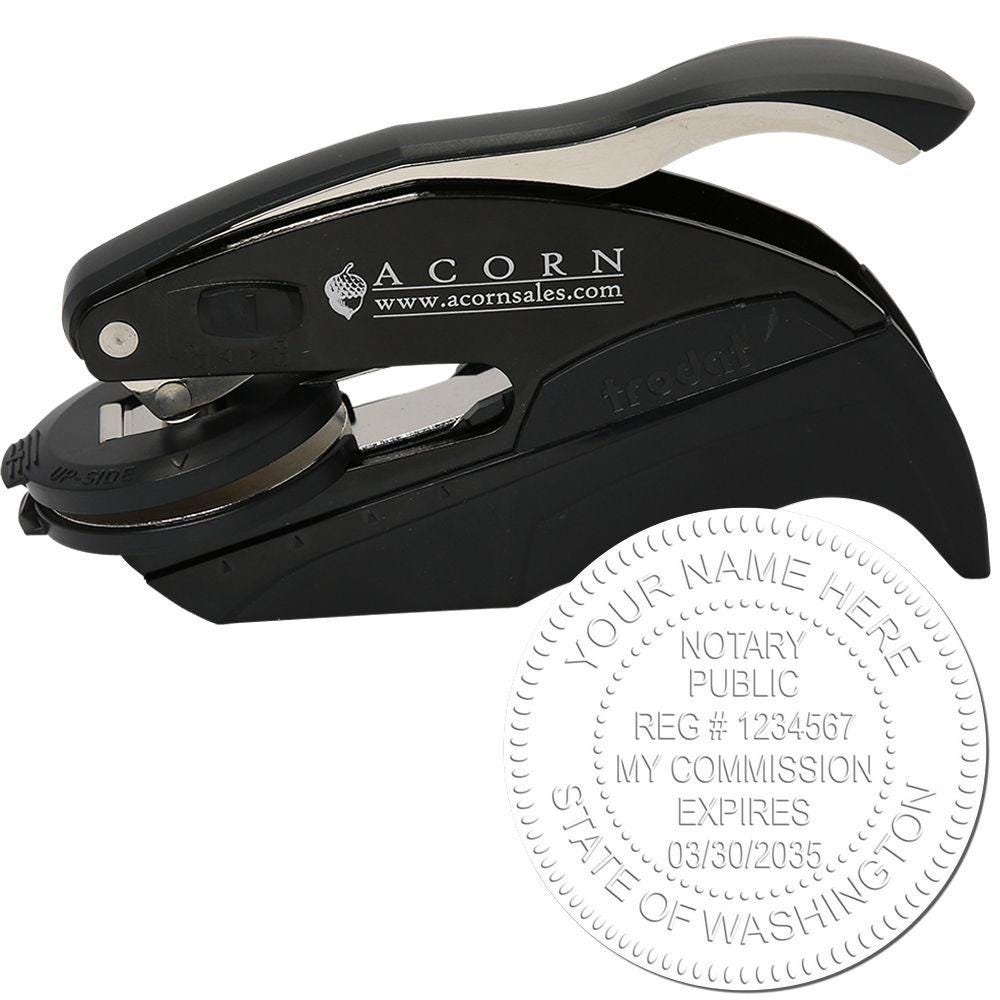
Understand the Importance of a Washington Notary Stamp and Seal
If you plan to serve as a notary public in Washington, securing the right Washington notary stamp and seal is essential. Not only are these tools legally required in many notarial acts, they also lend credibility and authenticity to the documents you notarize. In Washington, you perform important tasks to help safeguard the public from fraud, so having the correct stamp and seal in your possession helps you fulfill these duties confidently and within state guidelines.
Choosing the right Washington notary stamp and seal involves more than a quick purchase. You want to ensure that your stamp and seal meet state requirements, reflect your personal preferences, and stand the test of time. In the sections below, you will learn how to evaluate these tools carefully, discover what features to look for, and find tips for using them responsibly in your day-to-day notarial duties.
Review Washington State Requirements
Before you purchase your Washington notary stamp and seal, it is vital to understand the specific rules governing these items. Although the Washington Department of Licensing provides detailed guidance on notary practices, you will want a concise checklist to organize your considerations. Here are some key points:
- Your stamp or seal must clearly display your name and the words “Notary Public.”
- It should also include “State of Washington” and your commission expiration date.
- When used on a document, the impression or ink must be legible and reproducible.
- The design must comply with the modern guidelines set by Washington’s notary laws.
Each element plays a part in establishing the authenticity of your notarial acts. If any of these components is missing or difficult to read, your notarizations could be questioned or even rejected. Keeping in mind these basic requirements will guide you in selecting a compliant stamp or seal that suits your notarial practice.
Explore Your Notary Stamp Options
There are several types of notary stamps available. If you are new to the notary scene, you might be wondering which style will be the best fit for your daily work. In Washington, you are allowed to use a variety of stamp models as long as the information is correct and easy to read. Below are a few common options you can explore.
Self-Inking Stamps
Self-inking stamps are extremely popular among notaries. These stamps have an internal ink pad that re-inks itself after each impression, making them fast and convenient. You simply press down on the stamp and it imbeds the required notarial information onto the document.
- Pros: Quick to use, minimal mess, long-lasting internal ink pad
- Cons: Slightly pricier than traditional rubber stamps, might require special replacement ink
Pre-Inked Stamps
Pre-inked stamps work similarly to self-inking stamps but use a different technology. Instead of having a separate ink pad inside, they have ink embedded in the stamp’s surface. This design typically yields sharper, crisper impressions.
- Pros: Produces a very clear image, quieter operation, can last for thousands of impressions before re-inking
- Cons: Often more expensive upfront, needs a specific re-inking fluid
Traditional Rubber Stamps
Traditional rubber stamps require a separate ink pad. Although they may be considered “old-school,” they remain a trusted, economical choice.
- Pros: Budget-friendly, easy to replace pad or re-ink
- Cons: Slower to use, can be messy if you are not careful, might need frequent re-inking
By comparing these types, you can figure out which style aligns with the pace and location of your notarial work. If you conduct frequent notarizations in a mobile capacity, you might favor the convenience of self-inking or pre-inked stamps. If you handle only occasional notarizations in an office, a rubber stamp could be a cost-effective solution.
Evaluate Your Notary Seal Options
In Washington, a notary seal can often be used in conjunction with or in place of a stamp. While your primary tool might be a notary stamp, you may still want a notary embosser, also called a seal press. This tool can help differentiate your notarial act by producing a raised, tactile impression in the paper. Here are your main seal options:
Handheld Embosser
A handheld embosser is small, portable, and convenient to store in your bag or desk drawer. You squeeze the handles together, creating a raised seal on the document. This type is handy if you need quick embossing without a lot of desk space.
- Advantages: Portable, quick setup, discreet to carry
- Disadvantages: More effort needed to press down, might cause hand strain if used frequently
Desk Embosser
A desk embosser is a sturdier version that anchors to a flat surface. It has a lever mechanism, making it easier to use if you produce a high volume of embossed seals.
- Advantages: Consistent and crisp impressions, less hand fatigue
- Disadvantages: Bulkier, limited portability
Using Stamps vs. Embossers
In Washington, you will often see a stamp serve as the primary tool because it produces a clear inked image that photocopies well. An embosser can add an extra layer of security, especially for official documents that require a raised seal. If you are unsure which to choose, you might opt for both, depending on the volume and formality of your notarial duties.
Decide on the Right Material and Design
You want a notary stamp and seal that will last, ideally throughout your entire commission period. Pay close attention to materials, build quality, and design features when making your choice.
Durability
- Look for sturdy plastic or metal cases, especially on self-inking or pre-inked stamps.
- Check that the die or stamp surface is made with high-quality components so it can yield consistently sharp impressions.
- Ensure your embosser’s metal parts are thick enough to handle repeated pressure, which keeps your tool in good working order.
Legibility and Font Choice
- Opt for crisp, easy-to-read fonts that print or emboss your official information, including your commission expiration date.
- Make sure your name appears exactly as listed on your notary commission.
- Confirm your chosen design does not cut off any text or crowd your details.
Ink Color
Washington law requires the notary stamp to be “capable of being copied together with the record to which it is affixed.” In most cases, black and dark blue are standard. However, be sure to consult any additional guidelines or best practices, especially if a particular institution or client has a color preference.
Consider Acorn Stamps for Quality and Convenience
After reviewing your notary stamp and seal options, you might wonder where to purchase them. With so many online and local suppliers, it can be hard to know which brand to trust. One reliable option to consider is Acorn Stamps. Family owned and operated since 1964, Acorn Stamps has served Washington notaries for 60 years. Why does this family legacy matter? Acorn Stamps has evolved over decades of service, refining the manufacturing process and providing a top-quality selection of Washington notary stamps and Washington notary seals. By choosing their products, you can expect:
- Stellar customer service. If you ever have questions or issues, their experts are ready to guide you.
- Super fast turnaround. When you need a replacement stamp or are rushing to begin your commission, efficiency is everything.
- A rich tradition of reliability. With 60 years of experience, they have earned a reputation for durable, easy-to-use stamps and seals.
It is reassuring to have a supplier that understands notaries’ needs in Washington, especially since laws and requirements can vary by state. By pairing local expertise with a time-tested commitment to quality, Acorn Stamps can save you from the guesswork of incomplete or inaccurate products.
Follow Best Practices for Daily Use
Once you have the perfect Washington notary stamp and seal, proper use will ensure you consistently produce high-quality, legally valid impressions.
Store Your Stamp and Seal Safely
Even the best-made stamp or embosser can deteriorate if you leave it caked with ink or exposed to extreme heat. Consider these simple storage habits:
- Keep your tools away from prolonged direct sunlight or heat sources, as this can dry out your ink and weaken the materials in your embosser.
- Clean excess ink from your stamp’s surface periodically to maintain crisp impressions. Follow the manufacturer’s instructions for best results.
- Protect the stamping surface or seal die with a protective case or a small pouch, especially if you travel frequently.
Align and Press Correctly
When applying the notary stamp, place it on a sturdy, flat surface. Press evenly and with enough force to get a clear imprint. For embossers, make sure you insert the paper in the correct orientation and apply steady pressure on the lever or handles.
Maintain Legibility at All Times
If your stamp begins to fade, re-ink or replace the pad promptly. With embossers, check for worn-out plates or bent handles. Proper maintenance prevents invalid notarial acts due to unreadable seals.
Avoid Common Mistakes
It is surprisingly easy to slip into errors if you are juggling multiple notarizations every day. Understanding these common pitfalls will help you maintain professional standards.
- Using a stamp with outdated or incorrect information. Ensure the expiration date on your stamp is up to date. Update your stamp whenever you renew your commission.
- Allowing others to use your official seal. Only you can wield your notary stamp and seal. Lending them, even briefly, can jeopardize the security of your notarial acts.
- Not verifying your impression. Always double-check that every bit of text on the stamp or seal is fully visible on the document.
- Forgetting to note other required details. A stamp alone does not complete the notarization. You must sign and date documents where needed, and record the act in your notary journal according to Washington’s guidelines.
By taking a little extra care each time you notarize, you protect your commission and demonstrate professionalism to your clients.
Organize Your Commission Details
Part of choosing the right Washington notary stamp and seal is making sure the personal details you place on them match your official record. Plan to keep a clear record of:
- The name on your notary commission, exactly as it appears in your official documentation.
- Your notary commission number, if applicable.
- Your commission expiration date.
- Any additional text required by your state.
When everything lines up, you make life easier for yourself and reduce rejections of your notarial acts, which can happen if the stamp or seal does not reflect your legal name or correct expiration date.
Explore Additional Supplies and Services
While your Washington notary stamp and seal form the core of your toolkit, you might also consider investing in complementary supplies that make your job smoother.
- Notary journal. Washington notaries are encouraged or required to maintain a journal of all notarizations. A well-designed journal with columns for details like the date, signer’s name, type of document, and method of ID confirmation can simplify recordkeeping.
- A reliable bag or organizer. If you are a mobile notary, you might want a protective case or bag that keeps your documents, ID resources, stamp, and embosser neatly contained.
- Replacement ink. If you use a self-inking or pre-inked stamp, plan for a backup bottle of ink. This ensures you are never stranded with a fading impression right when you need a crisp stamp.
Beyond these basics, many suppliers can also customize items like notary stationery or sign plates. Once you settle into your routine, you might discover additional supplies that make your notarial duties more efficient and professional.
Five Frequently Asked Questions
Below are some common questions that new and experienced Washington notaries often ask when selecting or using their stamp and seal.
Why is the Washington notary stamp and seal required?
They are required by law to identify you as the duly appointed notary, authenticate the documents you notarize, and confirm your commission details. In Washington, your stamp or seal must clearly show your name, “Notary Public,” “State of Washington,” and your commission expiration date.
Can I use any design for my seal if it includes the correct information?
Washington’s rules give you some flexibility with the general layout, but the required text must be presented legibly and in a reproducible format. It is best to choose a straightforward design that meets legal guidelines.
How long will a self-inking or pre-inked stamp last?
Typically, a self-inking or pre-inked stamp can make thousands of impressions before needing re-inking. The exact lifespan depends on usage and storage, so be sure to follow the manufacturer’s recommendations.
Is an embosser mandatory if I already have a notary stamp?
In many situations, the Washington notary stamp alone meets the legal requirement, as it provides a clearly visible image. However, some professionals prefer having both a stamp and an embosser for added security or a more traditional appearance.
Where can I order a Washington notary stamp and seal quickly?
Acorn Stamps is a trusted option for Washington notaries, offering efficient turnaround, a variety of stamp and seal styles, and knowledgeable customer support. Their family-owned business has remained committed to quality since 1964, making them a reliable supplier for notary tools.
Choosing the right Washington notary stamp and seal is a pivotal step in your notarial career. By following your state’s guidelines, considering your day-to-day notarization needs, and selecting durable, well-designed products, you ensure every official act you perform is valid and respected. Wherever your notary commission takes you, having dependable tools at your side will help cultivate trust and integrity in the vital work you do. If you are ready to get started, do not hesitate to check out Acorn Stamps for product options that fulfill Washington’s requirements and align with your professional preferences. With the appropriate stamp in hand, coupled with precise use and ongoing care, you will be well on your way to running a successful notarial practice in the Evergreen State.