You already know that becoming a notary public in Texas requires paperwork, attention to detail, and a commitment to following rules. Yet, you may still have questions about which steps to tackle first or how to keep your commission valid for the entire term. By understanding the core Texas notary requirements and setting yourself up with reliable supplies, you can confidently perform your duties while helping fellow residents with important legal documents. Below, you will discover the essentials of qualifying as a Texas notary, maintaining your commission, and finding the best resources for stamps and other supplies.
Understand The Basic Requirements
Before you can serve as a Texas notary public, you need to meet the official qualifications. The State of Texas sets specific guidelines to protect the integrity of notarized transactions. By familiarizing yourself with these fundamentals, you can decide if pursuing a notary commission is right for you.
Eligibility Criteria
- You must be at least 18 years of age.
- You need to be a legal resident of Texas.
- You must not have any felony convictions or certain misdemeanors that could affect your ability to act ethically.
- You need to submit all required documentation accurately.
These basic qualifications ensure you are legally able to handle important documents on behalf of others. If you meet this initial checklist, you can move on to the application phase.
Application Steps
- Obtain your application form. You can either download it from the official Texas Secretary of State website or request a copy by mail.
- Gather the necessary supporting documents. You may need to submit a valid form of identification and proof of your residence.
- Pay the required fee to process your application. This fee helps cover the administrative costs associated with reviewing your information.
- Submit your completed form and wait for your commission certificate from the Secretary of State’s office.
Double-check each field on your application and ensure that the information you provide is error-free. Mistakes could delay your approval or require you to refile. Once you are approved, you will receive official notification of your commission, typically by mail.
Complete Your Notary Commission
Securing your commission involves more than just applying. You can think of the commission itself as a license allowing you, under Texas notary requirements, to verify signatures, administer oaths, and handle other legally recognized tasks.
Bonding And Insurance
State law requires that you maintain a notary bond as a form of financial protection for the public. If you make an error that causes someone harm, your bond may help cover the costs of damages up to the bond amount. Here’s what you should know:
- The standard bond amount for Texas notaries is $10,000.
- You can get your bond through various bonding or insurance agencies.
- Make sure you finalize your bond promptly, as it is a key step in making your commission valid.
Optional but highly recommended is an Errors and Omissions (E&O) insurance policy, which can offer additional protection beyond your bond amount. While the bond aids third parties, E&O insurance protects you personally from certain risks associated with notarial errors.
Commission Duration And Renewal
Your initial notary commission in Texas lasts four years, starting from the date the Secretary of State issues the commission certificate. About three months before your commission expires, you will want to begin the renewal process:
- Complete a renewal application, which is similar to your original submission.
- Obtain or extend your notary bond for the new term.
- Pay the appropriate application fees.
- Submit the renewal documents well ahead of your commission expiration date.
If your commission lapses, you are no longer permitted to perform notarial acts until the renewal is officially granted. Staying on schedule with your renewal ensures that you remain compliant and can continue serving as a trusted notary public.
Equip Yourself With Notary Supplies
Once you have satisfied all Texas notary requirements, the next step is to gather the essential tools that let you do your job properly. In Texas, notaries are highly encouraged to maintain specific supplies that ensure the authenticity of each act they perform.
Texas Notary Seal And Stamp
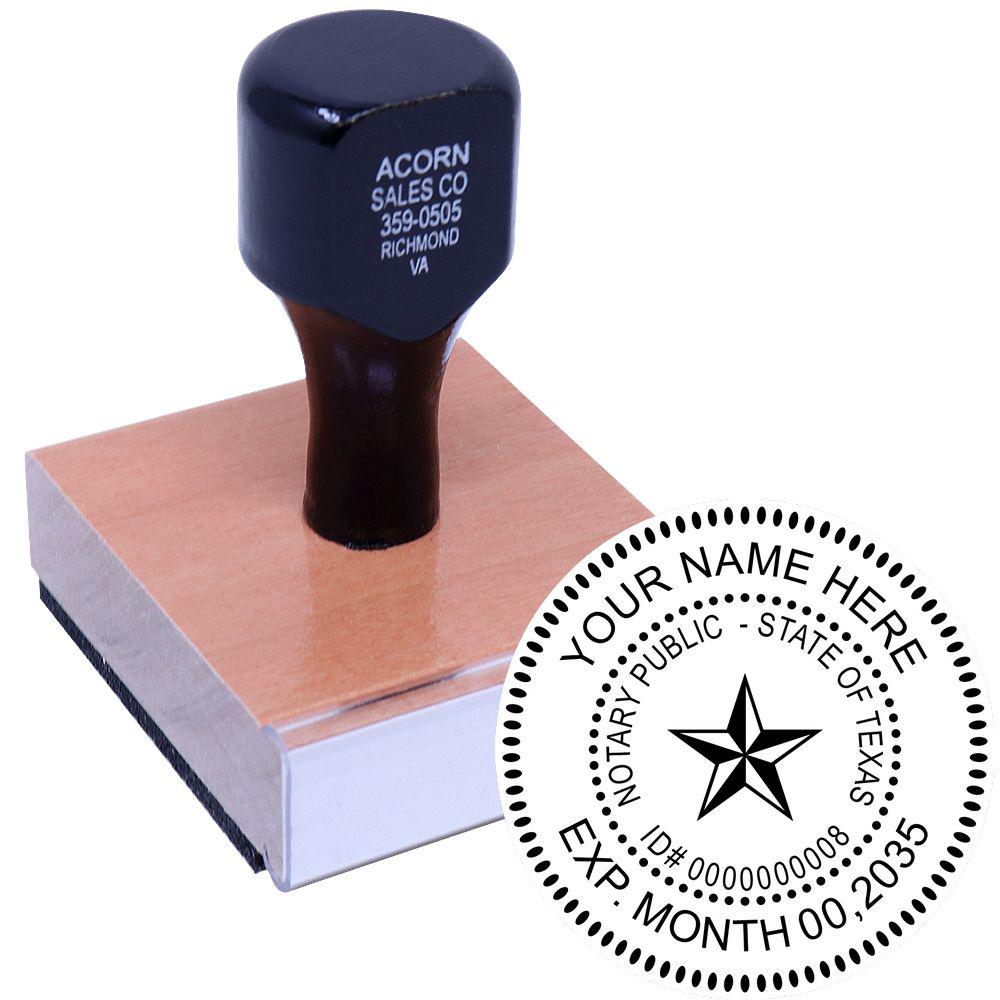
Texas notaries typically use an official seal or stamp that contains their commission information. This seal verifies the documents you notarize.
- Your seal must include your name as it appears on your commission, your identification number, and the words “Notary Public, State of Texas.”
- The impression should be clear and distinct on paper so that county clerks or any verifying authority can read it.
- You can choose between a self-inking stamp or an embosser, as both are acceptable forms of notary seals in Texas.
Choosing a stamp is more than just picking something that fits your budget. It should meet state guidelines, fit comfortably in your hand, and produce crisp impressions every time.
- Look for sturdy construction: You’ll be using it multiple times a day.
- Ensure the text on the stamp is accurate and spelled correctly.
- Confirm it can handle various paper qualities and surfaces, especially if you notarize documents in different settings.
Notary Record Book
Though Texas law only mandates a record book (often called a notary journal) for certain notarial acts that involve the transfer of real property, many notaries choose to document all of their transactions. Maintaining a detailed journal:
- Helps you track each notarization.
- Offers a clear audit trail if someone questions your work.
- Provides reliable evidence that you notarized a document correctly.
In your notary record book, it’s wise to include dates, times, client information, signatures, ID types, and any relevant remarks. If a dispute ever arises, your thorough record can protect both you and those who used your notarial services.
Follow Proper Notarial Procedures
Being a Texas notary comes with responsibilities that extend beyond stamping documents. You need to ensure every notarization is performed in strict accordance with the law. Proper procedures not only reinforce the value of your work but also shield you from legal complications.
Performing Jurats And Acknowledgments
In Texas, two common types of notarial acts are jurats and acknowledgments:
- Jurat: This act requires you to witness the signing of a document and administer an oath or affirmation. The signer is swearing to the truth of the document’s contents.
- Acknowledgment: This act does not require you to witness the signature. Instead, the individual appearing before you acknowledges that they signed the document voluntarily.
For each type of act, always verify the identity of the signer using acceptable identification. If the person cannot provide proper ID, you can rely on a credible witness, as long as that witness meets the legal criteria for testifying to the signer’s identity.
Avoiding Common Mistakes
Even if you’ve completed all the training and passed any optional exams, you might occasionally make minor errors. Try to steer clear of these pitfalls:
- Using a seal with incorrect or outdated information.
- Performing notarial acts outside your authorized jurisdiction.
- Failing to maintain a notary journal for acts that require it, especially real estate transactions.
- Not verifying the date on the document or the signer’s awareness of what they are signing.
If you ever discover you made a mistake, correct the record as soon as possible. Depending on the nature of the error, you might need to re-notarize the document or add a note in your journal describing the correction.
Work With Acorn Stamps
Although various suppliers offer stamps and seals, finding a reliable resource makes your job much easier. You want quality, efficiency, and friendly guidance. That’s where Acorn Stamps comes into play.
Quality Stamps And Seals
Acorn Stamps specializes in top-tier Texas notary stamps and seals that meet every detail of Texas notary requirements. You can choose from a variety of stamp styles, ensuring compatibility with different preferences and notarial environments. You’ll enjoy:
- Crisp and durable stamps that don’t fade easily.
- Quick shipping, so you can stay on schedule with your notarial activities.
- Customer service that cares about promptly correcting any misprints.
Family-Owned Since 1964
As a family-owned and operated business for over 60 years, Acorn Stamps takes pride in supporting new and established notaries across Texas. You can trust that every stamp or seal you order will be crafted with meticulous attention to detail. With decades of experience in your corner, you can focus on delivering reliable notarial services, knowing your tools are up to the task.
If you’re ever unsure of which notary seal, stamp, or style best fits your needs, you can count on Acorn Stamps’ friendly team to help you make an informed decision. They have seen countless changes in notarial technology, and they continue to keep pace with evolving state regulations.
Frequently Asked Questions
Below are answers to some of the most common queries you might have, especially if you are just getting started.
How Long Does It Take To Get Commissioned?
The exact timeline can vary, but processing typically takes a few weeks once you submit your application, bond information, and fees. Be sure to allow additional time for mailing and any potential corrections needed if your application is incomplete.
Am I Required To Have A Notary Journal For Every Notarial Act?
Texas law mandates keeping a record book for real estate transactions. However, many notaries choose to document all notarial acts. Doing so protects you and offers a clear record if there’s ever a dispute over a notarized document.
Can I Notarize Documents For Family Members?
Legally, Texas does not broadly prohibit notarizing for relatives. Yet, many notaries avoid notarizing for close family to prevent potential conflicts of interest. When in doubt, double-check your personal circumstances and consider referring a family member to another notary if it might compromise impartiality.
What Happens If I Move To Another County In Texas?
If you stay within Texas, you can continue to use the same commission until it expires. You should, however, update your address with the Secretary of State’s office. This ensures official correspondence and public records stay accurate based on your new location.
Is A Separate Notary Seal Required For Different Texas Counties?
No. Your Texas notary seal covers all counties in the state, so you only need one. Your commission is valid anywhere within Texas, and you don’t have to buy additional seals for each county in which you perform notarial acts.
Keeping your knowledge of Texas notary requirements current is essential to serving the public effectively. From understanding eligibility criteria to selecting the right Texas notary stamp and seal, you hold a valuable role in upholding legal standards. Always stay mindful of changing regulations, and don’t hesitate to consult experts or reliable suppliers to ensure that you remain compliant.
When you’re ready to arm yourself with the highest-quality tools, consider reaching out to Acorn Stamps. From fast turnaround times to personalized customer service, they’ve earned a reputation for equipping notaries just like you with everything needed to work confidently and professionally. By taking care of each step, from your application to renewing your commission, you’ll enjoy a rewarding notarial career that supports the legal needs of everyday Texans.