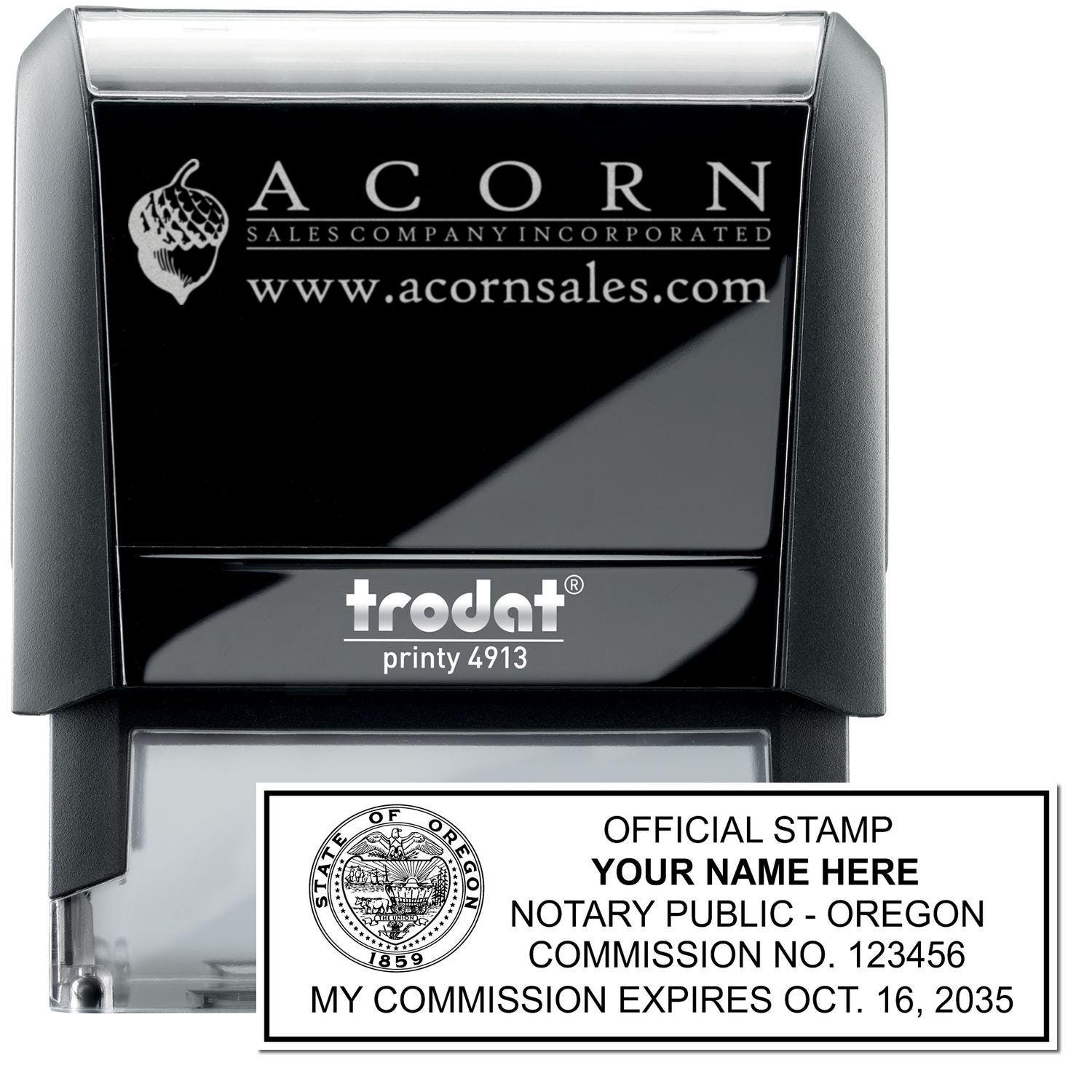
Understand Oregon Notary Seals
If you serve as a notary public in Oregon, choosing the right Oregon notary seal is one of the most important steps you can take to ensure your work is always accurate and professional. Your seal represents both your identity and the state's notarial laws, acting as an official mark on every document you notarize. It might be tempting to opt for the first seal you come across, but a little research can help you find one that not only meets legal requirements but also suits your comfort and style.
Purpose of the Seal
- Validates signatures: Your Oregon notary seal certifies that the signatures on the document are genuine.
- Protects against fraud: By affixing your seal, you provide an added layer of authenticity to prevent falsified transactions.
- Reflects state standards: Oregon holds specific guidelines for notary seals. Adhering to these rules helps you avoid legal complications.
Symbol of Credibility
Beyond its legal importance, your seal signals trust. Clients rely on you to validate crucial transactions, from real estate deeds to affidavits. The integrity of your work depends on the clarity and durability of the stamp or embosser you use. Selecting a reliable seal sets the tone for your notarial practice.
Meet Oregon Requirements
Oregon law outlines specific rules regarding the layout, appearance, and content of your official seal. Before you invest in a new seal, you want to know exactly what goes on it and how to use it lawfully.
Required Elements
- State name: Oregon.
- Your official name: Match the exact name on your commission.
- The state seal or official emblem: This ensures the notary mark is identifiable as belonging to an Oregon notary.
- Your commission number: Each notary has a commission or certificate number, which should be visible on the seal.
Standard Layout
Oregon typically requires a circular or rectangular seal measuring around one to two inches in diameter. Use high-contrast ink, like black or dark blue, so the seal is clearly visible on various types of documents. While you have some leeway in design, it is crucial that all mandatory elements are legible and properly arranged.
Staying Compliant
Failing to meet Oregon’s notarial design criteria can lead to delays in your commission approval. Always double-check the official Oregon Secretary of State website for updates or clarifications on sizing, shape, and text requirements. If you use a seal that deviates from these rules, you risk having documents rejected and may be asked to replace your seal sooner than expected.
Compare Types Of Seals
Once you know how an Oregon notary seal must look, the next step is deciding on the format that best serves your needs. Because each type of seal has unique pros and cons, your choice should fit your workflow, comfort, and budget.
Self-Inking Stamps
Self-inking stamps have an internal ink pad. Each impression re-inks the rubber or polymer die automatically, which reduces the chance of dry stamping.
Advantages:
- Quick and convenient to use
- Creates consistent results
- Low risk of ink spills
Potential Drawbacks:
- Ink pad eventually needs replacement
- Impression can deteriorate over time if used very frequently
Pre-Inked Stamps
Pre-inked stamps saturate the stamping surface with ink. They typically leave crisp and clear impressions for thousands of uses before needing a refill.
Advantages:
- High-quality imprints
- Usually quieter than self-inking stamps
- Compact size, making them portable
Potential Drawbacks:
- Slightly higher initial cost
- Re-inking technique can be messier if you are not used to it
Embossers
Embossers create a raised impression on the document without using ink. Although many states prefer ink-based seals, an embosser can be a stylish add-on or backup.
Advantages:
- Professional, distinguished look
- Tamper-resistant raised seal
Potential Drawbacks:
- Some documents may require visible, ink-based foil attachments
- Harder to use on thicker paper
- More physical effort needed for clear impressions
Personalize Your Oregon Seal
While adhering to state guidelines is mandatory, you can still customize select details so your seal reflects your personal or professional style. Working with a reputable provider can help ensure both compliance and personalization.
Choose Your Ink Color
Black, blue, and purple are common ink colors. Oregon requires that the seal impression be legible, so any color should be dark enough to read when photocopied or scanned. If you’d like to differentiate yourself, consider dark purple or navy blue. Just stay away from red or lighter shades that could affect readability.
Decide on Your Font
Although standard fonts are popular for clarity, some seal makers allow for minimal variations in font style. You could pick a clean serif font or a modern sans serif font to give your seal a personal touch. The only requirement is that the text remains readable and includes the mandatory information.
Add Your Flourish
Some stamp manufacturers offer small design options within the outer ring of the seal, such as a subtle filigree or linear accent. Remember that too many embellishments might distract from the core text, so keep it simple. Oregon law focuses on clarity rather than ornamentation, so any design elements must not obscure required details.
Maintain Your Notary Seal
Your Oregon notary seal is a vital tool, so caring for it properly ensures every document you sign is valid and professional. Regular maintenance reduces the risk of smudged or faint impressions.
Cleaning Stamps
- Wipe the imprint area: If ink accumulates on the die, gently dab it clean with a soft cloth or cotton swab.
- Store properly: Keep your seal in a protective case if possible, away from direct sunlight or extreme heat.
Refilling Ink
- Follow manufacturer instructions: Each brand has a different method for replenishing ink, so consult the guidelines.
- Avoid overfilling: Too much ink can lead to blotting and smudging on important documents.
Embosser Care
- Lubricate the hinges: A tiny drop of machine oil helps the embosser handle move smoothly.
- Keep plates free of debris: Gently wipe your embosser plates so debris does not compromise the raised impression.
Avoid Common Pitfalls
Even experienced notaries can run into issues that compromise their ability to notarize documents effectively. Here are some pitfalls to watch out for when using your Oregon notary seal.
Misplacing Your Seal
Your seal is unique to you and should never be accessible to unauthorized individuals. If someone else uses your seal, any documents they stamp could lead to legal consequences for you. Always store your seal in a locked drawer or cabinet when it is not in use.
Using an Expired Commission
Oregon notarial commissions must be renewed regularly. If your commission has expired, it is illegal to continue notarizing documents, even if you still have a functioning stamp or embosser. Keep track of your commission expiration date and submit renewal paperwork early to avoid any gap.
Inconsistent Impressions
If your seal’s impressions look different from one page to another, you might need to replace your ink pad or adjust your embossing technique. Always check a fresh impression on a spare piece of paper before notarizing an official document.
Failing to Update When Details Change
If you change your name or have another change that affects the required text on your seal, you must order a new seal that matches your new commission details. Continuing to use your old seal can render your notarizations invalid.
Choose Acorn Stamps
When you are ready to invest in a high-quality Oregon notary seal, Acorn Stamps stands ready to help. We are a family-owned and operated business established in 1964, celebrating more than 60 years of service. Our commitment to superior craftsmanship, stellar customer service, and super-fast turnaround has made us a top supplier of Oregon notary stamps and seals.
What Sets Us Apart
- Extensive product range: We offer self-inking stamps, pre-inked stamps, and embossers tailored to Oregon’s regulations.
- Fast production: Our team understands that time is of the essence. We work quickly without sacrificing quality.
- Knowledgeable staff: Our experts stay current on state notarial guidelines, so you can trust that your seal is always compliant.
- Personalized approach: Whether you prefer a sleek, no-frills design or want a hint of flair, we can help you choose a style that suits both your personality and professional needs.
Ordering With Confidence
We pride ourselves on making the ordering process smooth and hassle-free. Simply let us know the requirements for your Oregon notary seal, including your name, commission number, and any specific design requests. Our support team is available to answer questions and guide you through each step. By combining quality materials with meticulous craftsmanship, we make sure you receive a seal that is built to last.
Your Next Steps
Selecting your Oregon notary seal does not have to be daunting. By understanding state guidelines, comparing different types of seals, and properly maintaining your chosen design, you set yourself up for a smooth and professional notarial practice.
- Familiarize yourself with Oregon’s regulations: Keep track of what details must appear on your seal and ensure they match your commission accurately.
- Choose a seal format: Decide whether a self-inking stamp, pre-inked stamp, or embosser best serves your day-to-day workflow.
- Customize responsibly: Personalize your seal’s font or minor design elements, but always focus on clarity and readability.
- Maintain your tool: Clean and refill your seal or embosser regularly to guarantee consistent impressions.
- Avoid mistakes: Update your seal if your commission details change and keep it in a secure location.
If you are ready to pick out a reliable, high-quality seal, consider working with Acorn Stamps. Our long-standing heritage and dedication to fast, friendly service will help you obtain a seal you can rely on from your first notarization to your last.
FAQs
Does Oregon require the phrase “Notary Public” on the seal?
Yes. Your Oregon notary seal should state “Notary Public” to indicate your official job title. It must also include the state name, your name, and commission number.
Can I use an embosser instead of an inked stamp in Oregon?
Although inked stamps are most common to meet Oregon’s guidelines, you can supplement with an embosser if desired. Just make sure your primary seal clearly shows all required text.
How often do I need to replace my notary seal?
There is no fixed timeline, but you should replace it when impressions start fading or if your commission details change. Regular maintenance can extend a seal’s lifespan.
Can someone else use my seal on my behalf?
Never. Only you may use your official Oregon notary seal. Allowing others to use it invalidates the notarization and can lead to serious legal consequences.
Do I need to buy a new seal each time I renew my notary commission?
If your personal details and commission number stay the same, you are not obligated to buy a new seal. However, consider a fresh stamp or embosser if your old one produces inconsistent results. If any of your commission information changes, you must acquire an updated seal that reflects those changes.
By learning the ins and outs of selecting and caring for your Oregon notary seal, you protect every document you notarize and uphold the professional standards expected by the state. This responsibility begins with a seal that is both compliant and comfortable for you to use. When you work with Acorn Stamps, you can rest assured that you are getting a product made with care, expertise, and a commitment to the needs of Oregon notaries.