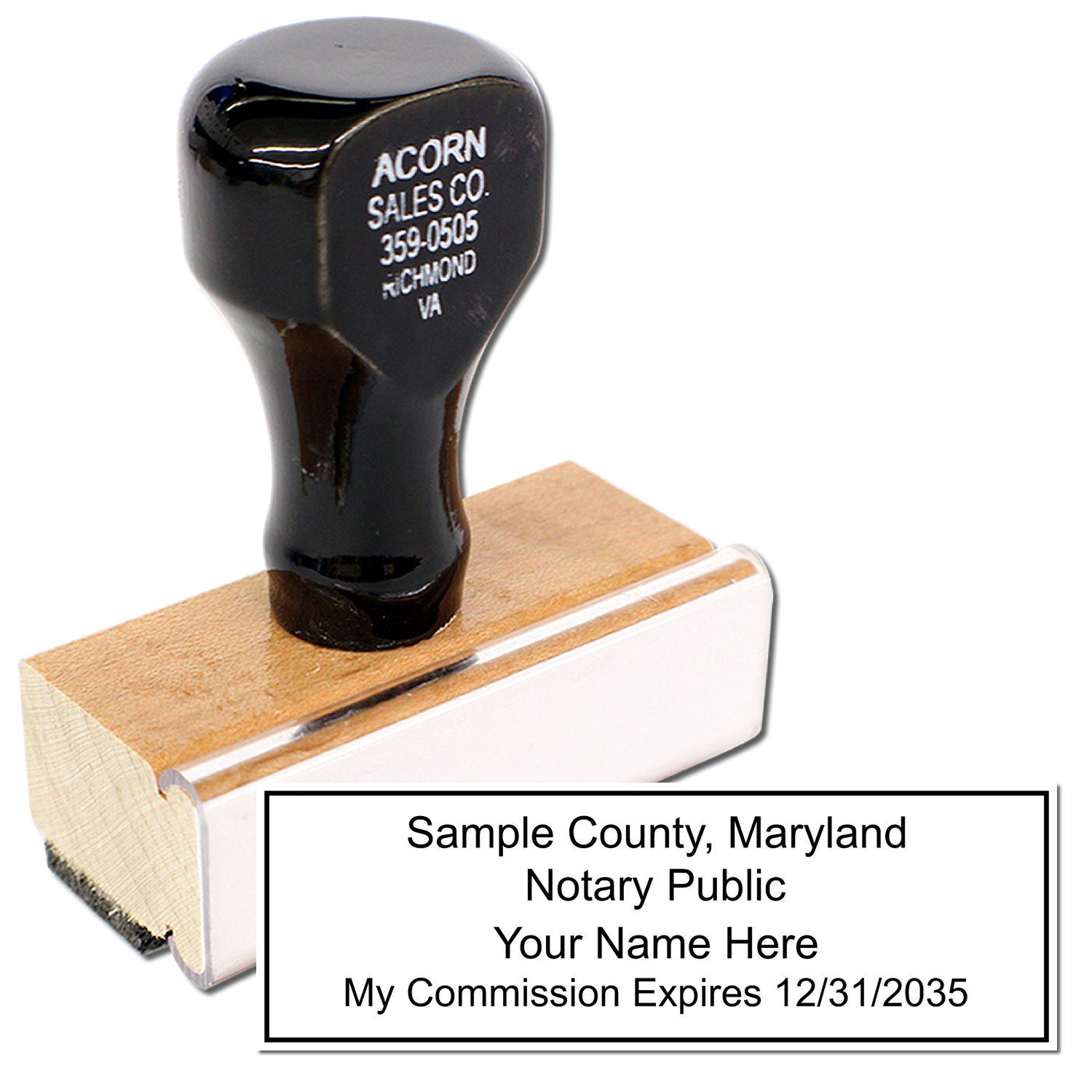
When you work as a Maryland Notary Public, choosing the right MD notary stamp and seal is one of the most important decisions you’ll make. These tools are essential for authenticating documents, verifying signatures, and upholding the integrity of your notarial acts. Yet, with so many options and regulations surrounding Maryland notary supplies, you might wonder where to start. Below, you’ll discover everything you need to know about selecting, maintaining, and using an MD notary stamp and seal. You’ll also learn why working with a trusted supplier such as Acorn Stamps can make all the difference in ensuring your notarial needs are met efficiently.
Understand the Essentials
Choosing an MD notary stamp and seal can seem overwhelming at first. A stamp typically involves a self-inking or pre-inked design that leaves an inked impression on documents, while a seal often takes the form of an embosser. Both items serve the same overarching purpose of authenticating important documents, but they do so in slightly different ways.
What Is an MD Notary Stamp
Your MD notary stamp is a pre-made device that quickly applies ink to documents requiring your notarial endorsement. Stamps come in various forms, including self-inking and pre-inked models.
- Self-inking: Has an internal ink pad that re-inks the stamp surface after each impression.
- Pre-inked: Contains ink within the stamp material itself, producing crisp and consistent imprints.
Either type can showcase your name, notary public title, commission expiration date, and the state of Maryland. You’ll notice these details are required by Maryland regulations to ensure the stamp represents an official record of your notarial act.
Why the Seal Matters
A notary seal typically references an embosser that creates a raised impression on legal documents. While Maryland recognizes both stamps and embossers, some notaries prefer an embosser for its distinct, tactile mark.
- Creates a raised imprint: This imprint is sometimes seen as more traditional and secure.
- Offers visual authenticity: Embossed paper can help deter tampering or unauthorized alterations.
Though an embosser can appear more formal, it works in tandem with or sometimes in place of a stamp. Depending on your preference and the types of documents you handle, you might choose one method or use both to comply with state guidelines and client expectations.
Know the Legal Requirements
To protect your professional reputation, you need to follow Maryland’s specific regulations concerning your MD notary stamp and seal. Understanding these requirements ensures that your notarial acts are recognized as valid and legally binding.
Commission Guidelines
Before you apply ink or emboss any documents, confirm that your commission is in good standing with the state of Maryland. You must maintain active authorization from the Office of the Secretary of State. In Maryland, your notary commission generally lasts four years, although your expiration date can vary depending on the issue date.
- Keep track of expiration: Mark your calendar or set an electronic reminder so you know when your commission is up for renewal.
- Update your information: If you change your name or address, follow state guidelines for updating your notary records.
Documentation and Renewal
Because Maryland requires a notary’s signature, stamp or seal, and the notary’s commission expiration date on each document, staying on top of your renewal dates is crucial. If your commission lapses, your stamp or seal is no longer valid for official notarial acts.
- Renew in a timely manner: Give yourself enough time before the expiration date to complete any state-mandated steps.
- Order updated equipment: As soon as your new commission is confirmed, invest in updated notary supplies that reflect your extended or renewed commission date.
Compare Stamp vs. Embossing Seal
When considering an MD notary stamp and seal, it pays to recognize the benefits of each option. While the state recognizes both, there are differences in appearance, convenience, and use.
Key Differences
- Application: A stamp employs ink, which can be easier to see on photocopied documents. An embosser uses pressure to create a raised design, so it may not show as clearly in scans or photocopies unless you ink the embossment.
- Speed: Stamps are generally faster to use than embossers because you simply press down. Embossers might take slightly more effort to line up and press.
Deciding which option best suits your notarial practice depends on the documents you handle, how you deliver or file them, and whether you need long-lasting impressions that are easy to reproduce in electronic copies.
Pros and Cons
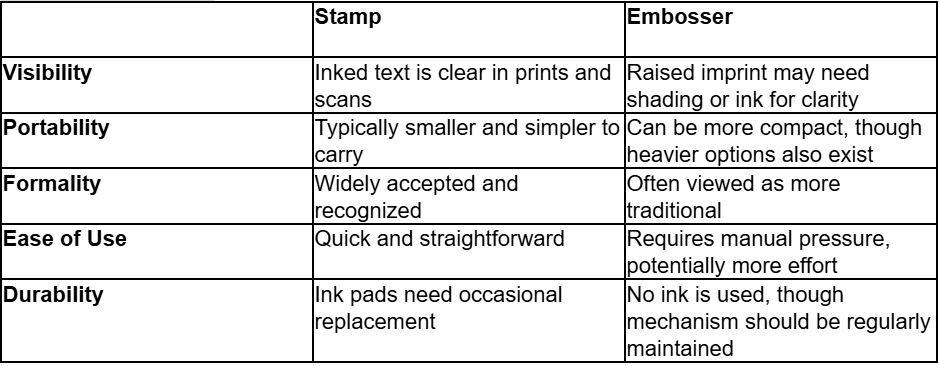
Use this quick comparison to help decide whether stamps, embossers, or both will fit your specific workflow and preferences.
Choose Quality Materials
Your stamp and seal should last the duration of your commission and ideally beyond your next renewal if you choose to continue your notarial duties. Quality construction, reliable ink, and design ergonomics all influence how well your MD notary stamp and seal will perform.
Ink Longevity
If you opt for a self-inking or pre-inked stamp, pay attention to the ink’s quality. The best inks deliver thousands of vibrant, smudge-free impressions before needing a refill. Lower-quality inks can fade quickly or require frequent re-inking. Look for:
- Quick-drying formula to prevent smears.
- Clear, crisp impressions that remain legible over time.
- Refill capacity so you can keep using your stamp long-term.
Ergonomic Design
Using your stamp consistently means you should aim for a comfortable grip and an easy press if you handle large volumes of documents. Stamps and embossers come in various shapes and handle styles. Make sure you select a design that suits your hand size and comfort preferences. Some features to consider include:
- Lightweight construction that won’t strain your wrist.
- A contoured handle to prevent slippage.
- Smooth lever action that doesn’t require excessive force.
Rely on a Trusted Supplier
Working with a reputable supplier simplifies the ordering process and ensures you receive high-quality, compliant notary supplies. After all, a reliable supplier will help you stay current on Maryland regulations and deliver your products on time, every time.
About Acorn Stamps
Acorn Stamps is regarded as a top supplier of Maryland notary stamps and Maryland notary seals, and with good reason. Family owned and operated since 1964, Acorn Stamps brings 60 years of dedicated service to notaries across the state. Purchasing your MD notary stamp and seal from a family-run business means:
- Personalized service: You’ll work with a team that truly cares about meeting your needs quickly.
- Stellar customer care: If you run into any issues or questions, they’ll prioritize finding swift solutions.
- Super fast turnaround: Time is critical for many notaries, and Acorn Stamps has built a reputation for rapid order fulfillment.
Why Choose Family Owned
When you choose a family-owned and operated supplier like Acorn Stamps, you’re also supporting a longstanding community-focused enterprise. Large suppliers may offer bulk discounts, but smaller businesses often provide the kind of attentive support that helps you navigate any challenges in your notarial practice.
- Direct engagement: Speak with knowledgeable representatives who can answer specific questions about Maryland’s guidelines.
- Customized approach: If you need a unique stamp design or additional embossers, you can often communicate directly with decision makers.
- Historical expertise: With six decades in the industry, a family-run business has the expertise to resolve unusual requests and troubleshoot any concerns.
Maintain Your Stamp And Seal
Even the best MD notary stamp and seal require periodic care to remain fully functional. From cleaning your stamp’s ink surface to properly storing your embosser, regular maintenance helps preserve crisp impressions and keeps your notarial act free from potential mishaps.
Cleaning and Storage Tips
- Wipe away excess ink: If you notice ink buildup on your self-inking stamp’s surface, gently wipe it with a soft cloth. Avoid harsh chemicals, as they can damage the stamp’s rubber or polymer.
- Handle embossers with care: Embossers have moving parts, so store them in a protective case or cover to keep dust out. If the mechanism shows signs of stiffness, consult the manufacturer for recommended lubricants.
- Keep them out of direct sunlight: Sunlight or hot environments can dry out ink pads sooner than expected. A cool, dry place is best for storage.
Security Measures
Because your stamp and seal represent official authority, you need to keep them secure. If misused or lost, someone could potentially forge documents, causing legal trouble for you.
- Lock them away: Store your stamp, embosser, and any extra ink refills in a locked drawer or cabinet when not in use.
- Monitor your surroundings: If you perform mobile notary services, be alert to your environment to prevent someone taking or tampering with your tools.
- Replace compromised devices: If your stamp becomes damaged or you suspect unauthorized access, promptly replace or re-ink your device.
Ensure Proper Use
Once you’ve secured a quality MD notary stamp and seal, the next step is using them correctly every single time you notarize a document. From aligning your stamp properly to following all Maryland-required protocol, proper use preserves the legal standing of each notarial act.
Avoid Common Errors
- Faint impressions: Try a test stamp on scrap paper before stamping official documents. If the image is too faint, re-ink or press more firmly.
- Incorrect alignment: Keep your stamp parallel to the page, and apply even pressure. Tilted stamps can produce partial or smeared impressions.
- Omitting essential details: Don’t forget your signature, the commission expiration date, and any other information Maryland requires.
Stay Compliant
Maryland notary laws can change over time, and you’re responsible for keeping pace with these updates. Make a habit of checking state websites or professional notary associations to stay informed. Some ongoing compliance steps include:
- Refreshing your knowledge: Attend continuing education courses or reading official updates from the Office of the Secretary of State.
- Updating your equipment: If the state modifies stamping requirements or formats, ensure your supplies are up to date.
- Recording each act: Many notaries keep journals detailing every notarial act. This habit can protect you if someone questions a prior notarization.
Frequently Asked Questions
Below are five FAQs to address common points of confusion about notary supplies, regulations, and best practices in Maryland.
How Often Should I Replace My MD Notary Stamp And Seal?
You can typically use your stamp and seal for the duration of your commission, as long as you maintain them properly. If the impressions fade or the device malfunctions, replace them immediately. Most high-quality stamps last for thousands of impressions.
Do I Need Both a Stamp and an Embosser?
Maryland acknowledges both stamps and embossers. Some notaries prefer to have both for added authenticity, while others stick to one. It mostly depends on client demands and personal preference. If your clients often request raised embossing, having both can offer more options.
Can I Order a Stamp Before My Commission Is Approved?
While you can technically purchase notary supplies at any time, it’s best to wait until your commission is confirmed so the correct commission expiration date can be included on your stamp or seal. This prevents confusion or the need to reorder if details change.
What If My Name or Address Changes During My Commission?
Maryland requires you to notify the Office of the Secretary of State about any legal name or address change. You might need to order a new stamp reflecting your updated information. Always follow official guidelines so you remain compliant.
Why Choose Acorn Stamps Over Other Suppliers?
Acorn Stamps is a family-owned company with 60 years of experience, specializing in Maryland notary stamps and notary seals. You enjoy personalized service, stellar customer care, and super fast turnaround times. It’s a reliable partnership that helps you maintain professional standards. By understanding the essentials, following Maryland’s legal requirements, and caring for your equipment, you’ll have the confidence that every signature you notarize stands on solid ground. Acorn Stamps is here to guide you every step of the way, ensuring that your MD notary stamp and seal meets all state regulations, delivers a crisp impression, and keeps your notarial duties running smoothly. With the right tools and knowledge, you’re free to focus on providing trustworthy, efficient service to every client who believes in your notarial expertise.