Understand Maine Notary Seal Requirements
When you start looking for a Maine notary seal, it is essential to know the fundamental rules set by the state. In Maine, notaries public carry significant legal responsibility, as you authenticate signatures on various documents. Having the correct seal is one of the simplest ways to comply with regulations and confirm your official status. By knowing the state’s requirements, you reduce the risk of improper notarization and ensure that every document you stamp is legally valid.
Basic Eligibility For Notaries
Before you can use a notary seal in Maine, you must meet certain eligibility criteria. You should already be a commissioned Maine notary public with an active license in good standing. The application process involves:
- Filling out the appropriate forms through the Maine Secretary of State.
- Paying required fees and providing references, if applicable.
- Committing to abide by the ethical and legal responsibilities of the position.
Once you receive your official commission, you can then purchase a seal that meets Maine’s specific guidelines. Carefully review any updates or changes in Maine notary laws, as these might affect the type of seal you need or how you use it.
Seals And Rubber Stamps
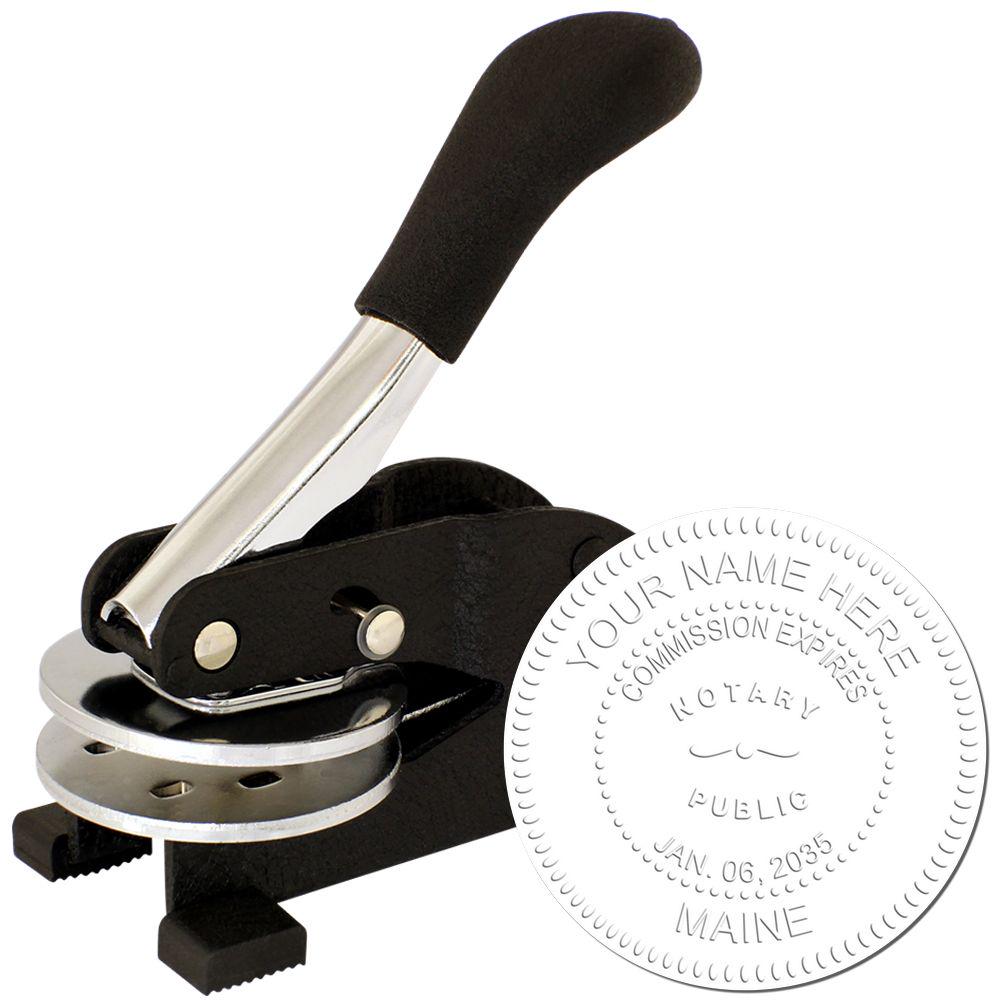
As a Maine notary, you typically use either a rubber stamp or an embosser, often referred to as your “official seal.” Under Maine law, your seal must include specific elements, such as:
- The words “Notary Public”.
- Your name exactly as it appears on your commission.
- The word “Maine”.
- Possibly your commission expiration date, depending on personal preference.
This official imprint helps verify your signature and authenticate documents. Many notaries opt for a combination of rubber stamp and embosser, ensuring flexibility for any paper type or client need. Whichever format you select, confirm that the seal leaves a clear, readable impression.
Choose The Right Seal Type
When shopping for a Maine notary seal, you may realize that various styles are available. Selecting the right type largely depends on how you plan to use the seal, the nature of your notarial duties, and your personal style preferences.
Embosser: A Traditional Option
An embosser leaves a raised impression on the document, lending a classic and formal look to your notary practice. You press two plates together, one featuring your name and the other displaying the surrounding text and design, which physically indents the paper. Some advantages of an embosser include:
- Professional and distinguished appearance.
- Harder to forge due to the raised imprint.
- Perfect for thick paper stock, such as certificates.
However, one drawback is readability. If a document needs photocopying or scanning, an embossed seal might not always show up well, which can be inconvenient for digital recordkeeping.
Pre-Inked Or Self-Inking Seals
If you perform frequent notarizations, a pre-inked or self-inking seal can save valuable time. These stamps:
- Contain ink within the device, reducing the need for an external ink pad.
- Make consistent, clearly legible impressions.
- Speed up your workflow, as you can stamp repeatedly without refilling.
You will find that many Maine notaries prefer self-inking seals for their speed. Meanwhile, pre-inked varieties support crisp edges and precise detail, making them ideal if you want a refined look on official documents.
Examine Design And Layout Options
Your Maine notary seal must incorporate certain texts, but you still have some flexibility in the overall appearance. A thoughtful design enhances readability and creates a sense of professionalism, which can reflect positively on your notary services.
Font Choices And Graphics
While Maine law requires specific phrases—like “Notary Public” and your name—it doesn’t usually dictate the font used. You can go with a simple serif font for a classic look or a clean sans-serif style for easier readability. Avoid overly decorative fonts that may be difficult to decipher on official documents, especially when you need to guarantee absolute clarity.
Some suppliers allow you to include minimal graphics or a border design around your text. Before you add any artistic flourishes, confirm that they do not overshadow the main information. You want the essential text to stand out clearly, so your seal remains undeniably legible.
Spacing And Legibility
If you add your commission expiration date and other optional information, pay attention to spacing. Cramming too much text into a small seal can make the impression look cluttered and unprofessional. When browsing different seal layouts online or in-store, review a sample impression. Ensure every letter is visible, from your name to the state designation.
Follow Maine Law And Regulations
Using your Maine notary seal goes beyond personal preference. It is also a legal matter, meaning you risk penalties or even the invalidation of important documents if you use your seal incorrectly. Staying up-to-date on Maine’s notary regulations is critical for avoiding oversights.Some key compliance tips include:
- Only use your seal after you have properly verified the signer’s identity.
- Maintain a journal of your notarial acts as recommended, even if the law does not strictly demand it.
- Never lend your seal or share it with another person. You are responsible for its security and proper use.
- If your commission expires or you retire, destroy your old seal to prevent fraudulent use.
By familiarizing yourself with these rules, you protect yourself and the public from the fallout of invalid notarial acts.
Consider Quality And Durability
Since you rely on your Maine notary seal to authenticate critical documents, you need to ensure a robust design built to last. Some notaries choose cheaper options, only to find themselves purchasing replacements sooner than expected. A higher-quality seal:
- Produces consistently crisp impressions.
- Withstands frequent use without breaking.
- Maintains a professional, uniform appearance over the life of your commission.
Material Factors
For embossers, opt for durable metal components that apply even pressure when you squeeze them together. A flimsy handle or pressed-tin frame might lead to misaligned or faint impressions. With stamps, look for an ink reservoir that is easy to refill and doesn’t leak. If you choose a self-inking or pre-inked tool, confirm the stamping mechanism is made of sturdy materials rather than cheap plastic.
Finding a balance between cost and quality often involves comparing various suppliers. Look closely at product reviews from other Maine notaries. This real-world feedback usually reveals which seal makers offer dependable quality, either in-store or online.
Where To Buy Your Seal
With a clear sense of what you need, you might be wondering where to purchase a high-quality Maine notary seal. You could browse office supply stores, but you may not always find specialized designs or the personalized attention you want. Many Maine notaries turn to specialized shops that understand the unique requirements of notary professionals.
Acorn Stamps: Family-Owned And Trusted
For a supplier that combines decades of expertise with truly personalized service, consider Acorn Stamps. Family-owned and operated since 1964, Acorn Stamps has provided premium notary supplies for more than 60 years. You will find:
- A variety of Maine notary seal options, from embossers to self-inking stamps.
- Customizable designs that meet all Maine requirements.
- Stellar customer service if you ever need guidance on choosing or caring for your seal.
- Remarkably fast turnaround times for those who need their notary tools quickly.
Whether you are a brand-new Maine notary public shopping for your first seal or an experienced professional looking to upgrade, Acorn Stamps offers a reliable, supportive buying experience. Their family-oriented approach means they understand the importance of building trust and delivering on promises.
Proper Usage And Maintenance
After you have selected and purchased your Maine notary seal, using and caring for it properly will extend its lifespan and keep your impressions crisp. Taking even small steps to maintain your stamp or embosser goes a long way.
Ink Refills And Storage
If you choose a self-inking stamp or a pre-inked seal, eventually you will need an ink refill. Always use the recommended ink type for your stamp brand. If you go with cheaper or incompatible ink, you risk smudged or uneven impressions, which can question the validity of notarized documents. When not in use, store your seal in a clean, dry spot. Avoid exposing it to direct heat or sunlight, which may degrade the rubber components. Also, keep the device away from children or anyone who is not authorized to use your seal. As you know, fraudulent misuse of a notary seal can have severe legal consequences.
Cleaning And Inspection
With embossers, occasionally check the plates for dirt or residue that can mar the raised imprint. Gently use a soft brush or cloth to remove any particles. Stamps may accumulate excess ink around the edges, so a gentle wipe with a damp cloth every now and then helps maintain a sharp imprint. Regular inspection also alerts you if any components become loose or worn out.
Common Pitfalls To Avoid
Even the most careful Maine notaries can encounter mistakes. However, learning about common pitfalls and how to bypass them will help you maintain a spotless professional record.
- Using The Seal Before Commission: You need to ensure your commission is active and approved. Using your seal even one day before your commission begins can invalidate any documents you notarize.
- Reusing Old Seals: If you had a previous commission name or changed your legal name, do not continue using an outdated seal. Maine law requires your seal to match your current, official name on file.
- Misplacing The Seal: If you lose or misplace your Maine notary seal, contact the state authorities and possibly renew your device. Never hope that it turns up later. The risk of misuse is too high.
- Ignoring Maintenance: Faded or sloppy impressions due to dried ink or worn parts can result in questions about the authenticity of notarized documents. Regular maintenance keeps your seal functioning properly.
- Forgetting About Storage: Carelessly leaving your seal in public view or an unsecured location can invite misuse or theft. Always store it securely to prevent any unauthorized use.
By being aware of these common mistakes, you consciously avoid tarnishing your professional reputation or risking legal complications.
Frequently Asked Questions
Can I Order A Maine Notary Seal Before I Receive My Commission?
It is recommended that you wait until your commission is officially granted and you have received your notary certificate. This ensures that all personal information on the seal—especially your name—matches the records on file with the Maine Secretary of State.
Am I Required To Use Both An Embosser And A Rubber Stamp?
Maine law does not mandate using both. You typically need at least one seal that clearly identifies you as a Maine notary public. However, many notaries choose to have both for added flexibility. The embosser is appreciated for its professional look, while the stamp is often more convenient for quick or frequent notarizations.
How Often Should I Replace The Ink On A Self-Inking Stamp?
The frequency depends on how many documents you notarize. If you notice that your seal impressions are getting faint or uneven, it is time to refill. Always follow the manufacturer’s instructions to maintain a clean, readable imprint.
What If I Change My Name During My Commission Term?
If you change your name due to marriage, divorce, or any other reason, you must update your notary records with the state. You will need a new seal that matches your updated legal name. Using your old seal after a name change can create legal and administrative disruption.
Why Choose Acorn Stamps For My Maine Notary Seal?
Acorn Stamps has been family-owned and operated since 1964, providing high-quality stamps, embossers, and other notary supplies for over 60 years. Their fast turnaround times, outstanding customer service, and dedication to customer satisfaction make them a reliable choice. You will find everything you need to fulfill Maine’s notary requirements while enjoying a friendly and personalized experience.
By understanding Maine’s specific notary requirements, selecting a proper seal, and staying informed about maintenance and usage, you are well on your way to providing seamless notarial services. Every detail counts, from the design of your seal to your storage practices. Ultimately, your Maine notary seal is more than a required tool—it is a symbol of trust and professionalism that reflects your commitment to those you serve. And when you are ready to invest in a high-quality seal that meets Maine’s guidelines, remember that Acorn Stamps stands ready to help you make the best choice.