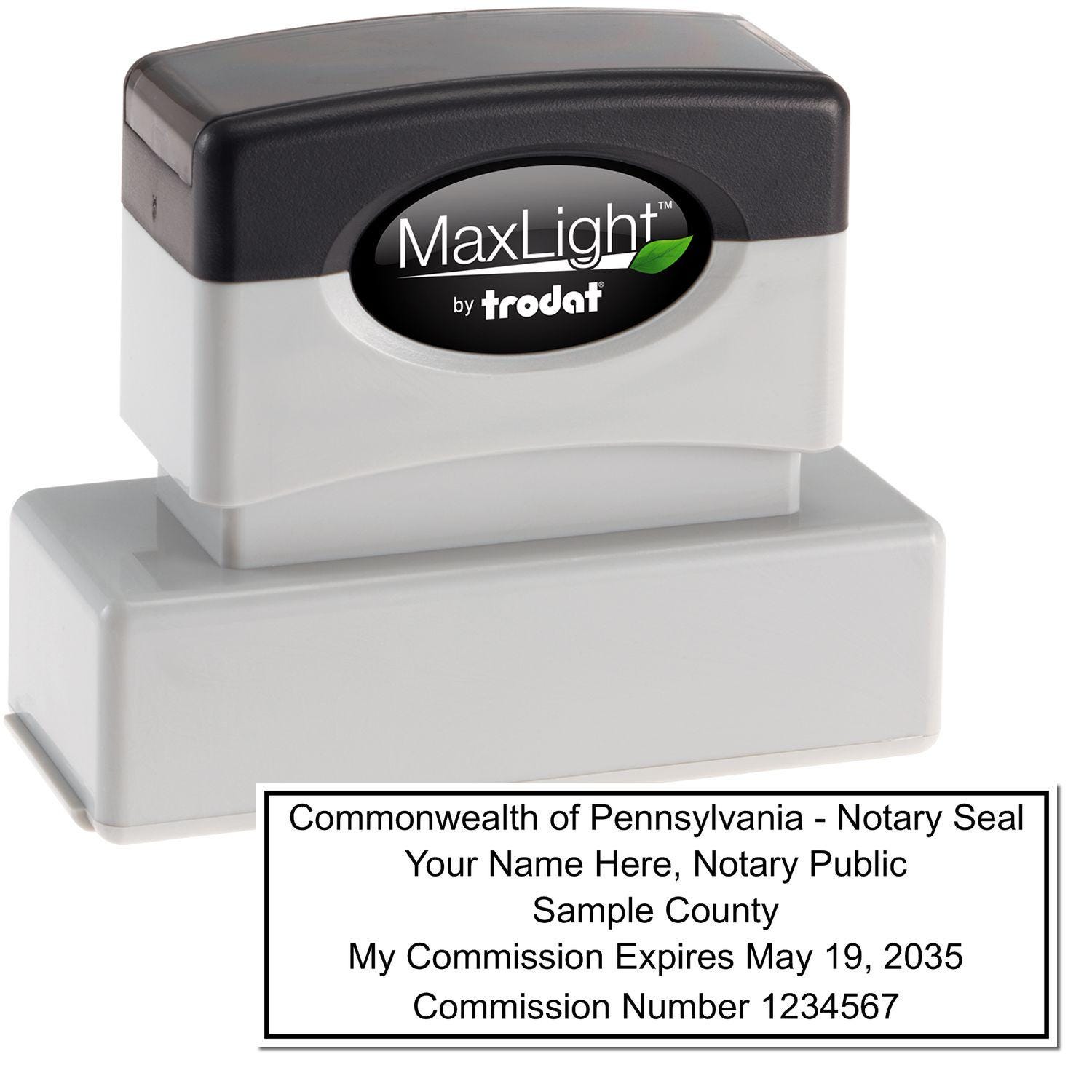
If you are a Pennsylvania Notary Public, you know how pivotal a PA notary seal can be for your day-to-day responsibilities. This small but powerful piece of equipment confirms your authority and ensures that every document you notarize meets the state’s stringent guidelines. With so much riding on a well-designed and properly used seal, you deserve clear guidance on how to choose one, how to care for it, and how to avoid common pitfalls. Below, you will find everything you need to know to make informed decisions about selecting and using your PA notary seal.
Unveil The Value Of PA Notary Seal
As a commissioned notary in Pennsylvania, you serve a critical role by verifying signatures and ensuring that legal documents are signed in an official and trustworthy manner. Your PA notary seal acts as a form of authentication. It confirms you have the state’s approval to perform notarial acts and helps maintain the integrity of each document you handle.A properly executed seal helps:
- Protect against fraud by displaying your notarial information.
- Streamline the acceptance of notarized documents in courts.
- Provide clear evidence that you notarized the document, reducing any doubts about validity.
Because of this, it is important to select a seal that meets Pennsylvania’s requirements. Your seal, along with your notary commission certificate and other essential tools, ensures you perform your duties smoothly while maintaining professional credibility.
Know The Basic Requirements
Pennsylvania’s Department of State has specific guidelines for what must appear on your notary seal. Missing or misstated information can lead to rejected documents or even potential legal implications. Understanding these standards upfront will help you remain compliant.
Required Information
Under Pennsylvania law, your PA notary seal must include:
- Your name exactly as it appears on your commission.
- The words “Notary Public.”
- The word “Commonwealth of Pennsylvania.”
- Your county of office issue.
- A border surrounding the seal.
Typically, your seal can be either a stamp or embossing seal, as long as it meets the content and layout requirements set by the state. Keep in mind that the Pennsylvania Department of State prohibits certain shapes or designs. Overly decorative or distracting elements may not be appropriate, so aim for clarity and professionalism above all.
Registration And Updating
Any time you renew your commission or make a name change, you will likely need to update your seal. The renewal process ensures the information is accurate and matches the name on your current notary commission certificate. It is best to plan for this update well in advance of your commission’s expiration date so there is no lapse in your ability to serve clients.
Choose The Right Seal
Once you understand the mandatory elements and what Pennsylvania requires, it is time to select the type of seal that works best for you. Generally, you have two main choices: a self-inking stamp or an embossing seal. Alternatively, some notaries carry both, but you might have a preference that aligns with your workflow.
Self-Inking Stamps
Self-inking stamps are popular for a reason. They are compact, easy to use, and typically come with a built-in ink pad that re-inks the die after each impression. If you plan to handle a high volume of documents in a single sitting, these stamps can be a great option. The impressions are clean, and you do not have to worry about fumbling with a separate pad.Key considerations:
- If you work in multiple settings, a stamp is portable and discreet.
- Self-inking styles reduce mess and are quickly replaced if worn out.
- Always verify the ink color requirement if there is one in Pennsylvania. Black is the most common and acceptable choice.
Embossing Seals
An embossing seal impresses a raised image onto the paper, creating a physical texture. This is a classic method many notaries still use for its elegant and timeless look. While not always required by Pennsylvania law, it can be an excellent way to further authenticate your documents.Advantages of embossing:
- Tactile, raised image that is hard to duplicate.
- Professional, traditional appearance that can complement certain official documents.
- Some clients prefer the reassurance of a raised seal (especially on significant documents).
On the flip side, an embossing seal can require more force to operate, especially on thick paper or multiple-page documents. If you frequently notarize documents at different locations, you will want to make sure your embossing seal is portable and easy to handle.
Combination Approach
Some Pennsylvania notaries keep both a stamp and an embossing seal handy. This allows you to adapt to different client needs while still fulfilling state requirements with utmost confidence. Consider whether you want a dedicated setup for each. For instance, you might use a self-inking stamp for everyday signings and reserve the embossing seal for high-priority or specialized documents.
Follow Proper Usage Steps
Once you decide which seal type to invest in, you will want to use it correctly with every notarization. Consistent usage is essential for maintaining the legality of the notarized documents you produce and for upholding your professional standards.
Position The Seal
After the signer has provided identification and you have filled in the notarial certificate, place the seal near your signature. If you plan to attach a separate acknowledgment or jurat page, ensure the seal is neatly applied in the designated area. Pennsylvania law does not specify an exact position on the document, but clarity and readability should be your top priorities.
Apply Consistent Pressure
If you opt for a self-inking stamp, press it firmly yet smoothly onto the surface. Double-check that all the text is legible. For an embossing seal, apply even pressure to create a crisp, raised impression. Always test a new seal on scrap paper before you start stamping official documents.
Record The Notarization
Your journal or record book is just as important as the seal itself. Pennsylvania, unlike some other states, strongly advises keeping a notarial journal (though it is required only if you charge fees for notarization or if you handle real estate loan or deposit account transactions). Even so, maintaining a journal is an excellent practice: if legality is ever questioned, your documented records can provide vital proof that you performed your duties accurately.
Avoid Common Mistakes
In the rush to complete numerous documents, it is easy to slip up on seal usage. However, certain errors can cause significant issues—from invalidating crucial paperwork to attracting legal trouble. Here are a few common pitfalls to watch out for.
- Skipping Essential Information
Ensure your seal molding includes every required detail. Pennsylvania requires your name, the words “Notary Public,” “Commonwealth of Pennsylvania,” your county of office issue, and a border.
- Using An Ineligible Seal
Smudged impressions or partial embossing can make your seal difficult to read. If a document’s authenticity is called into question, an unclear seal may not stand up in legal proceedings.
- Stamping Off The Page
Try to keep your seal fully on the same page as the signature. If you partially stamp on the edge, critical details might be missing—and the seal might look unprofessional.
- Not Renewing On Time
A notary commission runs for a set term. If your commission expires, you must renew it and update your PA notary seal. Failing to do so could render your notarial acts invalid.
- Improper Storage
Leaving a self-inking stamp exposed to sunlight or near heat can dry out the ink and warp its parts. Store your seal in a safe, cool, and dry place when not in use.
Rely On A Trusted Supplier
Choosing a reputable supplier is essential. You want an organization that focuses on quality and accuracy, so you can rest easy knowing your seal meets every state mandate. That is why many Pennsylvania Notary Public professionals trust Acorn Stamps. We have been family owned and operated since 1964, providing Pennsylvania notary stamps and Pennsylvania notary seals with stellar customer service for over 60 years.
When you work with us, you will experience:
- Super fast turnaround – We know you do not want to wait on critical notary supplies, so we prioritize speed without sacrificing quality.
- Precision and durability – Our stamps and seals are made to provide crisp, consistent impressions.
- Ongoing support – Clear instructions and helpful customer service ensure that you understand how to best care for your stamp or seal.
Whether you prefer the simplicity of a self-inking stamp or the traditional sophistication of an embossing seal, we have options that match your specific needs as a Pennsylvania Notary Public.
Frequently Asked Questions
Below are some of the questions we often receive from notaries who are either getting started or looking to refine their practices. These quick answers can serve as a handy reference whenever you have a doubt about your PA notary seal.
Do I Need A Stamp And An Embosser, Or Is One Enough?
Because the state’s requirement is simply that your notarial seal displays all mandatory elements in a clear fashion, using either a stamp or an embosser is usually enough. Some notaries keep both to offer clients a more professional look or to accommodate documents that call for a raised impression.
What Ink Color Is Recommended For A PA Notary Seal?
Pennsylvania does not specify a particular ink color for notary stamps. However, black is standard for readability. Always opt for an ink color that creates a clear, easily readable impression without blending into the page’s text or background.
How Often Should I Replace My Seal?
Generally, you should replace your seal if it starts producing unclear or partially missing impressions. Also, when your commission is renewed or if you change your name, you need to obtain a new seal that matches the updated information.
Where Should I Place My Seal On The Document?
While Pennsylvania does not require an exact position, place it near or around your signature so the seal is clearly associated with your notarial act. Make sure it does not overlap text or signatures in a way that makes either hard to read.
Can I Lend My PA Notary Seal To A Colleague If They Are Also A Notary?
No. Your seal is unique to your own commission and should never be lent, borrowed, or shared. Each notary needs to have their own seal for proper identification and accountability.
Wrap Up Your Notary Journey
Your PA notary seal is far more than just a stamp or an embossing tool—it stands as physical proof of your authority to act as an impartial witness within the Commonwealth of Pennsylvania. By understanding the key requirements, choosing the right style, and properly maintaining it, you ensure every document you notarize holds up to legal scrutiny and professional standards.
When you are ready to invest in a high-quality seal, consider Acorn Stamps. We take pride in working with Pennsylvania notaries to provide dependable, long-lasting solutions. Feel free to explore your options and ask questions—we are here to help you make confident decisions regarding your notary supplies. By arming yourself with the right resources, you will find it easy to perform every notarial act with absolute precision and peace of mind.