Understand Nevada Notary Stamp Basics
If you serve as a Nevada Notary Public or are preparing for your commission, you know that Nevada notary stamp requirements can seem complex at first. However, understanding these guidelines is crucial to performing your notarial duties correctly and maintaining legal compliance. In this guide, you'll learn the key components to include on your notary stamp, how to care for it, and the best practices to follow whenever you notarize a document. By the end, you’ll feel more confident about your responsibilities and ready to fulfill your role with ease.
Discover The Legal Foundations
Nevada’s regulations around notary stamps exist to ensure your notarizations are recognized as authentic. When you place your stamp on an official document, you’re formally asserting that the signer appeared before you, was properly identified, and executed the document knowingly and willingly. Recognizing the importance of this authority helps you understand why the state enforces specific requirements for your seal.
Why The Stamp Matters
- It proves the signer’s identity was verified by a notary.
- It indicates you, as a notary, are authorized under Nevada law.
- It preserves the legality of the document in courts, financial institutions, and other official contexts.
Where To Find Official Regulations
Nevada’s Secretary of State oversees notary commissions and provides the official guidelines you must follow. While the rules can change over time, the essence remains consistent: your notary stamp must conform to certain specifications regarding content and format. Regularly checking the Secretary of State’s website ensures you stay up to date on any new mandates.
Know What Must Appear On Your Stamp
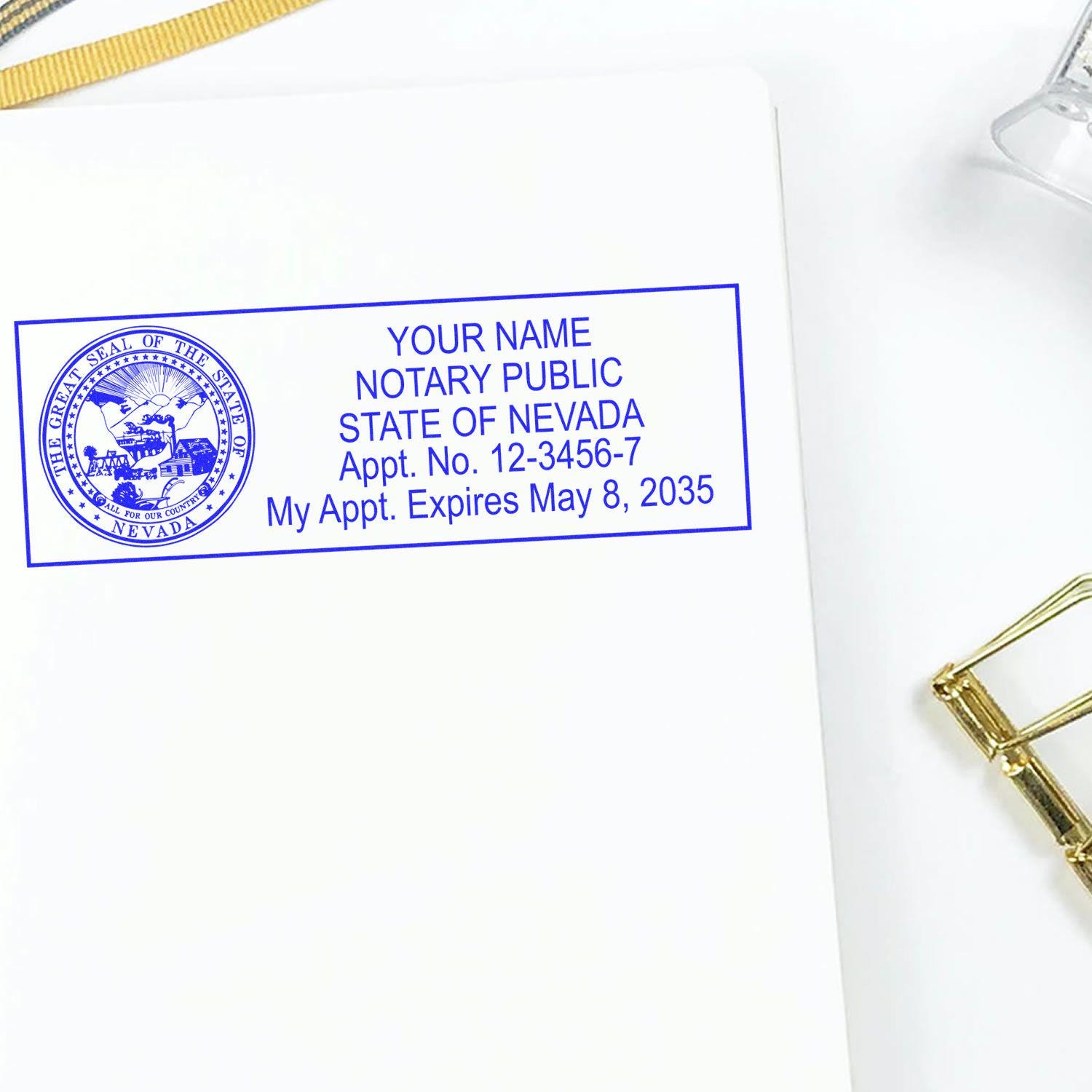
Your notary stamp isn’t just a random design, but rather a vital mark that must display specific information. Nevada notary stamp requirements typically include:
- Your Name: Exactly as it appears on your commission certificate.
- The Words “Notary Public”: Clearly indicating your role.
- Your Commission Number: Assigned by the state.
- Your Commission Expiration Date: So recipients know the stamp is valid.
Format And Design Tips
- Use a rectangular or circular shape that’s easy to read.
- Choose legible fonts. Avoid ones that might blur when you apply pressure.
- Keep text in a clear, high-contrast color such as black.
By meeting these criteria, you help guarantee your stamp will be accepted by the institutions that rely on your notarization.
Get The Right Supplies
Once you know what belongs on your stamp, it’s time to choose a supplier that understands Nevada’s regulations. Acorn Stamps has long been a trusted source for notaries seeking precise, high-quality stamps and seals. Family owned and operated since 1964, Acorn Stamps prides itself on stellar customer service and a super-fast turnaround time, ensuring you receive the perfect notary stamp in record time.
Where Quality Matters
Cutting corners on your stamp can lead to problems. Poor-quality materials might smudge or fade, causing confusion and risking the validity of your documents. In contrast, investing in a reliable supplier, such as Acorn Stamps, helps you avoid costly mistakes. You’ll get a durable product that properly displays your information for the duration of your commission.
Additional Supplies You May Need
- Embossers: Some notaries prefer an embosser for added authenticity.
- Seal Impression Inker: If you use an embosser, an inker makes it easier to photocopy.
- Extra Ink Pads: Regular refills keep your stamp crisp and professional for every document.
Use Proper Stamping Technique
Even when you have a fully compliant stamp in hand, technique matters. After all, any errors in your stamping process can make the notarization harder to read, potentially causing the document to be questioned. Follow this step-by-step guide to add your seal accurately every time.
Step 1: Verify Identity
Before you even reach for your stamp, confirm the identity of the signer. Request a valid, government-issued photo ID and compare the signature. Make sure the name on the ID matches what appears on the document.
Step 2: Confirm Willingness And Awareness
Ask the signer basic questions to ensure they understand the document and are signing voluntarily. Remember, the core role of a notary is to deter fraud by confirming the signer’s identity and intention.
Step 3: Position Your Stamp
Place the document on a flat, sturdy surface. Align the notary stamp so it rests entirely in the allotted signature space. A crooked or half-applied stamp can be difficult to read.
Step 4: Apply Firm Pressure
Press down evenly with a firm, steady motion. This helps the ink transfer cleanly. Lift the stamp straight up, avoiding any smearing.
Step 5: Review
Check that your name, commission number, “Notary Public,” and expiration date are all clearly visible, with no major smudges or missing letters.
Maintain And Replace Stamps
Your notary stamp is an everyday tool, and like any tool, it requires consistent upkeep. Regular inspections, cleanings, and timely ink replacements ensure a crisp impression. Keep track of when your commission expires as well. You’ll need a new stamp if you change your name or renew your commission.
Cleaning And Storage
- Wipe away any accumulated ink or debris on the stamp surface.
- Store your stamp in a cool, dry place to preserve the rubber and ink.
- Keep the stamp safely locked away when not in use, preventing unauthorized access.
When To Replace
- If your stamp shows signs of wear (faded impressions, partial characters, etc.).
- Whenever you receive a renewed commission number or an updated name from the state.
- If you notice uneven stamping or ink clumps that a simple cleaning doesn’t fix.
Avoid Common Pitfalls
Even experienced notaries fall into certain traps that can jeopardize a notarization. By knowing these issues beforehand, you stand a better chance of avoiding them.
Pitfall 1: Using A Non-Compliant Stamp
If your stamp lacks required elements or uses unclear text, the notarized document could be rejected. Always ensure your seal meets Nevada’s current guidelines.
Pitfall 2: Stamping Over Text
Placing your seal on top of other text can make both the stamp and the text underneath unreadable. Opt for a separate, clearly designated space to keep all details visible.
Pitfall 3: Failing To Update Expiration Dates
Your commission expiration date is a big part of your notary stamp. If you extend your commission, get a new stamp that reflects your updated expiration.
Pitfall 4: Not Logging Your Acts
Nevada law may require you to keep a journal or record book of each act you perform. Even if you have the perfect seal, failing to maintain records can create legal headaches or disputes in the future.
Recap Your Key Takeaways
- Always verify your Nevada notary stamp requirements so your stamp is fully compliant.
- Work only with trusted suppliers like Acorn Stamps to ensure clear impressions.
- Carefully apply your seal and double-check for legibility and accuracy each time.
- Stay on top of maintenance and replace your stamp whenever necessary.
- Avoid pitfalls, like stamping over text or forgetting to update your expiration date.
By following these best practices, you’ll uphold the integrity of your notarial acts and inspire confidence among the individuals, businesses, and institutions that rely on your services.
Address Common Questions
To help you feel even more prepared, here are five FAQs that Nevada notaries often have about their stamps and related procedures.
Do I need a specific shape or size for my Nevada notary stamp?
While the state doesn’t mandate one exact size or shape, your stamp must be clear, legible, and contain all required information. Most Nevada notaries choose either a circular or rectangular stamp large enough to be easily read on documents.
Can I use an embosser instead of an inked stamp in Nevada?
Nevada typically requires an inked stamp for the most straightforward compliance, though embossers can be used as an additional security measure. If you do add an embosser, remember to use a seal impression inker so the raised imprint can be photocopied.
How often should I replace my notary stamp?
You should replace your stamp when it starts showing signs of wear, such as faded impressions or missing letters. You must also replace it if your commission information changes. Keeping a reliable, up-to-date stamp ensures the validity of your notarizations.
What happens if I change my name during my commission?
Once the name change is official, you need to apply for an updated commission. After that’s approved, your new notary stamp must reflect your updated name. Using a stamp with outdated or incorrect details can invalidate your notarizations.
Why should I choose Acorn Stamps for my Nevada notary supplies?
As a family-owned business with 60 years of service (established in 1964), Acorn Stamps offers top-quality Nevada notary stamps and seals. You can expect stellar customer service, fast turnaround times, and dependable products that keep you in compliance.
Feel free to refer back to these tips and best practices whenever you have a question. Staying informed, prepared, and properly equipped ensures that each of your notarizations runs smoothly and remains legally sound.