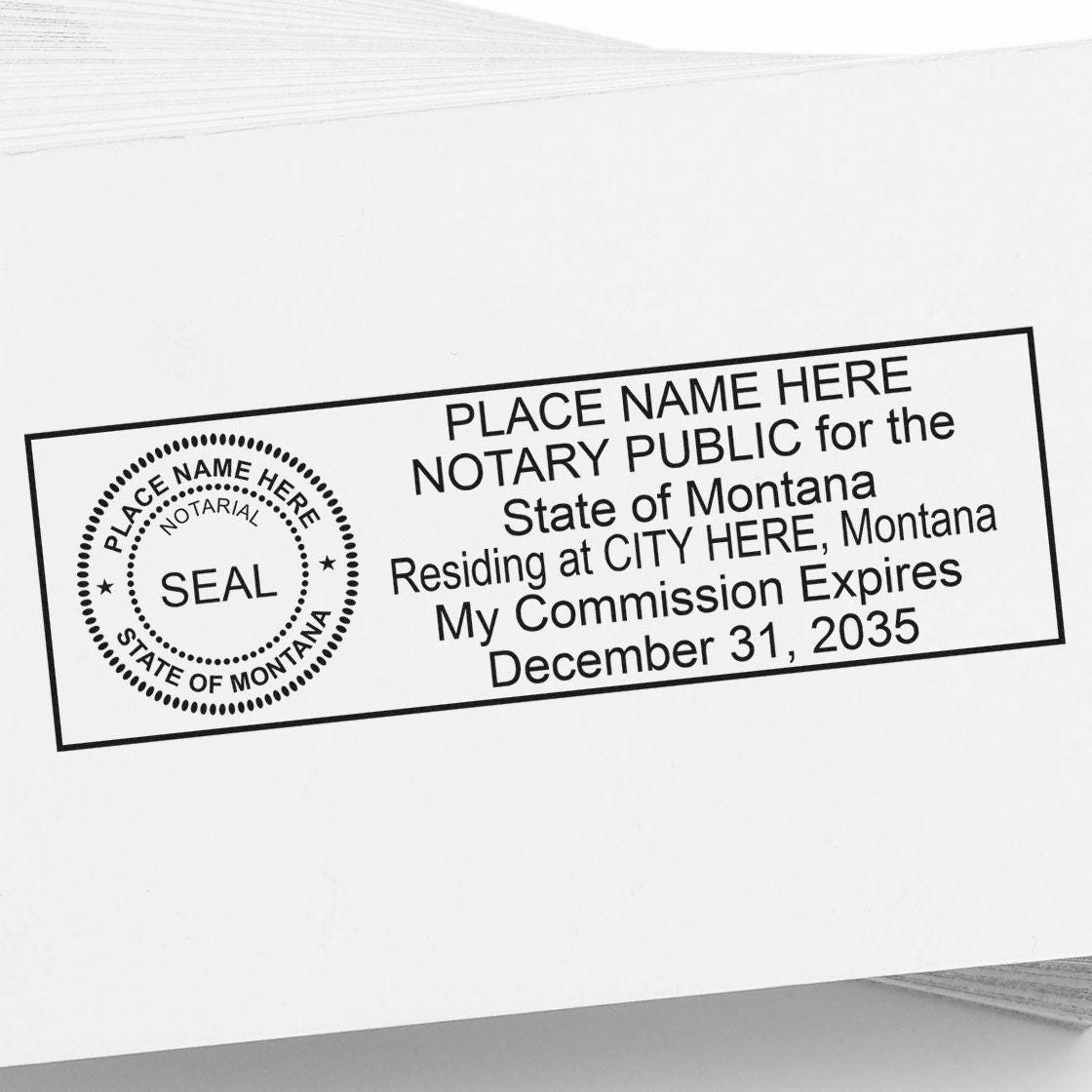
You likely already know you need a notary seal to fulfill your official duties in Montana. Yet, Montana notary seal requirements can sometimes feel confusing, especially when you are new to the process or have never purchased your own seal before. Understanding the fundamentals of how your seal should look, when it should be used, and where to obtain it can save you time, reduce mistakes, and ensure your notarial acts are valid under state law. Below, you will find an easy-to-follow guide covering everything from selecting the right seal design to proper maintenance and best practices.
Explore Montana Notary Seal Basics
Your notary seal is more than just a stamp. It affirms your authority as a commissioned notary public and adds an official mark to critical documents, signaling that you have verified identities and followed Montana’s statutes. When you apply your seal, you are certifying the integrity of each document you notarize. Because of this significant responsibility, you want to confirm that your seal meets the guidelines laid out by Montana law.
Core Function Of The Seal
A properly made notary seal ensures any recipient of a document—like a government agency, financial institution, or private business—can see at a glance that the required notarization has been officially performed. It usually includes key details such as:
- Your name (exactly as it appears on your commission)
- The words “Notary Public for the State of Montana”
- Commission expiration date
- Possibly the state seal or other design elements authorized under Montana notary seal requirements
In Montana, a notarial act is typically complete when both your signature and seal appear on the document. Always verify you have met every requirement, or your notarization might be deemed invalid.
Emphasis On Compliance
One of the most important responsibilities you have as a notary public is to stay current on state regulations. In Montana, there could be smaller updates or rule changes every few years, so keep an eye on any official announcements related to notary laws. Because your seal is a piece of official equipment, it must mirror state standards. If the text on your seal does not match your commissioned name, or if your notary commission expires, you should secure a new seal as soon as possible.
Understand Design And Wording
To ensure consistent notarial standards, Montana law outlines specific guidelines for how your seal should look and the exact wording required. This clarity is meant to prevent forgeries, confusion, or misuse.
Key Elements To Include
- Your Commissioned Name
Your name on the seal must perfectly match the one registered with the Montana Secretary of State. For instance, if you registered as “Jane A. Smith,” that is exactly the spelling and format your seal needs to display.
- Statement Of Authority
The seal generally includes the phrase “Notary Public for the State of Montana,” making it crystal clear which jurisdiction authorized you.
- Expiration Date
Many Montana notary seal requirements call for an expiration date. It helps the public know if your commission is still active. Placing this date clearly is often a legal necessity.
- Embellishments Or Borders
Some notaries prefer seals with a decorative ring or border. Others like a clean, simple format. Montana law does not usually restrict tasteful aesthetics, as long as mandatory text is present.
Customizing Your Seal
Though you must include certain text, you can add minimal personalization to your seal’s look. For example, you might choose a circular, rectangular, or oval shape. Some notaries also add a subtle color to inked stamps as allowed by law. Just confirm that any decorative elements do not overshadow the mandatory data, and remain certain your seal won’t be mistaken for another official seal used by government officers.
Place And Apply Your Seal
Knowing where and how to place your seal on documents is critical. An incorrectly placed seal might obscure text, or worse, fail to meet state guidelines.
Document Position
Aim to place your seal close to your signature but not overlapping any writing or signatures. Avoid stamping over typed text, barcodes, or important fields whenever possible. If the seal must be near a margin, confirm you have enough white space for a clear impression. Smudging or partial impressions can cast doubt on a document’s validity and require you to redo the notarization.
Timing Of The Seal
In most notarial acts, you add the seal immediately after you sign and date the certificate. This practice protects you against allegations that the seal was used improperly or at a different time. Keeping a consistent workflow—where you verify identities, review the document, sign it, and then apply your seal—reduces mistakes. If you are unsure, Montana notary laws generally recommend finalizing the notarial act in the presence of the signer.
Compare Embossers And Inked Stamps
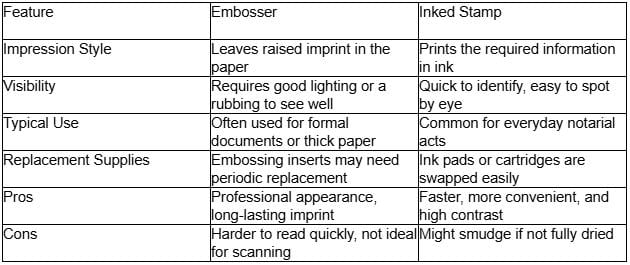
In Montana, both embossers and ink stamps are used. They each have their advantages, and some notaries even keep both on hand to accommodate different document formats or personal preferences. Before you decide, learn what sets them apart.
Choosing The Best Option
If your notarial work is largely paper-based and you often deal with official certificates, an embosser can add a classic, professional flair. However, if your clients need to scan, copy, or electronically transmit documents, an ink stamp tends to be more legible in a digital format. Many notaries favor ink stamps for daily use and keep an embosser for special occasions.
Maintain Your Notary Commission
Your commission is not forever. Montana typically requires renewals at specific intervals, and your seal’s expiration date will reflect that. Understanding how to keep your commission in good standing helps you avoid lapses that might invalidate your notarial acts.
Renewal Steps And Timing
In Montana, notary commissions generally last for four years, though this can vary. Shortly before your current commission expires, you should begin the renewal process. This might involve:
- Completing a renewal application
- Paying state fees
- Possibly revisiting training requirements
- Obtaining a new seal that shows your updated commission dates
Watch the calendar, and never notarize documents using an expired seal. Doing so could lead to legal consequences or challenge the validity of notarized paperwork.
Handling Old Seals
Once your commission is renewed and you have a fresh seal, consider the old one outdated. The typical practice is to destroy it or mark it “void” to prevent accidental reuse. Keeping outdated notary equipment around your workspace can invite confusion, especially if you handle a high volume of documents.
Partner With Acorn Stamps
An important step in meeting Montana notary seal requirements is knowing exactly where to purchase your seal. If you choose an unreliable source, you could end up with a seal that fails to meet mandatory standards or wears out quickly. At Acorn Stamps, we specialize in Montana notary stamps and seals, working closely with you to ensure everything is correct from day one.
Why Choose Acorn Stamps
- Family Owned And Operated Since 1964
We have served notaries across the country for 60 years, bringing experience and a personal touch to every order.
- Super Fast Turnaround
We know some notaries need their seals quickly for upcoming appointments or commission renewals. Our workflow is designed for efficiency without sacrificing quality.
- Stellar Customer Service
If you have questions about design, wording, or shipping options, our team is just a phone call or email away. We pride ourselves on being friendly, accessible, and solution oriented.
Our Ordering Process
- Provide Commission Details
You supply us with your name as it appears on your commission, your expiration date, and any instructions Montana law requires.
- Choose Seal Style
Decide if you want an embosser, ink stamp, or both. We offer multiple shapes and sizes tailored to the notary’s preference.
- Approve The Proof
Before finalizing production, we send you a proof or sample design to ensure the text is accurate.
- Enjoy Prompt Delivery
We ship your seal swiftly, and because we control every step in-house, you do not wait long to begin your notarial duties.
Use Practical Tips
Remaining professional, organized, and aware of compliance can make your daily notarial tasks run smoothly. Simple strategies can prevent oversights, improve your document handling, and build trust with your signers.
Organize Your Workspace
Keeping your seal, record book, and notarial certificates in one place helps you avoid a frantic search during appointments. Whether you meet signers at your office or travel to different locations, a dedicated carrying case or secure pouch can keep your notarial tools safe. This reduces the risk of losing or misplacing your seal, which could open the door to fraudulent misuse.
Keep A Notarial Journal
Though Montana law may specify particular record-keeping guidelines, maintaining a neat, up-to-date log of your notarial acts is always wise. Include details like:
- Date and time of notarization
- Type of document
- Name of signer
- Form of identification used
- Any additional notes or special circumstances
By consistently tracking these details, you reinforce the legality of your notarial acts. Should anyone question the authenticity of a notarized document, your journal (sometimes called a notary record book) offers proof of your process.
Frequently Asked Questions
Do I Need To Replace My Seal If My Name Changes?
Yes. Your commissioned name must exactly match the name on your seal. If you undergo a legal name change, due to marriage, divorce, or any other reason, you will need a new Montana notary seal right away.
What If My Seal Fails To Make A Clear Impression?
You should re-stamp the document in a correct spot that is still near your signature but does not hamper the readability of the text. If repeated attempts fail, consider replacing worn parts (for an embosser) or re-inking your stamp.
Is An Embosser More Official Than An Inked Stamp?
Both are equally legal in Montana as long as they include the required details. Some people perceive embossers as more formal, but an ink stamp is usually easier to fax, scan, or copy.
How Far In Advance Should I Renew My Commission?
Begin at least a few weeks before your current commission ends. This ensures your new commission is valid right after the old one expires, lowering the likelihood of any lapse in authority.
Can I Share My Seal With Another Notary?
No. Montana notary seal requirements specify that you alone use your seal. Each commission belongs to a single individual. Sharing a seal can lead to confusion, potential fraud, or other serious issues.
Conclusion
Your role as a Montana notary public carries significant responsibility. From verifying identities to ensuring proper execution of legal documents, you play an integral part in safeguarding public trust. Staying on top of Montana notary seal requirements is an essential component of your duties. By choosing a reputable provider like Acorn Stamps, you can confidently meet each standard, knowing your seal is accurate, durable, and made to official specifications.
Whether you prefer an embosser for traditional appeal or an inked stamp for quick and clear impressions, you have a range of trusted options to support your work. Maintain an organized workstation, keep your journal up to date, and implement each requirement diligently. With these measures in place, you can perform your notarial functions smoothly, assuring clients and colleagues that they are in reliable hands. Above all, remember your seal stands for authenticity and your promise to uphold Montana’s notarial laws. Embrace it with confidence, and continue to strengthen the important bond of trust between you and the individuals you serve.