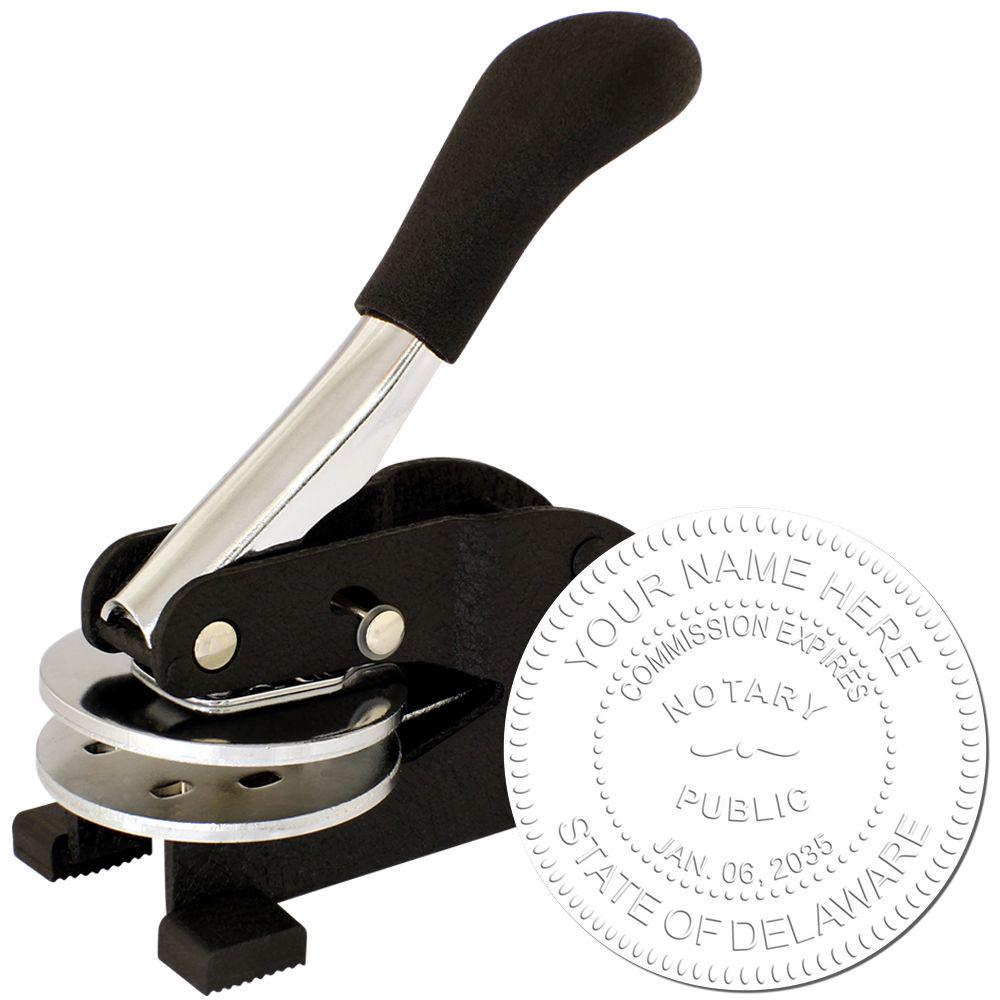
Whether you are just getting started as a Delaware notary or looking to ensure you stay in good standing, understanding Delaware notary stamp requirements is essential for your practice. Your stamp is not just a formality. It serves as legal proof of your authority to witness signatures and validate important documents. In this guide, you will learn what belongs on a Delaware notary stamp, how to use and store your notary tools, and why partnering with a reliable supplier like Acorn Stamps can make all the difference. By following the tips below, you will be ready to serve your clients and community with confidence.
Understand Delaware Notary Stamp Requirements
Knowing what the state expects from you is crucial. Delaware has specific guidelines for notary stamps because these stamps authenticate your signature and official role. If your stamp does not meet these requirements, you risk facing penalties or invalidating the documents you notarize.
The Purpose of a Delaware Notary Stamp
When you affix your stamp on a document, you are providing a clear, verifiable record of your commission as a Delaware notary public. In legal terms, your stamp:
- Confirms you are a notary in good standing with current credentials.
- Indicates the date your commission expires.
- Serves as a visible marker that helps deter fraudulent transactions.
Your notary stamp is more than just ink on a page. It carries the weight of your notarial authority in every impression you leave. If someone questions a contract or agreement, your stamp impression can offer assurance that the notarial act was performed legally.
Key Components on a Delaware Notary Stamp
To comply with Delaware standards, you need to include the following information on your stamp:
- Your Name. The name on your notary stamp must match the name on your commission.
- The Words “Notary Public.” This phrase proves your official role.
- The Words “State of Delaware.” This indicates your jurisdiction to perform notarial acts.
- Commission Expiration Date. Including this ensures anyone reviewing the document knows you held a valid notary commission on the date of notarization.
These elements help the public and legal entities immediately recognize the notarial authority behind the stamp. Make sure you double-check all information for accuracy before ordering a stamp, as even small errors can cause legal complications later.
Explore Types Of Delaware Notary Seals
Under Delaware law, your notary seal can take different forms, but the most common include both inking stamps and embossers. While each choice has its benefits, it is essential to pick a stamp or embosser that meets legal specifications and suits your workflow.
Pre-Inked vs. Self-Inking Stamps
Stamps come in two main varieties: pre-inked and self-inking. Pre-Inked StampsPre-inked stamps offer crisp, clear impressions thanks to a gel-based ink. They often last a long time before needing re-inking. If you keep up with routine maintenance, a good pre-inked stamp will often deliver uniform impressions over thousands of uses.
Self-Inking StampsA self-inking stamp delivers a fast, convenient experience. Each time you press down, the internal ink pad re-inks the stamp face automatically. Because of this feature, many notaries find self-inking stamps efficient during busy signing sessions. Over time, you can easily replace or re-ink the internal pad to extend the stamp’s life. Choosing between pre-inked and self-inking often comes down to personal preference. Either one meets Delaware notary stamp requirements, provided it shows all the mandated elements clearly.
Embossers And Their Role
Although not required in Delaware, some notaries opt for an embosser as an additional security measure. An embosser creates a raised seal on the document, making it much more difficult to forge or alter. However, because it can sometimes be harder to read or reproduce, an embosser is often used in tandem with an ink stamp. Ink stamps are usually required by lending institutions, government agencies, or other third parties that need legible verification for scanning or copying.
If you prefer using an embosser, make sure it includes all key information, just like an inking stamp. Some embossers are smaller and more portable, while others come in desk models. Whichever you choose, confirm its clarity and alignment to prevent smudges or illegible text on the raised impression.
Follow Guidelines For Proper Use
Having the right equipment is only half the equation. Delaware notary stamp requirements extend to how you use your stamp in everyday practice. From which documents require notarization to where you place the seal, proper use keeps you in line with state regulations.
When To Use Your Stamp
You must use your notary stamp every time you perform a notarial act. Common scenarios include:
- Verifying signatures on legal documents like affidavits, property deeds, or contracts.
- Authenticating sworn statements for court filings.
- Certifying copies of important records (where allowed by state law).
In Delaware, you can be held accountable if you stamp a document incorrectly or fail to include necessary details. Before stamping, verify the person’s identity, ensure they understand the document’s purpose, and confirm that they are signing voluntarily. Notaries are there to protect against fraud, so staying vigilant is part of your responsibility.
Where To Place Your Stamp Impression
Placement matters because a poorly placed stamp can lead to rejection or confusion. Typically:
- Position the stamp near your signature, but ensure it does not overlap any text.
- Keep the impression within the margins so it remains visible when scanned or photocopied.
- Avoid areas where the stamp could be partially cut off by a page edge or bound area.
Some documents have a designated “Notary Seal” box or section. If so, use that space. Otherwise, choose a clear area that will not obscure important details. Ensuring the entire stamp is readable helps everyone, from document recipients to county clerks, validate your notarization.
Maintain Your Notary Supplies
Staying compliant goes beyond initial setup. As a Delaware notary public, you also have a duty to maintain your notary seals and stamps in prime condition. Daily use, long storage periods, or even accidental drops can degrade your supplies over time.
Storing And Securing Your Stamp
Keep your notary stamp in a secure place to prevent misuse. Delaware law holds you responsible if someone else gains access and creates unauthorized notarizations in your name. A locked drawer or safe is a wise choice, especially if you work in a busy office or from a dedicated home workspace. If you have a pre-inked stamp, store it in a cool, dry environment where the ink will not dry out. Some notaries prefer a protective case to shield the stamp from dust. Embossers can also benefit from a hard-shell container to prevent accidental bending of the metal plates.
|
Renewals And Replacements
Delaware notary commissions do expire. Before your commission deadline arrives, follow the steps to renew. As soon as your renewed commission is official, you need a new stamp showing the updated expiration date. Using a stamp with an expired date may invalidate your notarial acts. Additionally, replace your stamp if it becomes worn or damaged. A distorted or faded impression can lead to rejected documents, so inspect your seal periodically. If you see any issues—like uneven ink distribution, smears, or missing text—do not wait to order a fresh replacement. Prompt maintenance helps you avoid legal or administrative complications.
Get Expert Help From Acorn Stamps
Choosing the right supplier for your Delaware notary seal is more than a convenience, it is an investment in peace of mind. After all, you rely on your stamp to authenticate critical documents. At Acorn Stamps, we have built our reputation by providing high-quality stamps and seals for notaries across the nation for over 60 years.
Our 60 Years Of Experience
Family owned and operated since 1964, Acorn Stamps has spent decades perfecting stamp manufacturing. In that time, we have helped countless Delaware notaries meet or exceed state requirements. We understand how important it is to get your details precisely right, from your exact legal name to your commission expiration date. Our long history translates to expertise you can trust.When you order from us, you can count on:
Precise Engraving And ImprintingEvery stamp we produce reflects our commitment to clarity and durability. We use top-grade materials to ensure consistency, even with repeated daily use. Stellar Customer ServiceOur friendly team is on standby to guide you. Whether you have a question about customizing your seal or need help navigating Delaware regulations, we are here to provide answers quickly. Super Fast TurnaroundBecause we know how important your stamp is to daily operations, we offer speedy production times and fast shipping. You can get back to business without unnecessary delays.
Benefits Of Ordering With Us
At Acorn Stamps, we take pride in providing a seamless buying experience for all your Delaware notary stamp requirements. Here are just a few of the benefits we offer:
User-Friendly OrderingOur simple ordering process walks you through each step so that you never worry about missing crucial details. Customization OptionsNeed a special handle style or want to pair a stamp with an embosser? We have options for every notary’s preference. Family-Owned ValuesOur dedicated team treats you like part of the family. We believe in honesty, respect, and punctuality. By choosing a reputable supplier, you reduce the risk of misprints or issues that could jeopardize the validity of your notarial acts. Plus, you can rest easy knowing your stamp meets all of Delaware’s regulatory requirements.
FAQs About Delaware Notary Stamp Requirements
Below, you will find the answers to some of the most common questions about Delaware notary stamp requirements and how they affect your everyday practice.
Do I Need To Include My Commission Number On The Stamp?
Delaware does not mandate a commission number on your stamp. However, you may choose to include it for personal record-keeping or added clarity. Always confirm the information you choose to display aligns with state regulations, focusing primarily on your name, “Notary Public,” “State of Delaware,” and the commission expiration date.
What If My Stamp Impression Is Faint Or Illegible?
If your stamp impression appears incomplete or faded, you risk having your notarized document rejected by a third party. First, check if your stamp needs re-inking or if the pad has dried out. If the problem persists, it may be time to replace it. Clear, legible impressions assure recipients that the document is valid and tamper-free.
When Should I Update My Stamp?
Update your stamp immediately upon renewing your commission or if information on the stamp changes. For example, if you legally change your name or move and need to reflect a new address, consult Delaware’s guidelines on revising your notary registration. Using an outdated stamp can lead to legal challenges and confusion.
Can I Use An Embosser Alone?
While an embosser can add an extra layer of security, many financial and government institutions require the clarity of an inked stamp for scanning or photocopies. You must have an inking stamp that meets Delaware’s legal requirements, though you can complement it with an embosser for aesthetic or security reasons.
Is There A Limit To How Many Documents I Can Stamp In A Day?
There is no fixed limit on how many notarial acts you can perform as long as you do so ethically and in compliance with Delaware law. However, you should always ensure you carefully screen signers and review the documents for each notarization to avoid any appearance of impropriety or possible fraud. By familiarizing yourself with these requirements, you are better equipped to serve your community and protect the integrity of the documents entrusted to you. Delaware notary stamp requirements aim to maintain legal clarity and protect both you and the public from fraudulent activity. With proper attention to detail, diligent storage practices, and a well-made stamp from a trusted brand like Acorn Stamps, you will have all the tools you need to perform notarizations confidently for years to come. If you have any more questions, feel free to reach out to our friendly team. We are always ready to help you thrive as a Delaware notary public.