Understand Idaho Notary Supplies
Finding the perfect Idaho notary supplies can significantly streamline your day-to-day notarial responsibilities. Whether you are just starting your journey as a notary public or you have been commissioned for years, having reliable items on hand prevents last-minute scrambles and ensures you deliver professional, accurate service. From choosing the right notary stamp to maintaining a well-organized journal, the following guide walks you through everything you need to know about selecting and using supplies in compliance with Idaho’s standards.
A solid set of Idaho notary supplies includes a few core items, such as a stamp, seal, and record-keeping log. You might also consider extras like secure storage pouches or protective cases, especially if you attend off-site signings. By investing in quality products from proven providers, you can stay confident in your work, maintain professional credibility, and uphold state regulations with ease.
Why You Need High-Quality Tools
The notary profession calls for meticulous attention to detail, so working with subpar equipment can easily result in smudged impressions, unclear seals, or incomplete documentation. Even small errors might lead to disputes or legal complications. When you are commissioning documents in Idaho, your state requires clear, legible stamps and seals to confirm the date, your official capacity, and the authenticity of the notarial act. As a commissioned notary public, it is your responsibility to adhere to state guidelines, store your supplies appropriately, and produce official impressions that cannot be questioned. This level of precision is much easier to achieve if you invest in pristine notary tools from the outset. In the long run, the peace of mind you gain from knowing your gear consistently meets state criteria is well worth the initial cost.
Key Elements of Idaho Notary Supplies
Idaho Notary Stamp
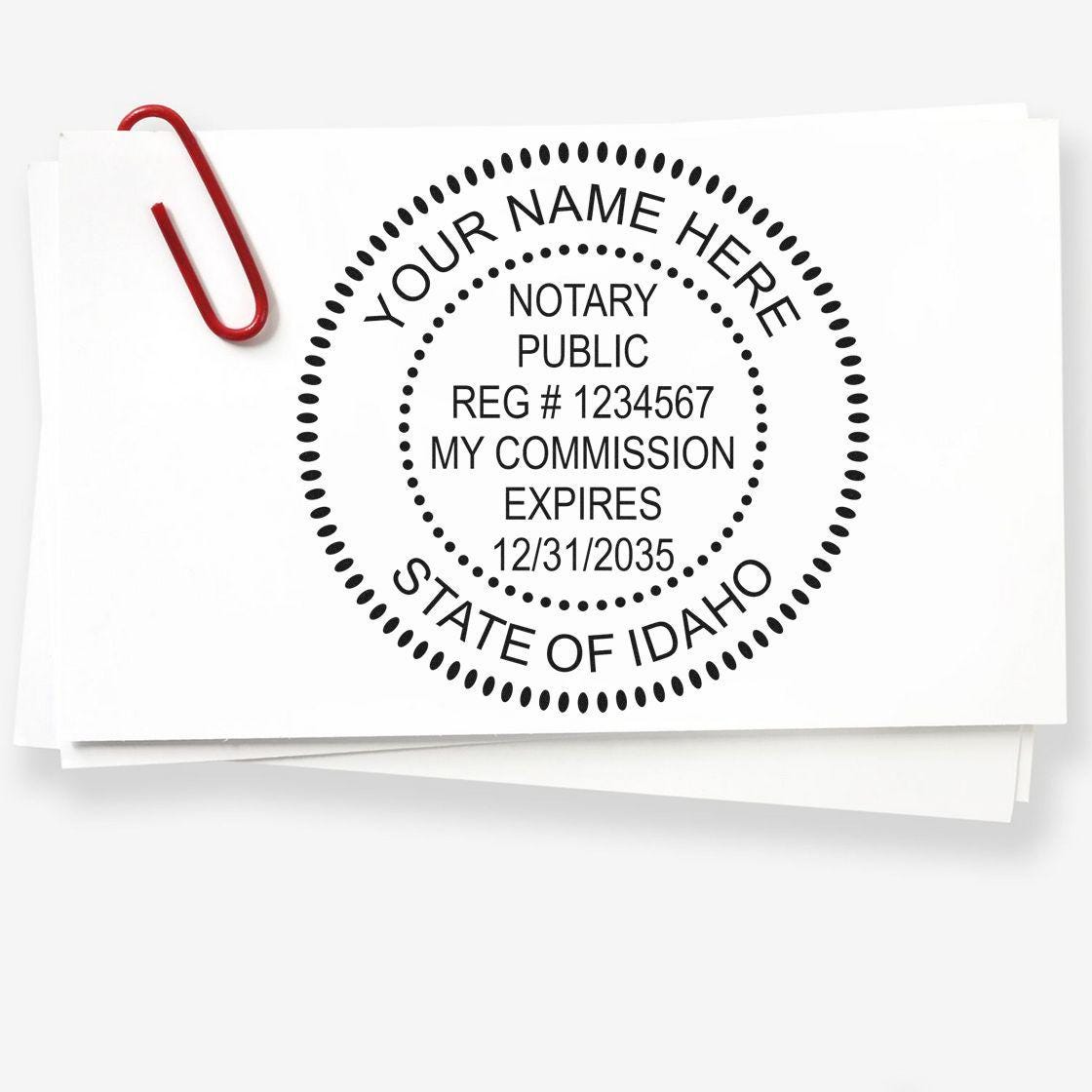
Your Idaho notary stamp is one of your most important tools. By law, this stamp holds key identifying information, such as your name, “Notary Public,” “State of Idaho,” and the commission expiration date. When deciding on the right notary stamp:
- Opt for a crisp, clean impression. Stamps with fresh ink and sharply cut rubber ensure no portion of the text smears or fades.
- Look for ergonomic design. Since you might use the stamp multiple times a day, an easy-grip model helps reduce hand strain.
- Choose fast-drying ink. This helps prevent smudging on documents and keeps your workspace tidy.
When shopping, you may come across different mount styles, including self-inking, pre-inked, or traditional rubber stamps. Each style has pros and cons, but self-inking and pre-inked typically offer a cleaner result and quicker use.
Idaho Notary Seal
Many notaries choose to have an embosser (also called a notary seal) in addition to the inked stamp. While Idaho primarily relies on the inked stamp for official acts, an embossing seal can add a professional touch to certain documents. It also serves as an extra measure of security, helping recipients confirm that an official notarial act took place.
- Consider a handheld embosser if you often travel. These portable seals are compact and easy to carry.
- If you frequently work at a desk, a desktop embosser offers more stability and can produce higher-quality impressions.
- Look for comfortable handles and a design that allows for consistent embossing pressure.
If you decide to include an embosser in your toolkit, ensure that your primary notary stamp still complies with Idaho’s legal requirements. The seal should act as a supplementary tool rather than a replacement for the inked impression.
Notary Journal or Record-Keeping Log
While Idaho does not currently require journals in every instance, maintaining a notary journal or record-keeping log is considered best practice. It gives you a clear, chronological record of each transaction and helps protect you against potential disputes or allegations down the line.
- Aim for a sturdy hardcover journal that will not easily bend or tear.
- Look for pre-printed columns that prompt you to capture essential details, such as signer names, document types, and dates.
- Store your journal securely when not in use. Use a locked cabinet or similar protected space to keep records safe from unauthorized access.
By logging every notarial act, you have a reliable, official reference that ensures transparency. If questions arise about a particular document, the journal can confirm the identity of the signer, the date of notarization, and any other crucial factors.
Additional Helpful Tools
Beyond the basics, a few other items can make your work smoother:
- Protective Case: If you travel often, a small lockable pouch or case is handy for storing your stamp, seal, extra ink, and journal.
- Extra Ink Cartridges or Ink Pads: Be prepared for busy periods by having a backup supply.
- Pen Set: A good pen with a comfortable grip prevents handwriting fatigue during long signing sessions.
- Office Supplies: Keep paper clips, sticky notes, and other simple resources on hand for quick document organization.
Considerations When Purchasing Your Supplies
Quality and Durability
Because accurate completion of notarial acts relies so heavily on your equipment, it is worth investing in durable, high-quality items. Cheaper stamps may wear out faster, causing you to continually replace them. Meanwhile, an expertly crafted stamp consistently produces a clear impression and saves you from the frustration of partial or faded prints.The same logic applies to embossers, journals, and other accessories. You want these items to last through countless transactions while still looking presentable and functioning reliably. By focusing on durability, you reduce the long-term costs and hassle of frequent replacements.
State Compliance
Idaho has clear guidelines for notaries, particularly regarding the information that must appear on your notary stamp. Remember that official acts you perform using an outdated or incorrect stamp may be challenged. Before ordering any new notary supplies, double-check your commission details to ensure accuracy. If your commission is set to expire soon, or if your name or address has changed, update all relevant details before placing an order.
Brand Reputation
When you are ready to buy, consider ordering from a reputable supplier like Acorn Stamps. Family owned and operated since 1964, Acorn Stamps brings 60 years of service to the notary field. They specialize in Idaho notary stamps and Idaho notary seals, so you can trust them to deliver tools that meet all state requirements. Stellar customer service sets them apart, along with super fast turnaround times that get your supplies to you promptly.If you have questions about which notary stamp style is right for you, or if you want advice on an embosser versus a rubber seal, a reliable supplier will guide you step by step. Their knowledgeable staff helps you make the best choice for your specific situation, ensuring your supplies align with Idaho laws and your daily workflow.
Cost vs. Value
While cost is an understandable concern, do not let a lower price tag be your sole deciding factor. Cheap supplies might break easily or produce poor impressions, leaving you to replace them sooner than expected. Consider your purchase an investment in a vital professional resource. Quality notary tools do not just help you avoid complications, they also enhance your credibility with clients.
Steps to Maintain Your Supplies
1. Store and Transport with Care
Proper care is crucial if you frequently travel to notarize documents. For items like your notary stamp or embosser, invest in a protective pouch or container that shields them from extreme temperatures or rough handling. Travel can cause ink to leak or the metal components of an embosser to bend if you are not careful.
2. Schedule Routine Checks
Once every few weeks, inspect your stamp for wear and tear. If you notice the impression is starting to fade, it is time to replace or refill the ink pad. For an embosser, double-check that the plates are aligned correctly to avoid crooked or incomplete impressions.A consistent maintenance schedule helps you catch issues early, preventing mistakes that might invalidate a notarial act. Additionally, it spares you from an unfortunate situation where you discover a faulty stamp only after you need it for time-sensitive documents.
3. Refill Ink Promptly
Self-inking and pre-inked stamps eventually require refills. Running your stamp too low on ink can result in patchy prints. Stock up on the recommended ink refills when you make your initial purchase, so you can refresh the pad right away if it begins to dry out. Follow the manufacturer’s instructions to avoid overfilling and to ensure the new ink is correctly absorbed.
4. Keep a Clean Workspace
While not specific to Idaho notary supplies, maintaining a neat workspace lowers the risk of mixing up documents or transferring dust and debris to your stamp or journal. Wipe your desk regularly and store your notary items in a drawer or cabinet for easy access. If you handle multiple clients a day, take a moment between appointments to tidy up, replenish pens, and align your stamps and seals so you can continue to perform your duties efficiently.
5. Update Supplies Upon Commission Renewal
Idaho has set renewal periods for notary commissions. Each time you renew, you will receive updated commission dates that must appear on your stamp. Ensure you update your notary stamp as soon as you receive your new commission information. Continuing to use an outdated stamp could jeopardize the legality of your notarial acts. It is also a great time to replace any items that have seen significant wear over the previous term, giving you a fresh start for the new commission period.
Tips for Working Efficiently
Combining reliable supplies with good organizational practices will boost your efficiency:
- Prepare Documents in Advance: Whenever possible, review documents for each signing session beforehand. Proper pre-reading helps you identify where stamps and signatures are needed, minimizing mistakes.
- Create a Handy Checklist: Jot down the steps required for a correct notarization—verifying identity, witnessing signatures, applying your stamp, and logging the event. This ensures you do not overlook any critical element.
- Keep Backup Options: If your main stamp suddenly malfunctions or runs out of ink, having a secondary stamp or refill pack on hand can save the day.
- Look for Education Opportunities: Even beyond your initial notary training, consider periodic refresher courses on Idaho’s notarial laws. Updated knowledge, combined with robust supplies, keeps you at the top of your field.
Work with a Trusted Supplier
When you choose to order from a company like Acorn Stamps, you benefit from decades of experience in the notary supply business. Because they specialize in Idaho notary stamps and seals, they have a thorough understanding of both practical notary requirements and any unique state standards. Their family-run operation takes pride in delivering items that are carefully crafted for clarity, durability, and professional appearance.
If you ever face questions about your notary tools—like whether you need an embosser or the best way to refill a certain type of stamp—their customer support team is on hand to help. Stellar service from start to finish ensures you are never left in the dark. By relying on experts for your supplies, you spend less time worrying about compliance details and more time focusing on providing exceptional service to your clients.
Frequently Asked Questions
Are Idaho notaries required to use an embosser in addition to a stamp?
Idaho primarily relies on an inked notary stamp for official documents. An embosser is not strictly required, but many notaries choose to use one as a supplement for added professionalism and security.
How often should I replace my notary stamp ink?
It varies based on how frequently you perform notarizations. Regularly inspect your impressions, and if you notice fading or patchy prints, refill immediately. Keep extra ink on hand to avoid interruptions.
My stamp design needs to include my commission details. Can I buy a stamp before my license arrives?
It is best to wait until you have your official commission information, including your expiration date, to ensure the stamp is completely accurate. Using an incorrect stamp could invalidate your notarial acts.
Can I store my notary journal electronically instead of using a physical book?
Idaho does not have strict requirements for notary journals, but maintaining a physical log is often recommended as a fail-safe, especially if you encounter technical issues. Combining both digital and paper records can offer maximum security and convenience.
What if my notary supplies do not arrive in time for my first notarization?
Delays are frustrating, but reputable suppliers like Acorn Stamps pride themselves on a fast turnaround time. If you need to handle a notarization before your supplies arrive, see if you can reschedule or make other arrangements. Using any unauthorized stamp could lead to complications.
Ensuring professional standards is easier when you work with the right Idaho notary supplies. From stamps and seals to recorded logs and beyond, investing in sturdy, compliant tools sets a solid foundation for your notarial services. Remember to maintain your supplies, store them properly, and stay aligned with any updates to Idaho’s notary regulations. By doing so, you can give your clients confidence in every document you handle. With dependable gear at your side and an organized approach to commissioning, you will find that providing top-tier notarial services in Idaho becomes second nature.