Discover FL Notary Supplies
If you are just starting your journey as a Florida Notary Public, you have probably noticed references to “FL notary supplies” in just about every training manual and forum. These supplies are more than simple office items. They are a critical part of your role in ensuring that documents are validated correctly and in compliance with state law. Having the right notary tools helps you protect yourself, maintain accurate records, and serve clients effectively. You do not have to spend a fortune or be overwhelmed by all the choices out there. In this guide, you will learn about each essential supply, why it matters, and where you can find dependable options to kick-start your notary work.
Understand The Basics Of FL Notary Supplies
Before diving into specific items, it is a good idea to get a handle on what notary supplies include and how they differ from standard office gear. You may already own plenty of stationery, but dedicated notary tools have unique legal requirements and specifications.
How Notary Supplies Differ From Regular Office Items
- They are designed to meet state standards: Florida has particular rules that notary stamps, seals, and acknowledgments must follow for legal documents.
- They help you stay compliant: If you use tools that do not meet Florida’s guidelines, you risk invalidating notarized documents.
- They protect you from possible legal issues: Properly maintained notary supplies can safeguard you in cases of fraud or disputes over authenticity.
Even if you have a small home office, you will want to set aside a dedicated space for your notary materials. This approach helps you stay organized and prevents non-notary items from getting mixed in with important documents.
Why You Need The Right Tools
The notary process is about trust and credibility. When your clients hand you a document to be notarized, they trust you to confirm identities, ensure the document is genuine, and add your official stamp or seal. Reliable supplies can mean the difference between a smooth, professional experience and a situation where a document gets rejected by a bank, court, or other authority.
Elevate Your Professional Image
As a new notary, you may already be wearing multiple hats. Perhaps you are a real estate professional, a paralegal, or even running a mobile notary service out of your car. Regardless of your background, professional-grade notary supplies display competence. They show your clients they can rely on you.
Prevent Costly Mistakes
Florida has stringent rules for verifying identities and recording notarizations. Without the right tools, common pitfalls include:
- Using a notary stamp that has missing or outdated information.
- Failing to properly complete your notary certificate or acknowledgment forms.
- Mixing up your records due to poor organization.
When you invest in the correct supplies, you minimize errors, rejections, and potential legal troubles down the road.
Must-Have FL Notary Supplies
Getting started with Florida notary supplies does not have to be complicated. Focus on the core items first. Once you have a strong foundation, you can add other helpful tools based on your specific workflow.
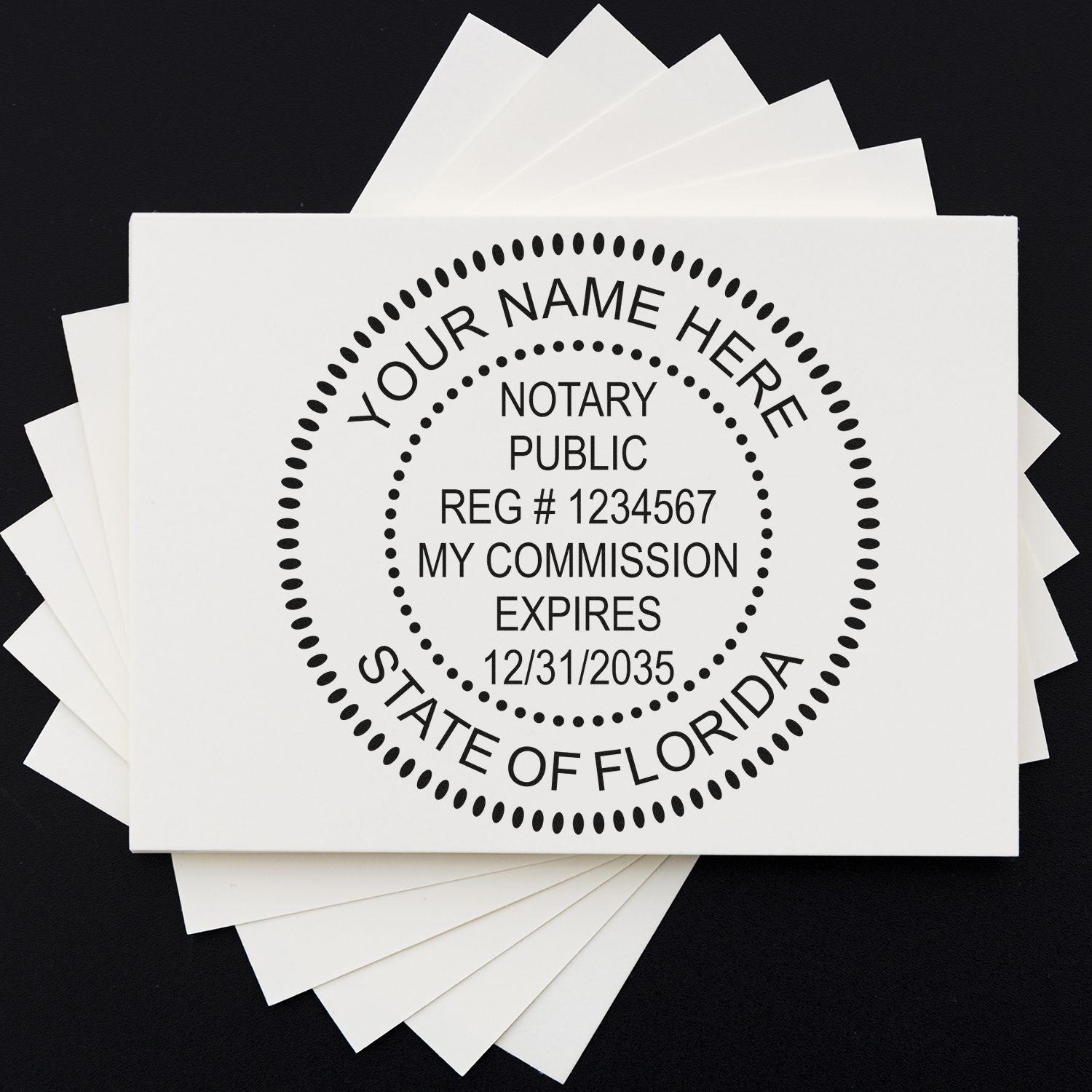
Florida Notary Stamp
Your notary stamp is the single most recognizable part of your toolkit. In Florida, the official notary seal must contain:
- Your name as it appears on your commission.
- The words “Notary Public, State of Florida.”
- Your commission number and commission expiration date.
This stamp shows that you have the state’s authority to officiate the signing of documents. Always make sure it is clear and legible. A faded or blurred stamp might cause issues when a notarized document is reviewed or filed.
Florida Notary Seal (Embosser)
While Florida primarily relies on ink stamps, an embosser can add an extra layer of authenticity. An embosser raises the paper, creating a visible and tangible imprint. Although Florida does not strictly require an embosser, many notaries choose to keep one on hand for clients who prefer a more traditional or formal look. An embosser is particularly useful if you deal with high-end legal documents or estate planning materials.
Notary Record Journal
A notary journal, also called a record book or register, is not mandated by Florida law. However, best practices strongly recommend keeping one for every notarization you perform. In your journal, you note the following:
- Date and time of notarization.
- Type of document.
- Names and signatures of all signers.
- Type of identification presented.
- Any special circumstances or comments.
If a signing is later disputed, the journal provides evidence to back up your actions. It is also an excellent resource to remind you of past signings, both for your own tracking and for any supervisory audits that occur.
Certificates And Acknowledgment Forms
Sometimes, a document will not include the Florida-specific language needed for a valid notarization. In these cases, you will need separate certificates or acknowledgment forms that you attach to the original document. These forms precisely detail the:
- Signer’s name.
- Date of notarization.
- Location and statement of what is being notarized.
- Your printed name, signature, and seal.
Stocking up on these forms can save you from scrambling when a client shows up with documents missing essential text.
More Essentials To Consider
Beyond the items that Florida law requires or recommends, there are a few additional tools that can help you run your day-to-day notary practice more smoothly.
Notary Bag Or Case
A designated notary bag or case helps you keep everything together, especially if you are offering mobile services. You can store your stamp, seal, journal, certificates, and even a few pens. If you frequently travel to your clients’ homes, offices, or hospitals, a sturdy carrying case ensures your supplies stay in good condition.
Quality Ink Pens
As trivial as it may seem, investing in reliable pens can make your signing process simpler. Look for pens that do not smudge, and keep extras on hand to avoid hiccups. Different signers may prefer different pen thicknesses or ink colors, so having options on hand sets a professional tone.
Embosser Vs. Self-Inking Seal
You might wonder which option to use if you are deciding between a traditional seal embosser or a modern self-inking stamp. In Florida, the self-inking stamp is more common for official notarizations because it provides the state-required information in a clear, standardized format. The embosser, meanwhile, can serve as a decorative addition or a backup for certain documents. You can also find combination products if you prefer to have both styles in a single tool.
Locking Storage
In Florida, you are responsible for the safekeeping of your stamp and seal. A small lockbox or lockable desk drawer is often recommended to keep these items secure, preventing unauthorized individuals from using them. If you misplace your seal, you could face serious liability issues if someone uses it fraudulently.
Where To Find High-Quality FL Notary Supplies
You can pick up basic items in a standard office supply store, but not all vendors specialize in meeting Florida’s specific notary requirements. That is where Acorn Stamps shines. Known as a top supplier of Florida notary stamps and Florida notary seals, Acorn Stamps has been family owned and operated since 1964, offering over 60 years of dedicated service.
Why Consider Acorn Stamps
- Stellar customer service: If something is not perfect with your notary supplies, you can expect quick responsiveness and a simple replacement or repair process.
- Fast turnaround: As a new notary, you want your stamp and seal as soon as possible. Acorn Stamps understands your needs and ships orders out quickly.
- Compliance with Florida law: Items sold are properly formatted with the correct expiration date line, commission number, and required Florida notary wording.
Whether you need one stamp for your daily notary tasks or plan to stock up on a full kit, working with a reliable supplier ensures you never have to worry if your tool is up to par.
Best Practices For Using Your Supplies
Once you have your FL notary supplies in hand, the next step is implementing good habits. You might be notarizing for family and friends, planning to expand your services as a side business, or working in an office where notarizations are part of your daily tasks. Whatever your goal, these best practices will give you a solid foundation.
Store And Maintain Stamps Properly
- Keep your stamp in a cool, dry spot to extend the life of the ink.
- Periodically test the imprint by stamping on scrap paper. If the imprint looks faded, re-ink or replace the pad if you have a self-inking stamp.
- Shield it from direct sunlight. Excess heat can dry out the ink quickly.
Secure Your Notary Journal
Treat your notary journal like a confidential record. Storing it with your other sensitive documents is a good practice. Never leave it lying around where personal information can be viewed by strangers. If you use a digital notary journal, apply secure passwords and follow any encryption policies.
Double-Check Document Requirements
Every time a client brings you a form, glance through the document to confirm:
- The correct notarial certificate is present.
- The document is complete—no blanks or missing pages.
- The signer’s name in the document matches the identification they provide.
If you notice any discrepancies, clarify them with the signer before applying your seal and signature.
Keep Up-To-Date With Regulations
Florida laws regarding notarial acts can change over time. Make it a habit to check the State Department’s website or sign up for official notices. You might find updated forms, new training modules, or changes in electronic notarization rules.
Present A Professional Attitude
Whether you work from your living room or travel to luxury high-rises, showing professionalism can boost your notary business. Dressing neatly, being punctual for appointments, and understanding Florida’s rules will make clients trust you and recommend you to others.
FAQs
Below are answers to five common questions you might have as you start gathering your FL notary supplies:
How Quickly Can I Receive My Florida Notary Stamp?
Many suppliers offer different shipping methods. At Acorn Stamps, you can expect a fast turnaround time, often within a few business days, so you can begin notarizing as soon as possible.
Do I Need Both A Stamp And An Embosser?
Under Florida law, an embosser is not required. Only an ink stamp is mandatory. However, some new notaries use an embosser for aesthetic reasons or to provide an additional mark of authenticity.
How Often Should I Replace My Ink Pad?
This depends on how frequently you notarize. If you notice your stamp impression becoming faint or blurry, it may be time to re-ink or replace the pad. Always test the stamp on a scrap piece of paper before conducting an official notarization.
Is A Notary Journal Required In Florida?
No, a notary journal is not legally mandated in Florida. However, it is strongly recommended for recordkeeping and legal protection. If a notarization is challenged, a journal entry may be your best defense.
Where Can I Buy Reliable FL Notary Supplies?
You can explore local office stores, but specialized vendors like Acorn Stamps ensure that products meet Florida’s specific guidelines. Plus, you will gain peace of mind knowing that any questions or concerns can be addressed by their knowledgeable team.
By choosing the right FL notary supplies from the start, you unite convenience, professionalism, and state compliance in your daily work. From your Florida notary stamp to your record journal, each tool in your kit supports the critical role you play in validating legal documents. With a trusted supplier like Acorn Stamps, you will be well-prepared to handle the responsibilities of being a Florida Notary Public for years to come.