Natural disasters. Life changes. Legal documents. Whatever the reason, your Alabama notary commission comes with important responsibilities—including following Alabama notary stamp requirements. Understanding these rules is crucial to performing your duties correctly and maintaining the integrity of each notarized document. Whether you recently received your notary appointment or have years of experience, staying in compliance protects both you and those who rely on your services.
Below, you will find what you need to know about Alabama notary stamp requirements, from ordering the needed supplies to using and caring for your seal. You will also see tips for renewing your license and keeping up with any legislative changes. By the time you finish reading, you will be ready to confidently fulfill your notarial responsibilities and serve your community with complete peace of mind.
Understand Alabama Notary Stamp Requirements
In Alabama, the law requires notaries to use a seal or stamp that makes their status official on every notarized document. This seal is not just a decorative piece—it confirms your identity, your authority to sign, and the authenticity of the notarized papers. The state has guidelines on how your official notary stamp should look and what it should include to be valid.
- Make sure your full name appears exactly as listed on your notary commission.
- Include the words “Notary Public” and “State of Alabama.”
- Use a legible design that is easy to read on paper and on copies.
While the law does not strictly dictate an exact shape or size, your stamp must be clear enough so that anyone reviewing the notarized document can read every detail.
Recognize The Purpose Of Your Official Seal
Your Alabama notary seal proves that you have the authority to act as an impartial witness in legal and administrative matters. Think of it as your personal identification in the notarial world. When you press the stamp onto a document, you:
- Validate your identity as the notary public.
- Confirm that the signature on the document has been witnessed or recognized.
- Signal that the document was properly executed according to state laws.
Because it serves such a crucial function, the seal should remain under your control at all times. That means not lending it to colleagues or leaving it unattended in open areas. Whenever someone sees your notary seal, they should be confident it came from you alone.
Explore The Required Elements
If you are new to notary work, it can be challenging to keep track of the required elements that must appear on your stamp. Here are the basics that Alabama typically requires: Your Name:
- The name on your notary commission should match your seal exactly. Even minor typographical differences can cause confusion.
The Words “Notary Public” and “State of Alabama”:
- Including these phrases ensures anyone reading the imprint knows you are officially appointed in Alabama.
Optional Details:While not always required, some notaries choose to include their commission expiration date. This optional element lets people know the exact period of your validity. However, you should confirm whether your county probate judge expects the date or not. Legibility:A crisp, readable stamp is essential. Faint or smeared impressions might raise doubts about the document’s authenticity, especially if it is subject to scrutiny in court or by another state agency. Different stamp manufacturers offer unique layouts, fonts, or design flourishes, but the core elements must remain. Before making your purchase, cross-check that all Alabama notary stamp requirements are met.
Choose Between Stamp And Embosser
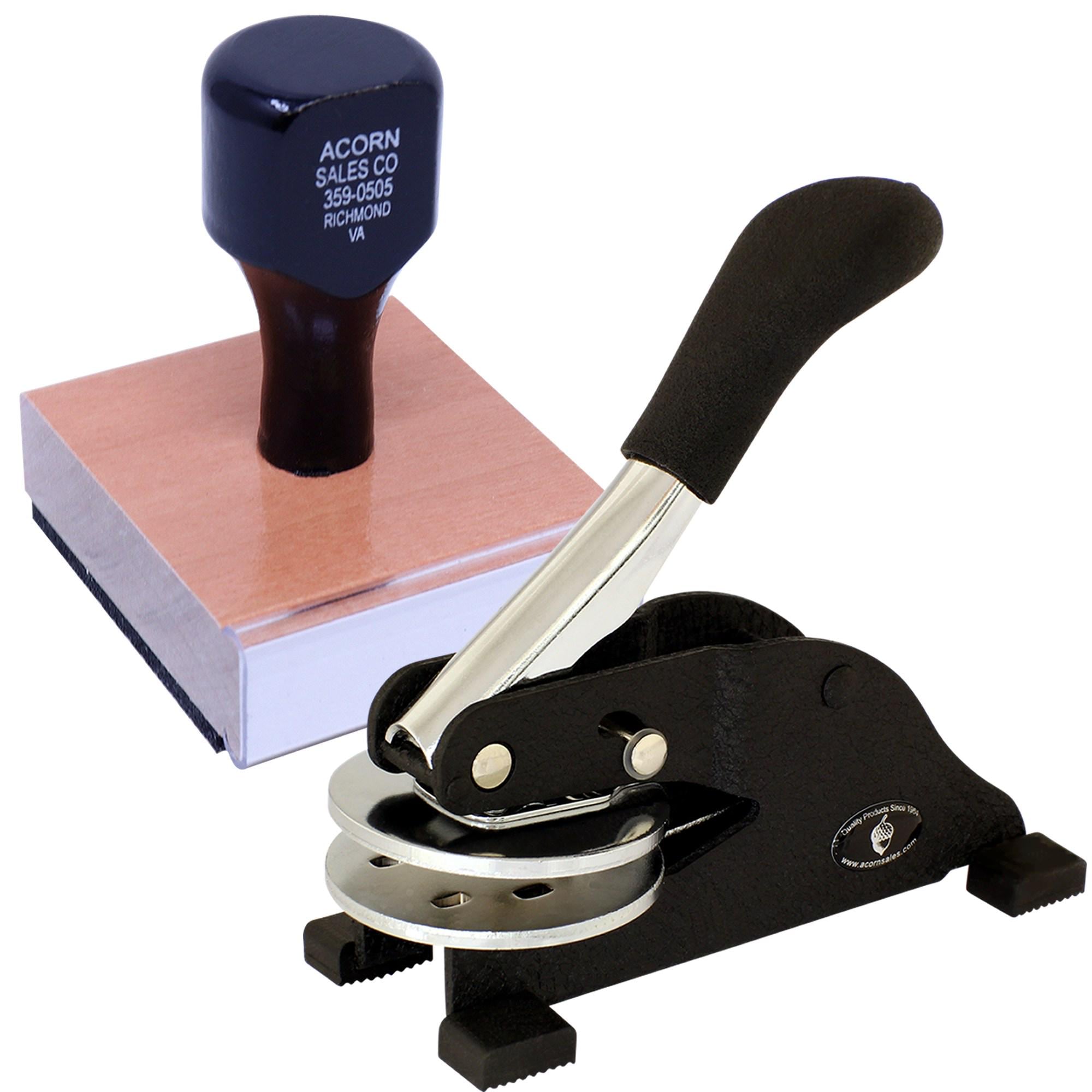
As a notary in Alabama, you can have a rubber stamp or an embosser—or both. Each tool is acceptable, as long as you meet basic Alabama notary stamp requirements. However, your choice may hinge on factors such as portability, clarity of the impression, and personal preference.
Notary Stamp
A self-inking or pre-inked rubber stamp is quick and convenient. You press down, and the design transfers onto the document. Rubber stamps are typically:
- Compact enough to fit in your bag or desk organizer.
- Easy to use with minimal pressure.
- Available in various ink colors (though most notaries choose a dark color like black or blue for clarity).
If you notarize documents frequently throughout the day or travel between different offices, a notary stamp can feel much more efficient than an embosser.
Notary Embosser
An embosser creates a raised impression on the paper itself. While it may not always reproduce well on photocopies, embossers are traditionally recognized as a classic mark of authenticity. Many Alabama notaries keep an embosser on hand for formal events or clients who expect that classic, embossed look. Embossers can be:
- Sturdy, though sometimes a bit larger to carry around.
- Eye-catching, with a distinctive raised seal in the paper.
- Seen as iconic, evoking a sense of tradition and formality.
You might choose to have both a stamp and an embosser, using one as your primary tool and the other for special circumstances. The key is ensuring each tool clearly shows all required elements.
Follow Proper Usage And Care
Owning your official seal means you also take on certain responsibilities for its use, storage, and maintenance. Preserving your stamp’s quality extends its life and keeps your notarial acts reliable. Follow these tips for best results: Test On Scrap PaperBefore stamping an important document, practice on a spare piece of paper to ensure the ink (or embosser impression) is clear. This simple step can prevent costly errors on official papers. Apply Moderate PressureWith a rubber stamp, pressing too lightly or too forcefully can produce smears or missed spots. For embossers, squeeze firmly but evenly to get a crisp raised design. Clean RegularlyStamps can collect dust or dried ink over time, which leads to dull impressions. A quick wipe with a soft cloth can remove debris without damaging the surface. Store In A Secure SpotAvoid tossing your stamp in the bottom of a cluttered drawer. Keep it in a case or designated area so it does not accidentally fall into the wrong hands or become damaged. Replace Worn PartsOver time, ink pads need refilling or replacement. Embossers may need cleaning or part replacements. Do not wait until impressions are almost unreadable to update your supplies. Consistent care will extend the life of your seal and safeguard the integrity of your notarial acts.
Trust A Reliable Supplier
When you shop for an Alabama notary stamp, you want confidence that you will receive a product that meets all state requirements. This is where choosing the right supplier matters. At Acorn Stamps, we pride ourselves on delivering top-quality Alabama notary stamps and seals that comply with state specifications. We are family owned and operated since 1964, offering more than 60 years of service, super fast turnaround, and stellar customer care. The convenience of ordering from a specialized supplier can spare you the hassle of verifying each strategic detail on your own. With Acorn Stamps, you can trust that your seal will match the name and title on your commission precisely, making it easier for everyone to recognize its authenticity.
Stay Informed About Renewals
Your notary commission is not a lifelong credential. You will need to renew your appointment according to Alabama’s schedule, and that usually involves applying through the local probate judge’s office. Once approved:
- Update your notary commission end date on your stamp if you have included it.
- Ensure your new commission certificate is on file with the appropriate county office.
- Review any new guidelines or legislative changes that have come into effect since your last renewals.
Sometimes, regulations do change. Alabama notary laws might be updated to reflect new security measures, record-keeping requirements, or even a new design standard for stamps. Check with the Secretary of State’s website or consult your county for any changes you should be aware of. Staying current on legal shifts helps you avoid unintentional mistakes down the line.
Consider Electronic And Remote Notarizations
With technology advancing, remote online notarization has become a topic of interest in many states. Alabama continues to evaluate different interoperability and security features, but it still primarily relies on in-person notarial acts. Nevertheless, it is worth staying informed about these developments, because if the state adopts broader remote notarization measures in the future, there could be specific guidelines around digital seals or e-signatures. Even if you do not plan to offer remote services, the world of e-notarization can affect you if clients or partner agencies look for flexible options. As with any notary-related change, new legislation might dictate updates to your notary tools or the addition of specialized software.
Apply Good Record-Keeping Practices
In Alabama, notaries are generally advised (but not strictly required) to maintain a journal of their acts. This can protect you from disputes or allegations of wrongdoing. Plus, it can serve as a handy reference if a question about a notarized document ever arises. Here are a few tips:
- Make consistent entries.
- Note the type of act performed (acknowledgment, jurat, signature witness, etc.).
- Record the date, type of document, and signers’ names.
- If you have included your notary stamp impression in your journal, note whether it was clear.
Even if not mandated by law, a well-kept notary journal can be invaluable. It offers proof of exactly when and how each notarial act was completed, adding another layer of protection for both you and the signer.
Safeguard Your Notarial Reputation
Remember that your signature, stamp, and seal are not just symbolic. They are legal indicators of your credibility. To safeguard your reputation:
- Never Use Your Stamp For Non-Notarial Purposes
- This includes marketing materials, personal correspondence, or anything not labeled as an official notarization.
- Verify Identification Thoroughly
- Part of your duty is to confirm the identity of signers. Skipping ID checks just to speed up a transaction can put your commission in jeopardy.
- Stay Aware Of Unauthorized Practices
- You are typically not allowed to give legal advice unless you are also an attorney. Keep your scope limited to the official notarial acts.
Your notary seal is the backbone of your work. Handling it with diligence sets you apart as a trustworthy professional.
Frequently Asked Questions
Below are five common queries about Alabama notary stamp requirements. Reviewing these answers will help clear up any lingering doubts you might have.
1. Do I Need To Include My Commission Expiration Date On My Stamp?
Alabama law does not strictly mandate the commission expiration date on your seal, but your county probate judge may prefer it. Some notaries find it helpful for clients to see how long their commission remains valid.
2. Can I Use Blue Or Purple Ink For My Notary Stamp?
Yes, you may use any color ink that creates a clear impression. However, black or dark blue ink tends to photocopy more reliably. Keep local norms in mind, as some offices might have unwritten preferences for darker colors.
3. Is A Separate Document Required To Prove My Commission?
Your stamp should reflect your valid notary commission name, but it is wise to keep a copy of your appointment certificate on hand. Certain agencies or clients might request to see an official record of your notary commission if they have questions about its legitimacy.
4. What Happens If My Stamp Is Lost Or Stolen?
If your stamp goes missing, notify your local probate judge’s office immediately. You may need to replace your seal to continue performing notarial acts, and you should document that the old one is no longer in your possession to prevent fraudulent uses.
5. Can I Order My Stamp Before My Commission Is Approved?
It is generally best to wait until you have the final version of your name and commission details from the probate judge. If you order prematurely and something changes (like spelling or the middle initial), you will have to reorder another seal.By understanding these common questions, you place yourself in the best position to remain fully compliant with Alabama notary stamp requirements. A properly designed stamp—used with integrity and safeguarded by good record-keeping—serves as the foundation for any successful notarial practice in the state.
As an Alabama notary public, your focus should be on performing duties that benefit your community while protecting the legal standing of important documents. With straightforward compliance and the right supplies, you can give peace of mind to those seeking your notarial services. Remember to keep your seal secure, apply it consistently under Alabama’s guidelines, and stay alert to any rule changes.If you are looking for a stamp or embosser that meets every detail of Alabama notary stamp requirements, turn to Acorn Stamps. As a family-owned and operated business since 1964, we take pride in delivering top-quality notary supplies, including Alabama notary stamps and seals, with fast turnaround and outstanding customer support. By trusting an experienced supplier, you can spend less time worrying about technicalities and more time confidently serving the people who rely on you.