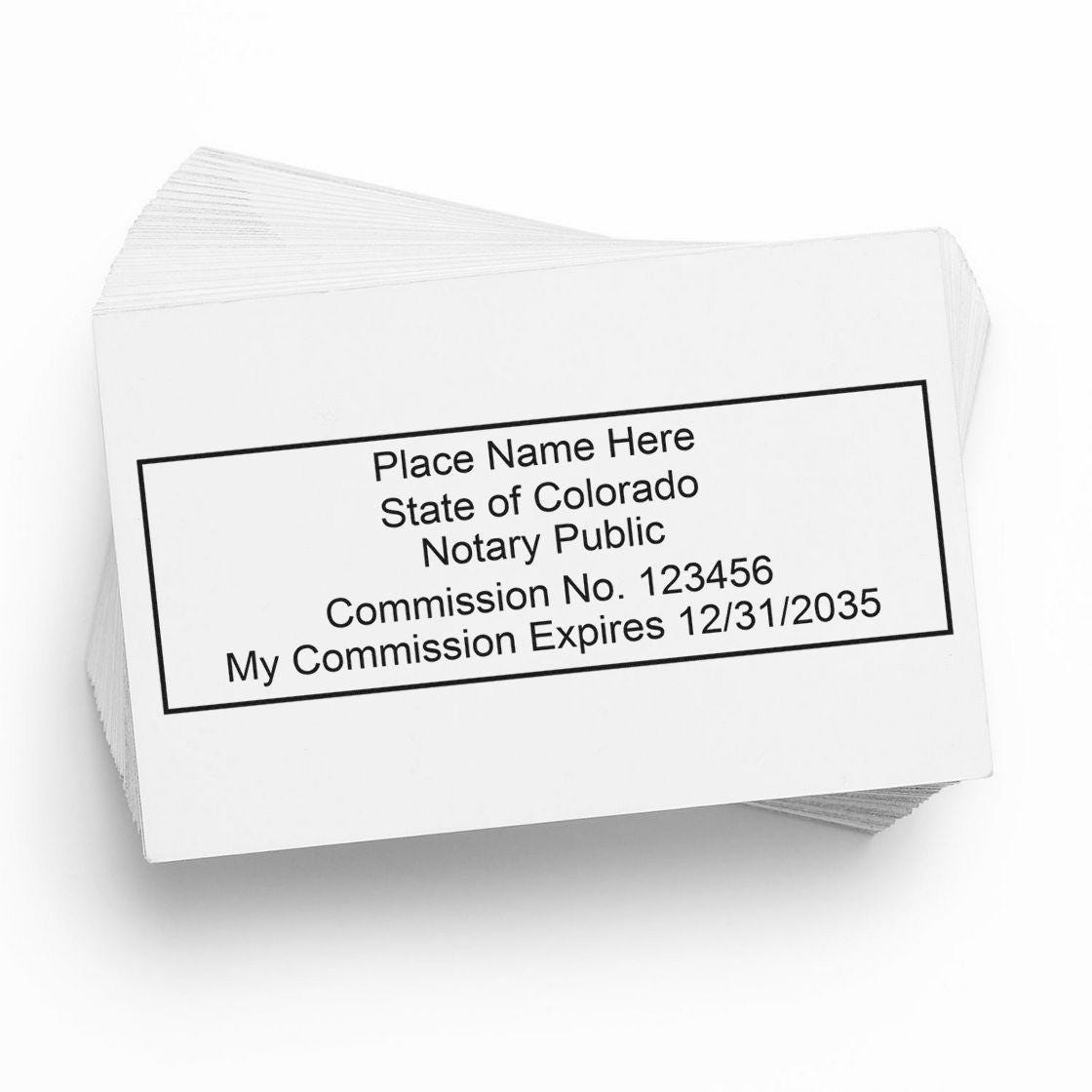
Are you looking for the perfect CO notary stamp for your business? As a Colorado notary public, you know how critical it is to remain compliant and project a professional image. A well-chosen stamp not only meets state regulations but also helps you stand out. Whether you have just started your journey or you have years of experience, selecting the right stamp can transform how you deliver notary services.Choosing a reliable supplier is equally important. Acorn Stamps, a family-owned and operated business since 1964, has been trusted for 60 years to provide Colorado notary stamps and seals with stellar customer service and super fast turnaround. In this guide, you will learn about the key elements of a CO notary stamp, common types and designs, and how to care for your stamp so it serves you well every day.
Understand Your CO Notary Stamp
Your CO notary stamp is a tangible representation of your authority. It includes your credentials and proves you are authorized by the state of Colorado to notarize documents. When you apply your stamp, you add a layer of authenticity that protects both you and those who rely on your notarization services.
- A clear and consistent impression: A good stamp should leave a readable impression every time. Poorly stamped documents might be rejected, so you want to ensure your stamp is crisp and properly inked.
- Quick verification: The stamp allows other parties to confirm swiftly that you are a Colorado notary in good standing.
- Professional look: A reputable seal or stamp elevates your notarial act and assures individuals their documents are trustworthy.
By understanding why the CO notary stamp is an integral part of your service, you can take the steps needed to maintain and protect it for the long term.
Identify Key Stamp Requirements
Colorado has specific guidelines that help ensure uniformity among notary stamps. Before you purchase or customize your stamp, make sure you are aware of these rules to avoid any compliance issues.
- State compliance: The stamp must contain your name as it appears on your commission, and you must include the words “State of Colorado” or the legal equivalent.
- Clear border: Colorado often requires a rectangular or circular border around the text. This border helps to distinguish your stamp from other markings.
- Legibility: Every element on your stamp should be readable with the naked eye. If your notary stamp is faded or difficult to interpret, you might run into legal complications.
- Additional details: Depending on the latest regulations, you might also need to note your notary ID number or the phrase “Notary Public.” Always check the Colorado Secretary of State's guidelines to confirm.
Be sure to keep these requirements in mind, because a non-compliant stamp could cost you time and money in replacements or lead to questioned notarizations.
Explore Stamp And Seal Options
You might be surprised by the variety of notary supplies available to you. CO notary stamps and seals have evolved over time to accommodate different preferences and needs. Knowing the options will help you pick a format that fits how and where you work.
Self-Inking Stamps
A self-inking stamp comes preloaded with an ink pad inside. Each time you press down, the stamp re-inks automatically, giving you a clean imprint. This style is perfect if you perform frequent notarizations because it saves you from constant re-inking.
- Efficiency: Quick to use and easy to store.
- Consistency: Delivers consistent results over hundreds (or even thousands) of impressions before needing a replacement pad.
- Compact design: Generally lightweight and easy to carry to mobile notary appointments.
Pre-Inked Stamps
Pre-inked stamps offer some of the most precise and crisp impressions. Instead of relying on a separate ink pad, the ink is saturated within the stamp’s surface.
- Sharp detail: Highly recommended if clarity is your priority.
- Reduced noise: You do not hear the “clack” often associated with self-inking stamps.
- Higher initial cost: They can be more expensive upfront, but they require fewer re-inks over time.
Handheld Embossing Seals
An embosser creates a raised impression on the paper. In Colorado, an embossed seal may serve as an additional layer of security, though many documents also require an inked stamp for clear copying or scanning.
- Extra security: Harder to counterfeit.
- Traditional touch: Adds a classic flair to formal documents.
- Storage considerations: Embossers can be larger and may not always be convenient for frequent mobile use.
No matter which format appeals to you, ensure that the final design meets state guidelines and that it suits your individual workflow.
Choose The Right Provider
With the number of stamp makers and online retailers, it can be overwhelming to decide where to shop. Settling for a generic supplier might yield an inferior product or lead to month-long delays. Here is what to look for when picking your CO notary stamp provider:
- Specialization in Colorado stamps. Make sure they are familiar with your state’s requirements and can guarantee compliance.
- Trusted reputation. Check customer reviews and testimonials to gauge experiences with stamp quality and service.
- Speed of turnaround. As a busy professional, you need your supplies quickly. Seek a vendor that offers fast shipping and minimal production times.
- Customer support. Look for friendly, responsive help in case you have questions about your order or the stamping process.
Acorn Stamps stands out as a preferred choice for many Colorado notaries. Family owned and operated since 1964, the company offers 60 years of expertise in crafting notary supplies. Their dedication to stellar customer service and super fast turnaround helps you stay current without worrying about long production waits. By partnering with a reliable provider, you can trust that your CO notary stamp or seal will be delivered accurately and on time.
Maintain And Protect Your Stamp
Once you have secured a high-quality Colorado notary stamp, your next priority is to keep it in top shape. Proper maintenance preserves clean impressions and ensures you do not have to replace your stamp prematurely.
- Store in a safe place. Keep your stamp or seal in a locked drawer or secure pouch. You are ultimately responsible for any misuse, so treat it with care.
- Monitor ink levels. If you use a self-inking or pre-inked stamp, check the ink levels routinely. Fading can result in unreadable prints.
- Re-ink properly. Use the recommended ink and follow the exact instructions. The wrong ink or method could damage the stamp.
- Clean regularly. A quick wipe with a non-abrasive cloth removes dust and residue from the impression surface.
- Watch for wear and tear. Inspect your stamp every few months for cracks or broken components. If your embosser starts producing incomplete patterns, consider replacing it or refurbishing the die.
A well-cared-for CO notary stamp retains its integrity and ensures every notarized document reflects your professionalism.
Next Steps For Your Notary Role
Securing the right stamp is only one part of fulfilling your duties as a Colorado notary public. Here are a few other action items you may want to consider:
- Review state regulations. Keep up to date with any changes the Colorado Secretary of State might announce. This applies to both your stamp design and your overall notarial procedures.
- Enroll in continuing education. Workshops and online courses help you refine your skills. You could learn updated legal guidelines or best practices for notarial acts.
- Maintain a notary journal. Although not always mandatory, many states encourage notaries to record each transaction. Doing so can protect you if a document’s authenticity is questioned in the future.
- Provide mobile services. If you enjoy variety, consider expanding your notary business by offering mobile notarizations. You can travel to clients who cannot come to you.
- Stay connected with peers. Local notary groups or online communities are a great place to ask questions, find referrals, or share your experiences.
Being prepared will boost your credibility and help you deliver top-quality notary services. When you combine a solid understanding of regulations, continuous learning, and a trustworthy CO notary stamp, you set yourself apart as a reliable professional.
Frequently Asked Questions
1. What Happens If My Stamp Expires?
Your CO notary stamp does not exactly “expire,” but your notary commission does. Once your commission period ends, you must renew it to continue notarizing. When you renew, you may need an updated stamp showing your current commission dates or ID number. Check Colorado’s latest guidelines to confirm.
2. How Often Should I Replace My Stamp?
A durable, high-quality stamp can last for years when maintained properly. However, if your stamp’s impressions become faint or difficult to read, it is time to replace or re-ink. You also need to replace the stamp if you change your name or details on your commission.
3. Is An Embosser Required In Colorado?
Colorado mainly requires that your stamp or seal is clear and legible. An embosser is an optional but often appealing choice for extra security or a more formal look. Ensure your inked stamp is present on documents that need to be photocopied or scanned.
4. Can I Let Someone Else Use My Notary Stamp?
No. Your notary stamp is your personal responsibility. No one else should use or have access to it. Such misuse could invalidate notarizations and put your notarial commission at risk.
5. What If I Lose My Stamp?
If your stamp is lost or stolen, you should immediately file a report with the proper authorities and notify the Colorado Secretary of State’s office. Prompt action protects you from potential misuse and clarifies your status if someone tries to use your stamp illegally.By understanding your responsibilities, keeping your notary stamp in good condition, and working with a proven provider like Acorn Stamps, you will be ready to serve your community with confidence. A dependable CO notary stamp sets you apart as a trusted professional who pays attention to detail and respects the significance of every document you notarize.