Understand Alabama Notary Basics
Securing your Alabama notary public stamp is an essential part of your official role. Whether you are just starting your notary commission or looking to renew, understanding the state's requirements and guidelines will help you work confidently. In Alabama, notaries witness signatures, administer oaths, and verify important documents. By following the right steps, you can streamline the process and avoid common pitfalls.
Role of an Alabama Notary Public
You serve as an impartial witness to the signing of legal documents, ensuring they are executed correctly and without coercion. This responsibility helps build trust in contracts, deeds, and affidavits, so people know their paperwork is authentic. You also:
- Administer oaths and affirmations for sworn statements.
- Certify that signers appear voluntarily and understand the purpose of the document.
- Maintain a record of your notarial acts, which can include a journal and detailed logs.
Performing these tasks accurately requires familiarity with Alabama's notary regulations, which can vary slightly from other states.
Commissioning Requirements
In Alabama, the commissioning process typically goes through the local Probate Judge in the county where you reside. Requirements may differ by county, so it is wise to check specific instructions for your location. That said, most counties ask for:
- A completed application or petition for appointment as a notary.
- A small filing fee.
- A bond (often set at about $25,000, but amounts vary by county).
- Proof of residency in Alabama.
Once you are commissioned, you can officially notarize documents and obtain an Alabama notary public stamp or seal.
Choose the Right Notary Stamp
Selecting a suitable Alabama notary public stamp is crucial for performing your duties professionally. A clear, consistent impression on each document ensures there is no confusion about your identity or commission details.
Types of Stamps
Many notaries in Alabama choose between self-inking stamps and traditional rubber stamps. You may also consider an embossed seal for more formal documents, though it is not always required. Here are your main options:
- Self-Inking Stamp: Includes an internal ink pad. You press down on a spring-loaded mechanism that re-inks between impressions. This style is efficient if you handle many documents each day.
- Rubber Stamp: Requires a separate ink pad. Rubber stamps can be more versatile since you can swap ink colors, but they are slightly slower to use.
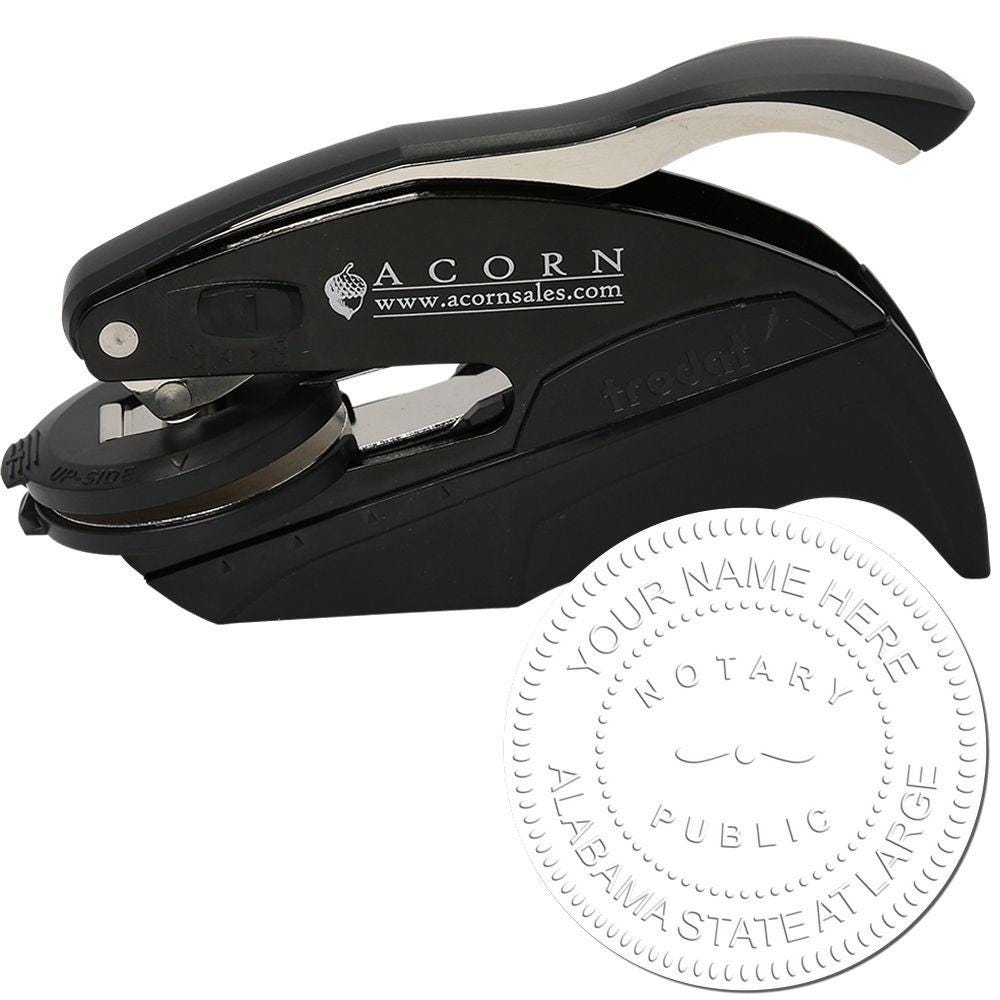
- Embossed Seal: Raises the paper with your notary information. It is visually impressive but often used to supplement a standard ink stamp for added security.
Key State Regulations
Alabama law specifies that your stamp or seal show your name exactly as it appears on your commission, plus the words "Notary Public" and "State of Alabama." Some counties may allow or require your commission expiration date, so always confirm local rules. Other important guidelines include:
- Avoid obscure fonts or ornamental designs that might reduce readability.
- Make sure your seal leaves a crisp, legible mark on the document.
- Keep your notary supplies in a secure place to prevent unauthorized use.
Steps to Obtain Your Notary Commission
Though procedures may vary by county, the general journey to become an Alabama notary public involves education, preparation, and official approval. By following each step carefully, you can simplify the entire process.
Check Eligibility
Before applying, confirm you meet Alabama's eligibility criteria. You must typically:
- Be at least 18 years old.
- Reside in or own property in the county where you are applying.
- Have no felony convictions affecting your ability to serve.
- Demonstrate good character and sound judgment.
It also helps to check if your county requires any notary courses or continuing education. These programs give you a solid foundation in best practices, so you know how to handle various documents.
Submit Application
Next, gather all required documents and fees for the county probate office. Typical application steps include:
- Complete the official notary application form.
- Obtain a surety bond (check with an insurance agent or bonding company).
- Pay the required application fee.
- Supply any additional documents directed by your county probate judge.
Once approved, you receive confirmation of your notary appointment. From there, you can acquire your Alabama notary public stamp or seal so you can start notarizing as soon as possible.
Order With Acorn Stamps
When it comes to ordering your Alabama notary public stamp, opting for a reputable supplier makes a difference. Acorn Stamps, family owned and operated since 1964, has served notaries across Alabama for more than 60 years. You can rely on their stellar customer service and super fast turnaround to keep your commission on track.
Super Fast Turnaround
Once you are officially appointed as a notary, you typically cannot notarize documents until you have your stamp or seal. Any delay here can result in lost opportunities or frustration for clients. With Acorn Stamps, your order is processed quickly, and they make sure you get your supplies fast. This speed is possible thanks to:
- Efficient order fulfillment systems.
- In-house manufacturing.
- Streamlined shipping and delivery processes.
You will be able to get to work without unnecessary waiting.
Superior Quality and Convenience
A notary stamp is only useful if it produces a clear, accurate imprint. Acorn Stamps prioritizes product quality so your seal is easy to read. You will also find it simple to order:
- Multiple layout options for your name, county, or commission details.
- Self-inking, pre-inked, or rubber stamps that come with durable materials.
- Customized designs matched to Alabama's legal requirements.
By choosing a trusted partner, you not only get the right stamp, you get a stress-free experience and the confidence that your supplies meet the required guidelines.
Maintain Professional Standards
Becoming an Alabama notary public is not just about the initial commission and obtaining your stamp. It also involves long-term responsibility for accurate record-keeping, awareness of legal obligations, and timely commission renewal.
Record-Keeping and Document Security
Your notary journal is the centerpiece of your professional practice. In it, you track each notarization and keep details like:
- Date, time, and type of document notarized.
- Name and address of the signer.
- The method used to verify the signer's identity (such as a driver’s license).
- Your signature or stamp impression for the entry.
While Alabama does not mandate a specific notary journal, it is strongly recommended to protect yourself and the public. Alongside thorough records, store all notary tools—like your stamp and embossing seal—somewhere secure. This precaution keeps unauthorized individuals from misusing your credentials or forging documents.
Regular Updates and Renewals
Most Alabama notary commissions last four years, though this can vary by county. As your expiration date approaches, start planning for renewal. Submitting your renewal paperwork on time prevents any gap in your authorization to notarize. You also avoid late fees or the need to reapply from scratch. Remember to update your stamp or seal to reflect any changes if your new commission requires a different date or name format.
FAQs About Alabama Notary Public Stamp
Below are answers to common questions you might have about your Alabama notary public stamp and responsibilities.
How Long Does It Take to Get an Alabama Notary Public Stamp?
Once your commission is approved, you can order your stamp. With a supplier like Acorn Stamps, turnaround is usually very fast, often just a few business days.
Do I Need a Separate Embossed Seal?
Alabama law typically requires only a stamp or seal containing your name, the words "Notary Public," and "State of Alabama." However, some notaries prefer an embossed seal for added formality. Check local regulations to see if both are necessary.
What Types of Documents Need Notarization?
You might notarize affidavits, deeds, powers of attorney, medical directives, and other legal agreements. Always verify the document’s requirements before stamping.
Can I Notarize Outside of My County in Alabama?
In most cases, your commission is valid statewide, so you can notarize documents anywhere within Alabama. Always carry your stamp and keep your credentials up to date.
What Happens if My Stamp Is Lost or Stolen?
Immediately notify your county probate office in writing and consider filing a police report. You may need to replace your seal and keep records of the incident for your protection.Purchasing your Alabama notary public stamp from a reliable provider, staying informed on state guidelines, and documenting each notarial act properly all contribute to a successful notary practice. By addressing these essentials, you are well on your way to building a trustworthy reputation and handling your notary duties with ease. Acorn Stamps has proudly supported Alabama notaries since 1964, and if you ever have questions about your stamp, seal, or general notary obligations, their friendly customer service team is here to help.Invest in the right supplies and follow the established guidelines. Before you know it, you will have all you need to serve your clients or community with confidence. When you are ready to order, remember that Acorn Stamps offers high-quality products, super fast shipping, and the personalized support you deserve. Above all, never hesitate to ask questions or seek clarification about any aspect of your responsibilities as an Alabama notary public. By staying informed and connected, you can enjoy a smooth, hassle-free notary experience.