Meeting Alabama notary requirements for the first time can feel like a tall order, but it really comes down to a few simple steps. As a new or aspiring notary in Alabama, you will have certain responsibilities and legal guidelines to follow. This process may seem complicated at first, yet with the right knowledge—and a bit of thoughtful planning—you will feel fully prepared to serve the community.When you get commissioned as a notary public, you act as an impartial officer who helps prevent fraud and confirms the authenticity of legal documents. Your neighbors trust you to confirm identities, witness signatures, and maintain accurate records. If any of that sounds overwhelming, do not worry. This guide will walk you through the basics so you can meet all Alabama notary requirements with confidence and a friendly approach.
Understand Alabama Notary Requirements
Before you even begin the application process, make sure you meet the basic Alabama notary requirements. Alabama law sets forth some eligibility standards, and verifying these up front will save you time. You will typically need to:
- Be at least 18 years old
- Reside in Alabama or have a permanent place of employment within the state
- Have never been convicted of a felony or any crime involving fraud
- Be able to read and write English
Why Fulfilling Eligibility Matters
Each state sets slightly different rules, but Alabama’s exist to ensure notaries are trustworthy, impartial, and properly equipped for the role. When you meet these eligibility standards, you demonstrate that you can handle important legal tasks, protect the public’s interest, and keep private documents secure. Having a clean record and stable residence also reassures the local county probate judge—who typically oversees applications—that your appointment will be in the best interest of the community.
Complete the Notary Application Process
Once you are sure you meet the qualifying criteria, the next step is to apply through the probate judge’s office in your county of residence. You typically submit a form that verifies your identity, contact information, and confirmation that you meet the basic requirements.
Navigating the County Probate Process
- Contact your local county probate office to get the correct notary application form.
- Fill out the application accurately and completely. Providing false information could lead to denial.
- Submit any required supporting documents, such as proof of residency or references.
Pay the required filing fee.Processing times may vary by county, so you will want to reach out in advance to confirm current wait times or any specific paperwork they might need. Always double-check the address where you mail or deliver your application, and keep copies of everything for your own records.
Obtain the Right Supplies
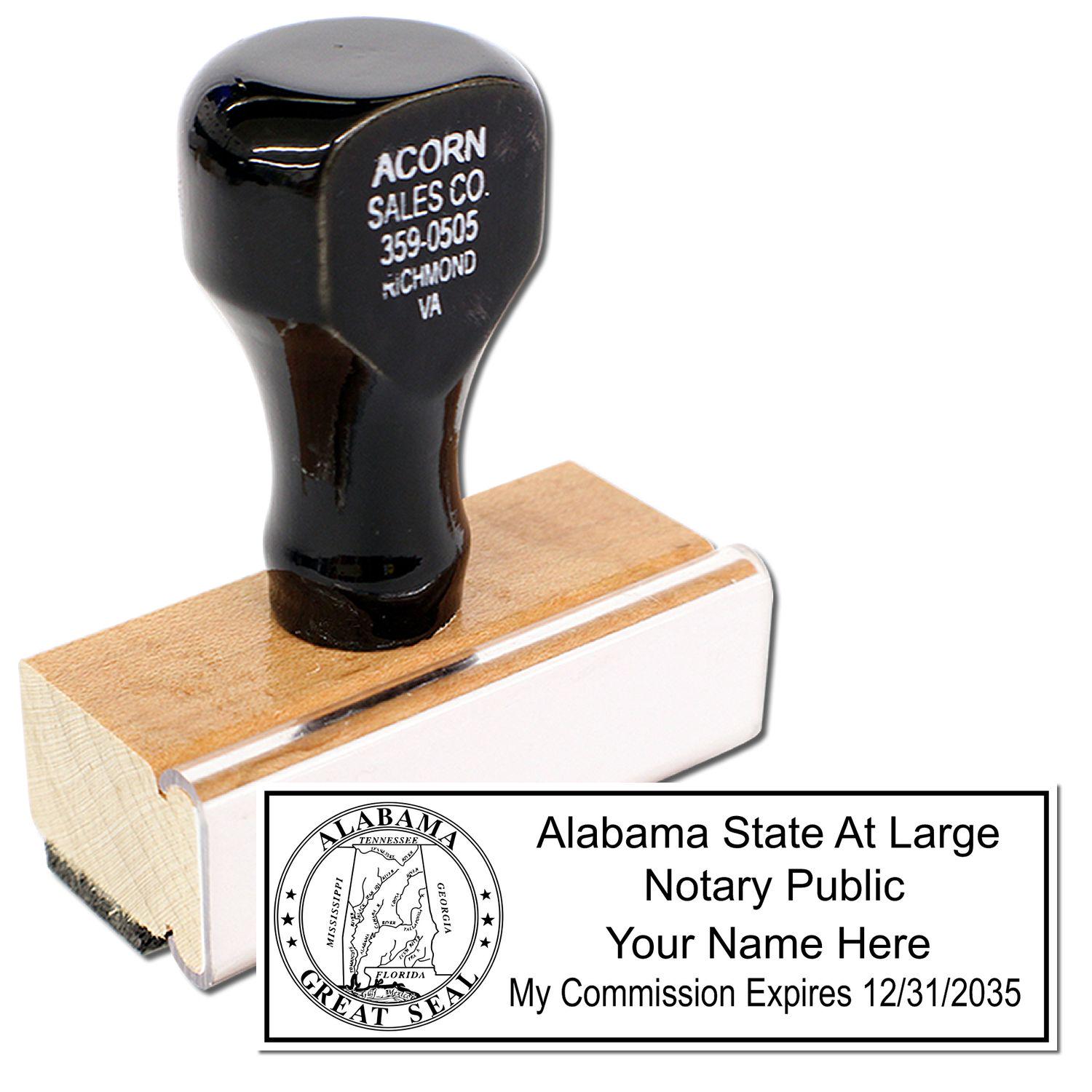
After you are approved, acquiring the appropriate notary supplies is the next step. In Alabama, your official seal or stamp is a key part of verifying notarized documents. It typically includes the words “Notary Public,” your name, your county, and “State of Alabama.” This seal ensures each document you notarize can be traced back to you and that the notarization is authenticated by a recognized official.
Selecting Your Stamp And Seal
Since you will be using your stamp on legal documents, it is crucial to pick a high-quality product that is both durable and easy to use. Look for:
- Clear, sharp impressions that stay consistent over thousands of uses
- High-grade stamping materials that resist fading and smudging
- A portable design that suits your notary work environment
If you are wondering where to find a dependable stamp or seal, consider Acorn Stamps. We are a top supplier of Alabama notary stamps and Alabama notary seals, committed to providing stellar customer service and super fast turnaround times. As a family owned and operated business since 1964, we have spent the last 60 years focusing on giving you reliable products and a smooth buying experience.
Maintain Professional Standards
Once you have your stamp, you will want to operate with integrity in every notarization. In Alabama, you are responsible for verifying the identity of signing parties and confirming that all parties appear willingly to sign the document in question. These steps protect individuals from forgery and fraud while ensuring the document will be recognized as legitimate.
Verifying Identities And Willingness
- Always check a valid government-issued photo ID, such as a driver’s license or passport.
- Look for signs of fraud, like inconsistent signatures or suspicious behavior.
- Confirm that each signer fully understands what they are signing and is not under duress.
A notary’s integrity is built upon thoroughness and impartiality. That means you should never notarize a document if you have a direct financial or personal interest in it. Remaining neutral protects everyone, including yourself, from conflicts of interest or legal disputes down the line.
Keep Accurate Records
Although Alabama does not require every notary to maintain a formal journal, it is still considered a best practice. A well-kept notary journal helps confirm that you performed your duties correctly and provides a reference if any questions about a past notarization ever arise.
What To Track In A Journal
- Date and time of each notarization
- Type of document notarized
- Name and address of each signer
- Type of identification provided
- Room for any notes about unusual circumstances
Remember that your journal is strictly for professional purposes. If you choose to keep one, safeguard it the same way you safeguard your notary seal, storing it in a locked area or space that only you can access.
Renew Your Commission
An Alabama notary commission is valid for four years. After your commission term ends, you must reapply if you want to continue performing notarial acts. While you will be somewhat familiar with the requirements by then, do not wait until the last minute to start the renewal process. Doing so could cause a gap in your commission dates—something you want to avoid if notarization is part of your daily work.
Steps For Smooth Renewals
- Contact the probate judge’s office in your county well before your commission expires.
- Complete another application or renewal form as required.
- Pay any applicable fees and update your information if you have moved or changed your name.
Renewing on time demonstrates your reliability to clients and reaffirms that you remain in good standing, continuing to meet all Alabama notary requirements. Plus, it ensures that your coverage does not lapse, so you do not have to turn away any clients who need your services.
Benefit From Continuing Education
Even though continuing education is not mandatory to remain a notary in Alabama, expanding your knowledge is always valuable. Laws can evolve, and best practices for recordkeeping or identity verification may shift. By staying informed, you protect yourself from accidentally making errors that could result in fines or legal complications.
Finding Educational Opportunities
- Stay current on Alabama’s notary laws by reading updates from official state websites.
- Explore workshops or webinars offered by professional notary associations.
- Subscribe to relevant newsletters or blogs that highlight noteworthy legislative changes.
Taking the time to keep learning showcases your competence and professionalism. It also builds trust with your community. When clients know you stay updated on every twist and turn of notary regulations, they feel more confident in your abilities.
Rely On Acorn Stamps For Support
While learning the ropes of Alabama notary requirements, you may have questions about selecting the right supplies or navigating the notarization process. Acorn Stamps is proud to be your trusted partner on this journey. Our reputation stems from decades of experience serving notaries across the state. We are family owned and operated since 1964, which means we are deeply committed to every detail of our craft and customer experience.
Our Commitment To You
- Top Supplier: We specialize in providing Alabama notary stamps and Alabama notary seals that adhere to all legal specifications.
- Stellar Customer Service: Our friendly team is ready to answer questions and offer tips to new notaries.
- Super Fast Turnaround: We understand that timely delivery can make a difference, so we work hard to get your supplies to you as quickly as possible.
From special ink types to replacement seals, you can trust us to meet your notary-related needs. We will always strive to ensure you have the right tools in hand to work confidently and uphold professional standards in every notarization.
FAQs About Alabama Notary Requirements
Below are some commonly asked questions from new notaries just getting started in Alabama. If you still have concerns after reading, it is a good idea to chat directly with your county probate office or reach out to a reputable supplier like Acorn Stamps.
What Is The Difference Between A Notary Seal And A Notary Stamp?
A notary seal and a notary stamp both serve to authenticate documents, but the term “seal” often refers to the embossed impression created by a metal seal press. A “stamp” typically uses ink. In Alabama, most notaries use stamps that include key identifying information. Whichever tool you choose, make sure it follows Alabama’s guidelines so that your notarized documents are recognized as valid.
Where Do I File My Completed Notary Application?
You will file your application with the probate judge’s office in your county of residence. Some offices let you mail in the application, while others may require you to apply in person. If you are not sure which route to take, it is best to call your local probate office first.
How Long Does It Take To Become An Alabama Notary?
Application processing times can vary by county. You may wait from a few days to several weeks, depending on how busy the probate judge’s office is and whether your paperwork is complete. Be sure to double-check your application for accuracy and completeness to avoid unnecessary delays.
Should I Keep A Notary Journal If Alabama Does Not Require One?
While Alabama does not make it mandatory to keep a journal, it is still a wise idea. A journal provides evidence of each notarization and can help settle any disputes if someone questions a particular document or signature. It also demonstrates professionalism if you are called upon to verify past notarizations.
Can I Notarize Documents For Family Members?
Notarizing documents for immediate family members is generally risky because you must remain impartial. If you stand to benefit from the document being signed, a conflict of interest may exist. Though Alabama’s law does not outright ban notarizing for relatives, it recommends that you avoid the practice to protect yourself from any scrutiny regarding partiality or personal gain.
Conclusion
Getting acquainted with Alabama notary requirements is an achievable goal once you break everything down into smaller steps. By confirming your eligibility, applying properly through your county probate judge, and getting the right supplies, you place yourself on solid footing. Maintaining professional standards, renewing your commission on time, and tracking each notarization in a journal all help keep you in good standing.While you discover your path as a notary, rely on trusted resources like county officials, continuous learning opportunities, and a dependable supplier like Acorn Stamps. We have spent six decades supporting new and veteran notaries by delivering the highest quality Alabama notary stamps and seals, all with a quick turnaround and exceptional customer service. As you start this exciting chapter, remember that you are stepping into a public service role. Your dedication and thoroughness are vital to preserving integrity and fairness in important legal processes across the state.