Understand The Importance Of Your Vermont Notary Kit
If you serve as a Vermont notary public, you know how crucial your role is in verifying documents and preventing fraud. That responsibility starts with having the right tools at your fingertips. A well-prepared Vermont notary kit ensures you can handle a range of documents confidently, whether you work out of a home office, a law firm, or on the go. By keeping your supplies organized and readily available, you also project the professionalism that your clients expect and trust.
Your kit goes far beyond just a stamp or seal. It should include everything you need to authenticate signatures, record transactions, and maintain compliance with Vermont’s notarial standards. Below, you will discover which items are absolutely essential, and how you can assemble them for your day-to-day work. Whether you are a long-time notary or just starting, these must-have tools will give you peace of mind and help you streamline your process.
Gather A Reliable Vermont Notary Stamp
One of the first items you will want to secure is your Vermont notary stamp. In Vermont, your notary stamp often contains your official name, the words “Notary Public,” and “State of Vermont.” Having a clear, durable stamp is vital for properly validating documents, ensuring recipients can clearly read and verify your credentials.
What To Look For In A Stamp
- Quality Stamp Material: Rubber stamps are popular, but self-inking or pre-inked types can save you time and leave crisp, smudge-free impressions.
- Clear Imprint: Choose a stamp that is designed to produce legible details even after multiple uses in a busy workday.
- Compact Size: Opt for a design that fits easily in your kit so you can carry it to client meetings and notarize documents wherever necessary.
Tips For Proper Use
- Test the Stamp: Before applying it to an official document, test your stamp on scrap paper. This prevents repeated impressions if the ink fades or spreads.
- Regular Ink Checks: If you use a self-inking stamp, refill or replace the ink as needed. A faint or messy imprint could call your professionalism into question.
Get An Official Notary Seal
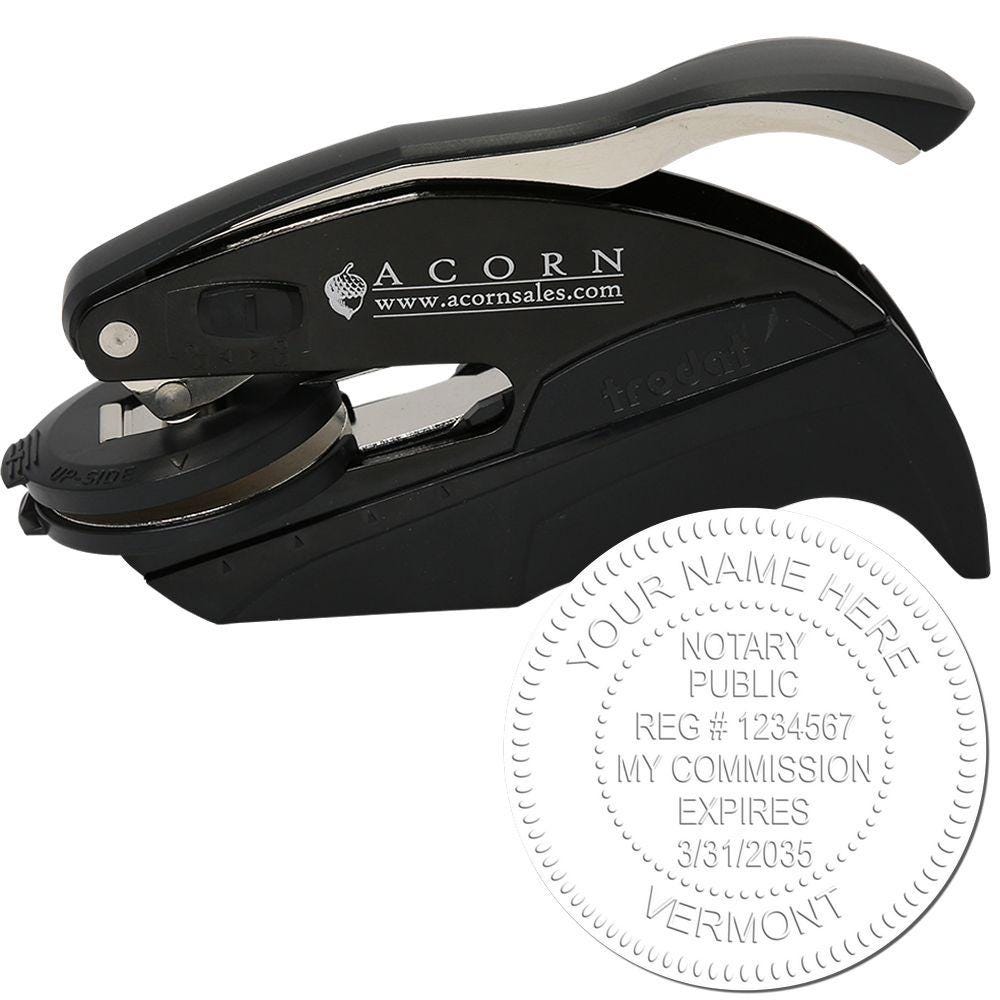
Along with a notary stamp, you may also use an official Vermont notary seal, sometimes referred to as an embosser. While not always required in certain states, a raised seal often provides an extra layer of authenticity for certain documents. Some notaries prefer to use both a stamp and a seal, depending on the specific requirements of the document they are notarizing.
Key Benefits Of A Notary Seal
- Professional Appearance: An embossed seal conveys a sense of formality, underscoring the legitimacy of your notarial act.
- Fraud Deterrent: The raised impression is more challenging to replicate than a signature or stamp, offering additional security.
- Cultural Expectation: Some clients or organizations still specifically request a seal on legal documents. Having a seal in your Vermont notary kit means you are prepared for these requests.
Embosser Selection Guidelines
- Ergonomic Design: Look for a seal with a comfortable handle so you can apply it without strain.
- Proper Inset Distance: Choose an embosser that allows you to emboss further into the page, if needed, to prevent edge distortion.
- Portable or Desktop: A pocket-sized embosser is fantastic for mobile notaries, while desk embossers are often sturdier and ideal for an office.
Use A Comprehensive Notary Journal
Vermont notarial law may not explicitly require you to keep a notary journal for every transaction. However, it is strongly recommended for your records and liability protection. Maintaining a journal helps you document each notarization, reducing the risk of disputes or accusations of improper conduct.
What To Include In Each Entry
- Date and Time: Log the exact moment you perform the notarial act.
- Signer’s Name and Signature: Collect the signer’s full name and their signature in your journal.
- Document Type: Note whether you are notarizing a power of attorney, affidavit, property deed, or any other document.
- Type of Identification: Record the ID type the signer presented, such as a driver’s license, passport, or other valid form of identification.
Why A Journal Matters
- Protection Against Legal Claims: In the event of a dispute, your journal serves as a reliable record of the transaction.
- Professionalism and Client Confidence: Showing that you thoroughly document each signing can give your clients greater trust in your services.
- Organization and Tracking: By maintaining a journal, you can track the volume and frequency of your notarial acts for personal, professional, or accounting purposes.
Keep Essential Notarial Certificates
Different documents may require different notarial certificates. While many states have standardized notarial language, Vermont’s requirements can vary depending on the document being notarized. To avoid confusion in the field, you will want to keep blank forms readily available in your Vermont notary kit.
Common Certificate Types To Have On Hand
- Acknowledgment Certificates: These confirm that you identified the signer and ensured they signed the document willingly.
- Jurat Certificates: These indicate that the signer swore or affirmed that the information in the document is truthful.
- Copy Certification Certificates: For notarizing copies of certain documents with the original text verified as accurate and unaltered.
Best Practices For Certificates
- Check State Requirements: Vermont’s official website or notary handbook may have specific language you need to use. Make sure to keep your certificates updated.
- Store Paper Copies Safely: Use a folder or binder to protect blank forms from crumpling. Organized forms speed up the signing process and help ensure you are always prepared.
- Label For Quick Retrieval: Different certificates can look alike at a glance. Label or color-code each type so you avoid mistakes under tight deadlines.
Adhere To Vermont Regulations
To effectively carry out your notarial duties, stay informed about Vermont’s specific guidelines on education, training, and record-keeping. While your main focus is performing notarizations correctly, you will also want to keep track of any changes to state laws or best practices. Doing so safeguards your professional reputation and helps you avoid legal pitfalls.
Continuing Education And Documentation
- Monitor State Updates: Check for any recent announcements or rule changes on Vermont’s official government website.
- Attend Workshops Or Seminars: Some professional organizations host notary workshops. These sessions offer practical tips, refreshers on state rules, and networking opportunities.
- Keep Renewal Dates Noted: Be aware of your commission’s expiration date. Renew with enough lead time so you never find yourself without valid credentials.
Important Compliance Tips
- Verify Signers Thoroughly: Always request current, valid identification. Overlooking an ID check could invalidate the notarization and open you to potential liabilities.
- Maintain Legible Records: Whether you prefer handwritten or digital logs, keep your entries clear and consistent.
- Respect Privacy: Safeguard your journal, stamps, and seals. Unauthorized individuals should never have access to these materials, which could lead to fraudulent use.
Secure Identification Tools And Accessories
Accurate identification is central to your role as a Vermont notary public. While a single ID check might suffice, additional tools can help you confirm the authenticity of an ID if something seems off.
Handy ID Verification Items
- Magnifying Lens: Some IDs have micro-printed text or intricate details that help prove authenticity.
- UV Light Pen: A quick scan with UV light can reveal hidden features found on many state and federal IDs.
- ID Checking Guide: If you work with out-of-state or international clients, an updated ID guidebook can clarify the specifics of lesser-known documents.
Additional Helpful Items
- Ink Pens For Signers: Keep several reliable pens with dark ink so signers can sign clearly. Let them keep or discard used pens to reduce possible germ spread.
- Sticky Notes Or Flags: When handling multiple documents, colorful flags help you mark exactly where a client or witness needs to sign.
- Carrying Case Or Bag: Keep everything organized in one secure, portable container. A sturdy case protects your supplies from wear and tear, ensuring you are always ready to notarize on-site.
Rely On A Trusted Supplier
Growing your career as a Vermont notary public requires reliable, high-quality supplies. At Acorn Stamps, you can find top-tier Vermont notary stamps and Vermont notary seals, along with exceptional customer service. Family-owned and operated since 1964, Acorn Stamps draws on 60 years of expertise to deliver quick turnaround times and a truly stellar buying experience.
Whether you need a sleek self-inking stamp or a durable metal embosser, Acorn Stamps makes it easy to customize items with your official notary details. You can rely on their thorough attention to detail, ensuring your stamp or seal meets Vermont’s specific requirements. If you have questions or need guidance, their knowledgeable team is ready to address your concerns and ensure you receive exactly what you need.
Why Choose Acorn Stamps
- Wide Variety Of Products: From pocket-sized embossers to unique stamp designs, you will find a broad selection tailored for professional notaries.
- Fast, Dependable Turnaround: In a pinch for your new or renewed notary commission? Acorn Stamps prides itself on delivering your order quickly.
- Family-Owned Legacy: With decades of service, they value each customer and continually refine their offerings to meet evolving notarial requirements.
FAQs
Below are some common questions about creating and maintaining your Vermont notary kit. These answers can help you fill any gaps before heading out to notarize your next document.
Do I Need Both A Notary Stamp And A Notary Seal?
Vermont law does not strictly require both forms of validation for every scenario. However, having both in your kit means you remain prepared for any client’s needs. Some documents look more official with an embossed seal, while a stamp often satisfies basic requirements swiftly.
What If I Run Out Of Ink During A Signing?
It is good practice to keep an ink refill or backup stamp in your kit. If you use a self-inking stamp, be sure to periodically check the ink levels. This way, you will not be left struggling in the middle of an important signing.
How Often Should I Update My Notary Supplies?
You typically need to renew your notary commission every few years, depending on Vermont’s schedule. Each time you renew, it is wise to update or refresh your supplies to reflect any changes to your name, address, or commission information. Also, inspect regularly for wear and tear.
Can I Share My Stamp Or Seal With Another Notary?
No, you should never share your stamp or seal. Your notary commission is individual and tied directly to you. Allowing others to use it can lead to misuse or fraud, and you could be held responsible for unauthorized notarizations.
Is A Notary Journal Absolutely Required In Vermont?
Vermont does not strictly mandate keeping a journal. However, having one can protect you from future disputes or liability issues. It serves as a comprehensive record of who, when, and why you notarized a document, helping you prove the authenticity of your work if questions arise.
Putting together a complete Vermont notary kit may feel overwhelming at first, but with the right tools and resources, you will quickly see the benefits in both your professional image and day-to-day efficiency. By dedicating some time to securing the proper stamp, seal, journal, certificates, and identification aids, you equip yourself with the means to fulfill Vermont’s notarial requirements and ensure a seamless experience for every client. And by choosing a trusted company like Acorn Stamps, you can confidently focus on what matters most: serving your community with integrity and professionalism.