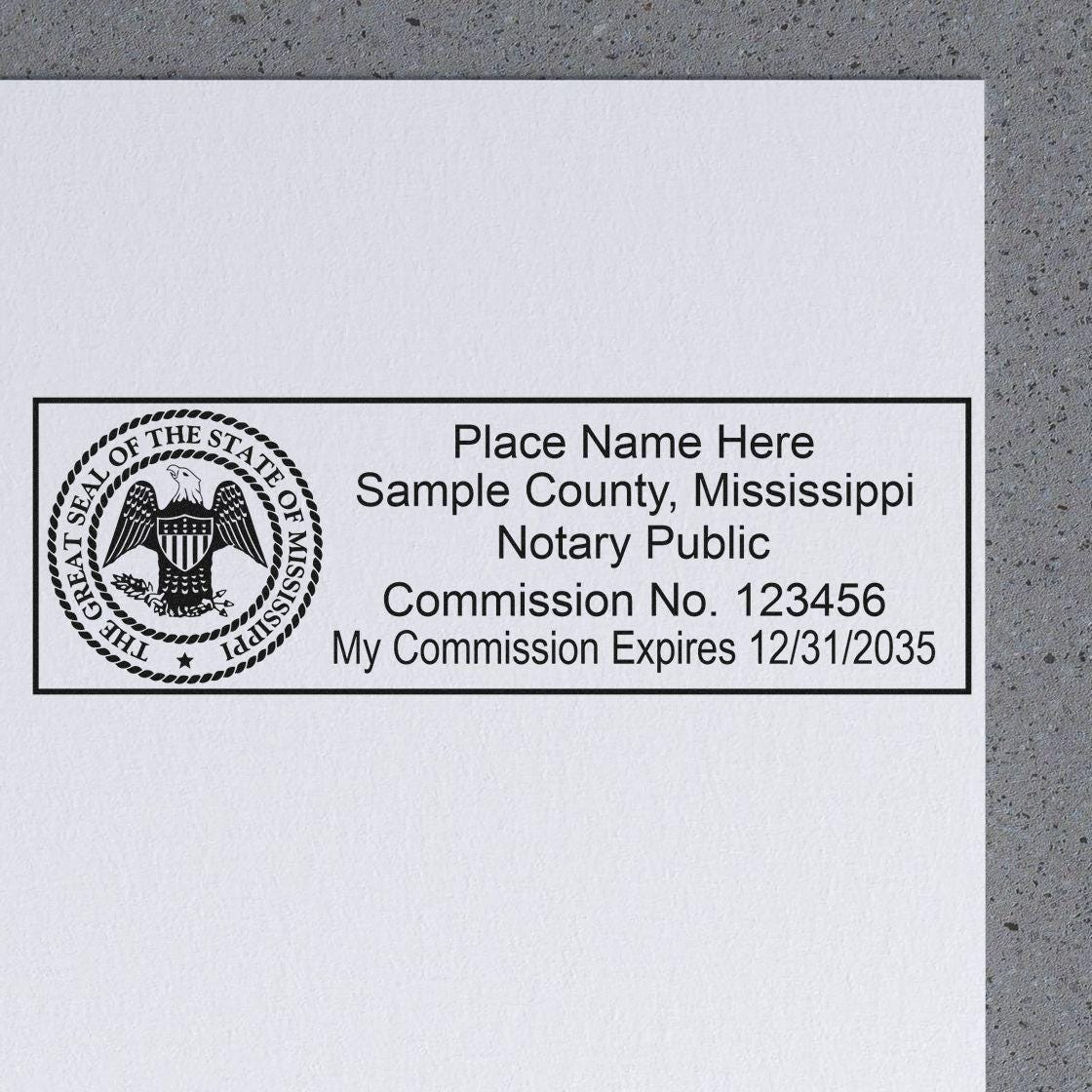
Review Mississippi Notary Requirements
When you begin your journey as a Mississippi Notary Public or prepare to upgrade your existing supplies, it all starts with meeting state requirements. Your most critical tool is a reliable Mississippi notary public stamp. To comply with state laws, you need to ensure your stamp displays clear, legible information and remains in good condition for every notarization you perform.
Although Mississippi does not have an extremely rigid set of rules about the exact shape or type of notary stamp (compared to some states), there are clear guidelines about what must go on it. Typically, your official notary seal includes your name, the words “Notary Public,” “State of Mississippi,” and possibly your commission expiration date. The primary goal is to make sure your stamp meets these legal requirements so you can confidently notarize documents without facing compliance issues.
Choose The Right Stamp Type
Selecting the right stamp type has a huge impact on how smoothly and efficiently you work. There are generally three categories to consider when choosing a Mississippi notary public stamp: self-inking, pre-inked, and traditional rubber handle stamps.
- Self-Inking Stamps
Self-inking stamps have an internal ink pad, so each time you press the stamp down, the die plate re-inks automatically. These are popular for their convenience — no separate ink pad is required, making them quick and clean to use. The downside might be slightly less crisp impressions compared to some pre-inked models, but newer designs often produce excellent clarity.
- Pre-Inked Stamps
Pre-inked stamps carry ink within the die itself. When you press down, the ink transfers directly from the die onto the page. These can deliver very clean and consistent images. Pre-inked stamps also tend to last for thousands of impressions before needing a refill. However, they usually cost more upfront than self-inking stamps.
- Traditional Rubber Handle Stamps
Traditional stamps require a separate ink pad. They might feel more “old-school,” but they offer flexibility with ink colors and can be quite durable. The main disadvantage is the added step of inking the stamp each time. However, some notaries prefer this classic approach, especially if you only perform a few notarizations per day.
Your choice depends on your personal preference, budget, and how often you conduct notarial acts. If you need something portable and easy to carry around, you might lean toward a self-inking or pre-inked stamp. If you’re more traditional or prefer changing ink colors occasionally, a rubber handle stamp could be your best bet.
Assess Impression Quality
A perfectly clear and legible impression is crucial for every notarization. If your stamp leaves a smudged or faint impression, the document’s validity might be called into question. When comparing stamp options, look for crisp edges, consistent ink distribution, and sufficient detail to read all the mandatory text.
- Test Before Finalizing
If possible, test different stamp brands or models in person. Putting them side-by-side on practice paper can reveal which stamp offers the cleanest print.
- Check Samples Or Reviews
Many reputable suppliers will show actual impression samples on their websites or in-store catalogs. Examine these carefully and read user reviews. If a particular stamp has consistent complaints about unclear text, you’ll know to steer clear.
- Assess Ink Saturation
Whether you go with self-inking or pre-inked, look for stamps that hold adequate ink to repeatedly produce sharp impressions. A well-saturated stamp will capture fine details in your name and commission number, which is essential for official documents.
Focus On Durability And Longevity
As a notary, you need your stamp to keep up with your workload. Frequent stamping can quickly wear down lower-quality products, causing faded or incomplete impressions. A durable, high-quality Mississippi notary public stamp saves you time, effort, and money in the long run.
- Material Strength
Opt for sturdy plastics or metal components. Metal frames, in particular, can handle heavy stamping sessions without breaking. If you travel often for signings, a resilient design prevents damage in transit.
- Replaceable Ink Pads Or Cartridges
If your ink pad or cartridge runs out, it’s handy to be able to swap it out without replacing the entire stamp. This feature keeps costs manageable and ensures you’re always ready for your next notarization.
- Warranty Or Return Policy
Reputable manufacturers stand behind their products. Look for a warranty or hassle-free return policy in case of defects. This peace of mind can make a big difference if you run into any quality issues.
Ensure Proper Customization
Your Mississippi notary stamp isn’t just a functional item. It’s a personalized tool that should align perfectly with your legal name and commission details. A slight misspelling or wrong detail can cause you a big headache down the line.
- Verify Your Commission Name
Double-check the exact spelling of your name as listed on your official notary commission. Use the exact format on your stamp, including middle initials if required by law or if they appear on your commission certificate.
- Include All Required Wording
Mississippi law typically requires your seal to feature specific text such as “State of Mississippi,” “Notary Public,” and possibly the expiration date. Some stamps also incorporate the county name or commission number. Confirm what is mandatory in your jurisdiction so you align fully with state regulations.
- Align With Commission Expiration
Mississippi often requires you to note when your commission expires, but laws can change over time. Make sure the date on your stamp is accurate, and keep track of commission renewals so you can update your stamp as needed.
Compare Pricing And Value
Cost shouldn’t be your only factor, but it’s practical to weigh different price points when shopping for a Mississippi notary public stamp. Consider the total value, not just the initial price tag, to avoid frequent replacements or messy impressions.
- Initial Investment
Pre-inked stamps typically cost more than self-inking or rubber handle stamps, but they often offer sharper results and last longer before needing refills. The initial price may be higher, but the long-term benefits can justify the expense.
- Refill And Replacement Costs
Even the best notary stamps eventually run out of ink or wear down. Check how much replacements or refills cost. A more expensive initial purchase might turn into the lower-cost option if it’s cheap and easy to maintain.
- Bulk Discounts
If you’re part of an organization where multiple individuals need stamps, you could look for group deals or corporate pricing. Some suppliers lower the cost per unit if you order multiple stamps at once.
Check Brand Reputation
The best gauge of quality often comes down to brand trustworthiness. You’ll want a supplier that not only sells top-notch stamps but also delivers helpful customer support if any issues arise.
- Read Online Reviews
See what other Mississippi notaries say. If a supplier has consistent praise for their products, turnaround, and service, that’s a positive sign. Look for comments on durability, ease of use, or clarity of imprint.
- Verify Industry Experience
Established suppliers usually know the ins and outs of notary requirements. Companies in business for decades likely have well-refined manufacturing processes and selection criteria.
- Consider Specialized Providers
For unique or hard-to-find notary items, specialized vendors can be valuable. They often stock the latest stamp styles and remain up to date on any changes to state guidelines.
Maintain And Replace Correctly
Proper care extends the life of your Mississippi notary public stamp, ensuring consistent performance each time you notarize. Because you rely on it so heavily, developing good habits can save you from stress and last-minute supply runs.
- Store In A Dry Place
Exposure to moisture can degrade ink quality or create smudges. Keep your stamp in a sealed case or on a dedicated shelf away from direct sunlight.
- Clean The Stamp Face
Ink residue can build up over time, affecting clarity. Gently wipe the die with a non-abrasive cloth if you notice excess ink accumulation.
- Watch For Fading
If your impressions start to weaken, try re-inking (if your stamp allows) or replacing the pad. If problems persist, it could be time for a new stamp entirely.
- Adhere To Commission Changes
Periodically review your commission details. If your name, address, or commission expiration date changes, order a new stamp immediately. Using outdated information can invalidate notarized documents.
Spotlight On Acorn Stamps
When you’re ready to select your new Mississippi notary public stamp, finding a trusted supplier is half the battle. Acorn Stamps has been family owned and operated since 1964, proudly serving notaries for 60 years. As a leader in Mississippi notary stamps and seals, Acorn Stamps places a strong emphasis on:
- Stellar Customer Service
Whether you have a simple question about ink refills or need step-by-step help customizing your stamp, you’ll receive friendly and prompt support.
- Super Fast Turnaround
Time matters. Acorn Stamps strives to fulfill your order quickly, understanding that delayed stamps can disrupt your notarial duties.
- Quality Focus
Each product — from self-inking stamps to traditional rubber handle stamps — undergoes a thorough check so you get sharp, reliable impressions every time.
- Mississippi Expertise
Because Acorn Stamps has served notaries for decades, you’ll benefit from insights into Mississippi’s specific requirements. If state laws tweak the format of your seal, they’ll guide you through the updates so you remain compliant.
Frequently Asked Questions
Below are some common questions notaries ask when buying or maintaining a Mississippi notary public stamp. If you’re just beginning or need a refresher, these answers can help you avoid common pitfalls.
Do I Need Specialized Training To Use A Mississippi Notary Stamp?
You do not need special training for the actual stamping process. However, you are required to understand Mississippi’s notarial laws and perform all notarial acts correctly. This includes verifying identity, ensuring the signer is willing and aware, and maintaining a proper notary journal.
Are Self-Inking Stamps Acceptable In Mississippi?
Yes. Mississippi typically accepts self-inking stamps as long as all required information is legible. Check your commission guidelines to confirm any specific design limitations that might apply in your region.
How Do I Properly Store My Mississippi Notary Public Stamp?
Keep your stamp in a case or a location where it’s shielded from moisture, dust, and direct sunlight. Extreme temperatures or exposure to humidity can degrade the ink over time, so a cool, dry spot is best.
What If My Stamp Impression Starts To Fade?
If your notary stamp leaves faint or uneven prints, first check if you can refill or replace the ink pad. Sometimes cleaning the die or changing the ink pad resolves the issue. If the stamp continues to produce unclear impressions, you may need a new one.
Can I Use My Notary Stamp For Non-Notarial Acts?
No. Official notary stamps are exclusively for legitimate notarial acts. Using them for any purpose outside of your authorized duties can create legal complications and undermine the trust placed in notary officials.
By taking the time to research, compare your options, and focus on what matters most — clarity, durability, and compliance — you can find the perfect Mississippi notary public stamp that complements your work. With the right stamp in hand, your notarial acts will be more efficient and professional, giving your clients the confidence they deserve. And if you have any doubts or need assistance, remember that dedicated suppliers like Acorn Stamps are here to help you every step of the way.