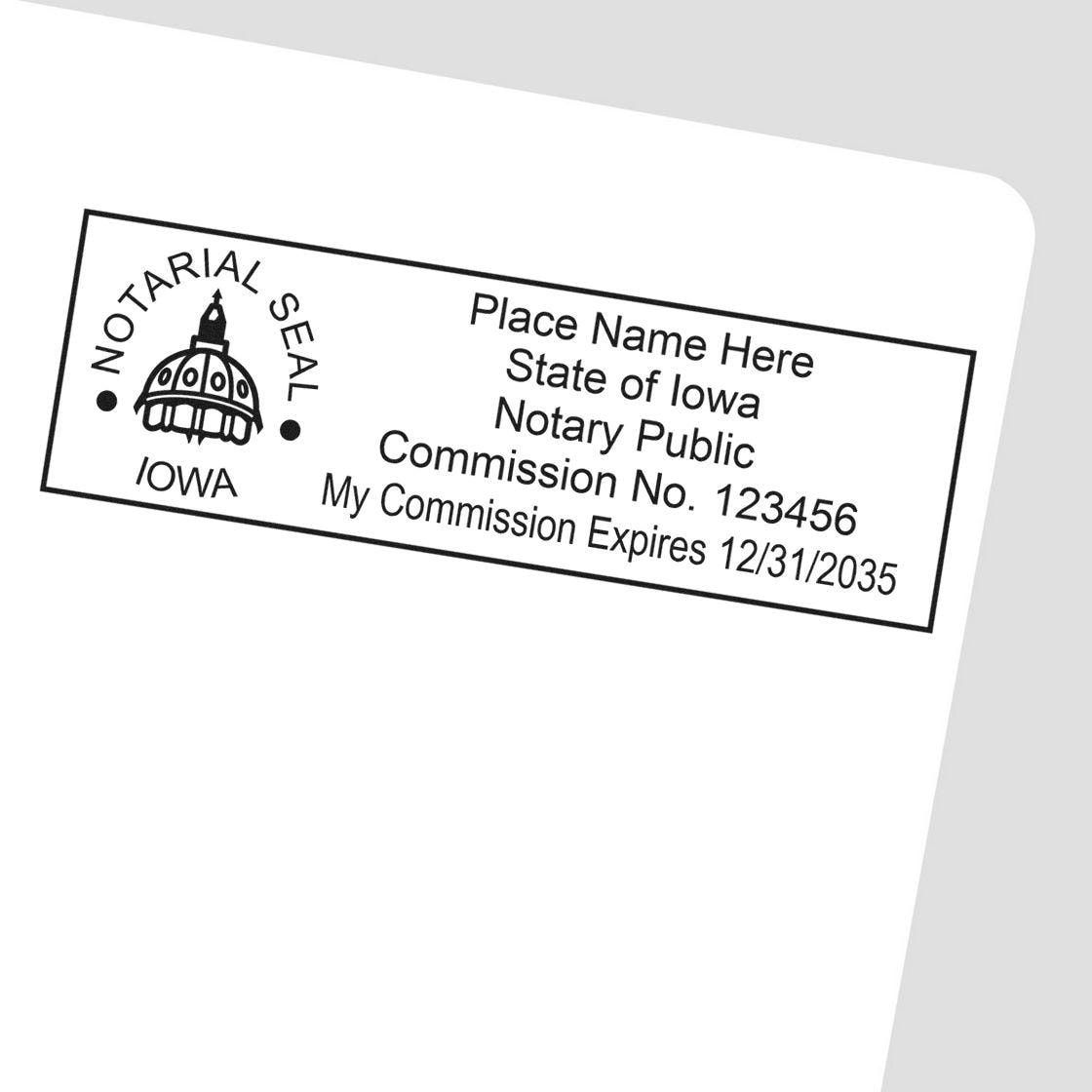
How to Find the Right IA Notary Seal for Your Practice
Whether you are just starting your notarial practice or you have years of experience stamping documents, finding the right IA notary seal is a key step in meeting Iowa’s legal requirements and maintaining a polished professional image. Your stamp or seal helps authenticate documents, instills confidence in clients, and ensures that your actions as an Iowa Notary Public remain compliant with state guidelines.Along with these legal and aesthetic
considerations, you also want something that reflects your personal style as well as the credibility of your services. In this guide, you will discover how to choose the type of seal that aligns perfectly with your needs, explore design and material options, and learn how Acorn Stamps—family owned and operated since 1964—can help make the selection process a breeze.
Understand the Purpose of an IA Notary Seal
Your IA notary seal is more than just ink on paper. It is an official indicator of your authority to perform notarial acts in the state of Iowa. The second your seal touches a document, you are validating its authenticity. By carefully selecting your seal, you ensure that every time you administer an oath or witness a signature, the result is consistent and reliable.
- The seal confirms your name, commission number, and the state of Iowa.
- It proves you followed Iowa’s regulations, which adds credibility to your document.
- It distinguishes your notarial act from any unauthorized or unqualified marks.
You will find that having a properly crafted seal not only meets state guidelines but also enhances your professionalism in the eyes of clients and colleagues. Most people may not realize how vital a stamp or seal can be, but a faded or unclear impression can confuse recipients and even lead to questions about the legitimacy of a notarized document. Having a well-made, durable notary seal ensures clarity every time you emboss or stamp a page.
Know Iowa Notarial Requirements
Before you commit to a particular IA notary seal, it helps to familiarize yourself with Iowa’s specific regulations. Iowa law spells out certain requirements to keep your notarial acts consistent and legally recognized.
Iowa’s Basic Criteria
- You must include your official name as it appears on your commission.
- You must incorporate the words “Notarial Seal” or “Notary Public.”
- Your seal must state “Iowa,” indicating your jurisdiction.
- You must include a legible impression or print.
Depending on your preference and the advice of local officials, your seal could be an ink stamp or an embosser, as long as it meets these core requirements. In most cases, your stamp or seal must be clear enough to easily transfer your name, the words “Notarial Seal,” the words “Notary Public” and “Iowa,” and any other required details.
Commission Information
If you are newly commissioned, you might be wondering when to order a seal. Generally, as soon as your notary application is approved, you will have permission to purchase a notary seal. Double-check your commission dates so that your seal is valid for the appropriate term. A well-made seal should last you throughout the duration of your commission if you treat it with care, but you can always reorder or update it as needed.
Explore Different Seal Options
Not all IA notary seals are created the same. You have several choices in terms of mechanism and appearance. The primary categories include self-inking stamps, pre-inked stamps, and embossers. Each has its own distinct characteristics that might suit your workflow differently.
Self-Inking Stamps
- Preloaded with ink inside the stamp.
- Provide quick, consistent impressions.
- Typically lasts for thousands of document impressions before re-inking.
Self-inking stamps are highly popular among busy professionals who need to make multiple impressions throughout the day. The self-contained ink pad helps keep things neat and saves you from dealing with separate ink pads.
Pre-Inked Stamps
- Contain ink within the stamp’s internal reservoir.
- Offer sharp, crisp, and highly detailed impressions.
- Often operate quietly and can last tens of thousands of uses before needing ink refills.
Pre-inked stamps can produce some of the cleanest imprints because they allow for very fine text and image transfer. They are also relatively compact, making them easy to carry in your notary kit.
Embossers
- Create a raised impression on the paper.
- Typically used together with or instead of an ink stamp.
- Impart a classic, professional appearance.
Embossers are the traditional choice for many notaries, lending a distinguished look to your notarized documents. They do, however, require a bit of pressure and may be more challenging to use on large volumes of documents.Your choice among these three largely depends on your personal style, the volume of documents you process, and whether you want your mark to be ink-based or embossed. All three are valid under Iowa law, as long as the stamped or impressed data meets state guidelines.
Factor in Design and Material
After you decide on the kind of tool—self-inking, pre-inked, or embosser—it is worth considering the design and overall durability of your new seal. Since you are required to have a legible stamp or seal on every notarized document, you want hardware that balances functionality with a long lifespan.
Durability and Material
- Metal vs. Plastic Construction: Metal stamp frames and embosser bodies often withstand daily use better than plastic, though modern plastic frames can be lightweight and still robust enough for moderate usage.
- Grip Comfort: Check the handle or operating mechanism. If you work with large volumes of documents, comfortable grip and easy maneuverability are essential.
- Replacement Parts: If your stamp or embosser is designed with replaceable parts, you may only need to buy ink refills or a replacement pad when it starts to fade. This approach can help you save money in the long run.
Aesthetics and Customization
While the look of your IA notary seal is secondary to compliance, there is no harm in infusing a bit of personality—particularly if you would like to maintain a consistent “brand” across all your professional materials. Some notaries prefer a simple black or navy color scheme, while others choose subtle design variations, as allowed by law, to stand out. Regardless of your aesthetic preferences, ensure that the crucial text remains easily readable.
Select a Trusted Supplier
Where you buy your IA notary seal can make all the difference in quality and overall satisfaction. Although many suppliers exist, not all have the same level of expertise or commitment to customer service. You deserve a supplier that understands Iowa notary regulations and stands behind every product they sell.
Why Choose Acorn Stamps
Acorn Stamps has been family owned and operated since 1964, giving us over 60 years of service in providing top-notch stamp and seal solutions to professionals like you. This longstanding history means we know the ins and outs of Iowa notary requirements and have refined our processes to deliver consistently high-quality stamps and embossers. We also pride ourselves on our:
- Stellar Customer Service: We are here to guide you through each step, from helping you confirm appropriate design elements to ensuring you know how to care for your seal.
- Super Fast Turnaround: We understand how important it is to have your seal ready when your commission starts, so we work quickly to get you the products you need.
- Personal Attention: We treat every order with care and attention. As a family-operated business, we believe in building long-term relationships with our customers.
By working with a trusted supplier, you minimize the risk of errors, ensure compliance, and can rely on quick resolutions if any mishaps occur—whether that is a design update or an ink refill.
Maintain Your IA Notary Seal
A well-maintained notary seal is essential for producing consistent, clear impressions. Proper upkeep also protects you from mistakes and rejections on official documents. Different types of seals require different forms of care, but certain universal tips can apply to all.
Storage Guidelines
- Keep your stamp or embosser in a cool, dry spot where it will not be accidentally engaged or crushed.
- Avoid placing it under heavy objects that might damage the casing or cause ink leakage.
- Use a protective pouch or case if you are transporting your seal between multiple locations.
Cleaning and Re-Inking
- Gently wipe away ink residue from the face of your stamp with a soft cloth if it begins to get blurry.
- Follow the manufacturer’s instructions to re-ink self-inking or pre-inked stamps. Over-inking can produce messy, illegible impressions.
- For embossers, occasionally inspect the raised metal die for dirt or debris and gently remove it to maintain crisp impressions.
A little maintenance goes a long way in keeping your IA notary seal in peak condition. By prolonging the life of your seal, you will also reduce your overall costs over time.
Avoid Common Pitfalls
Even experienced notaries can make simple mistakes when it comes to choosing, using, and caring for their seals. Being aware of possible pitfalls in advance can protect you from unnecessary hassles and potential compliance issues.
- Fading or Illegible Impressions: This usually happens if you do not re-ink your stamp or if your embosser is not pressing firmly enough. Routinely check your impressions to ensure clarity.
- Wrong Commission Details: If your name or commission number changes, make sure to update your seal. Using outdated information on official documents can render your notarization invalid.
- Ordering from Unfamiliar Vendors: Sometimes, cheap seals from unknown websites end up being poor quality or invalid. Stick with established suppliers like Acorn Stamps to avoid subpar products.
- Ignoring Iowa’s Regulations: Always confirm your seal meets the mandatory dimensions, text, and layout. The best seal in the world will not help if it fails to comply with Iowa’s directives.
Avoiding these issues is primarily about staying proactive. As soon as you detect reduced clarity in your stamp or plan to change your commissioned name, it is best to address it right away.
Frequently Asked Questions
Below are five commonly asked questions about IA notary seals, along with straightforward answers to guide you as you make your decision.
- Do I Need Both a Stamp and an Embosser?
No, Iowa typically requires only one type of official seal, but you can use both if you wish. Many notaries choose a stamp for everyday use and an embosser for special documents or for clients who appreciate a more traditional, raised seal look.
- How Do I Know Which Ink Color to Choose?
Black ink is generally the default for clarity and photocopy compatibility. However, some people prefer blue ink to distinguish original documents from photocopies. Always ensure your chosen color is dark enough to be easily deciphered and photocopied.
- Can I Update My Seal If My Last Name Changes?
Yes, you should order a new seal reflecting your updated name as soon as your legal name change is recognized by Iowa’s notary department. Using an outdated seal can invalidate your notarial acts, so it is vital that you keep your seal current.
- How Long Will My Notary Seal Last Before I Need a Replacement?
With proper care, you can often rely on a quality IA notary seal for the length of your commission. Self-inking and pre-inked stamps can be re-inked, while an embosser can perform reliably for years if properly maintained. When performance deteriorates or design details become illegible, it is time to replace or repair it.
- What Is the Best Way to Confirm That My Seal Meets Iowa’s Standards?
Your seal provider should follow Iowa’s guidelines, but it is also wise to review the Iowa notary handbook or official notary resources before finalizing your purchase. Double-check that your name, the words “Notary Public” and “Iowa,” and any other mandatory details match the specifications set forth by the state.By addressing these common inquiries, you can feel more confident about the process of selecting and maintaining your IA notary seal. Small details can make a big difference in how smoothly your notarial acts proceed. Whether you prefer an ink stamp for daily tasks or an embosser for a more elegant appearance, the key is to pick a high-quality product and to keep it in good working order.When you team up with a reputable supplier like Acorn Stamps, you can rest assured knowing that you will receive not just a legally compliant product, but also the guidance and support needed for your continued success. After all, a reliable seal is an essential tool in your notarial toolkit, and choosing the right one helps you deliver the professional, steadfast service that your clients deserve.