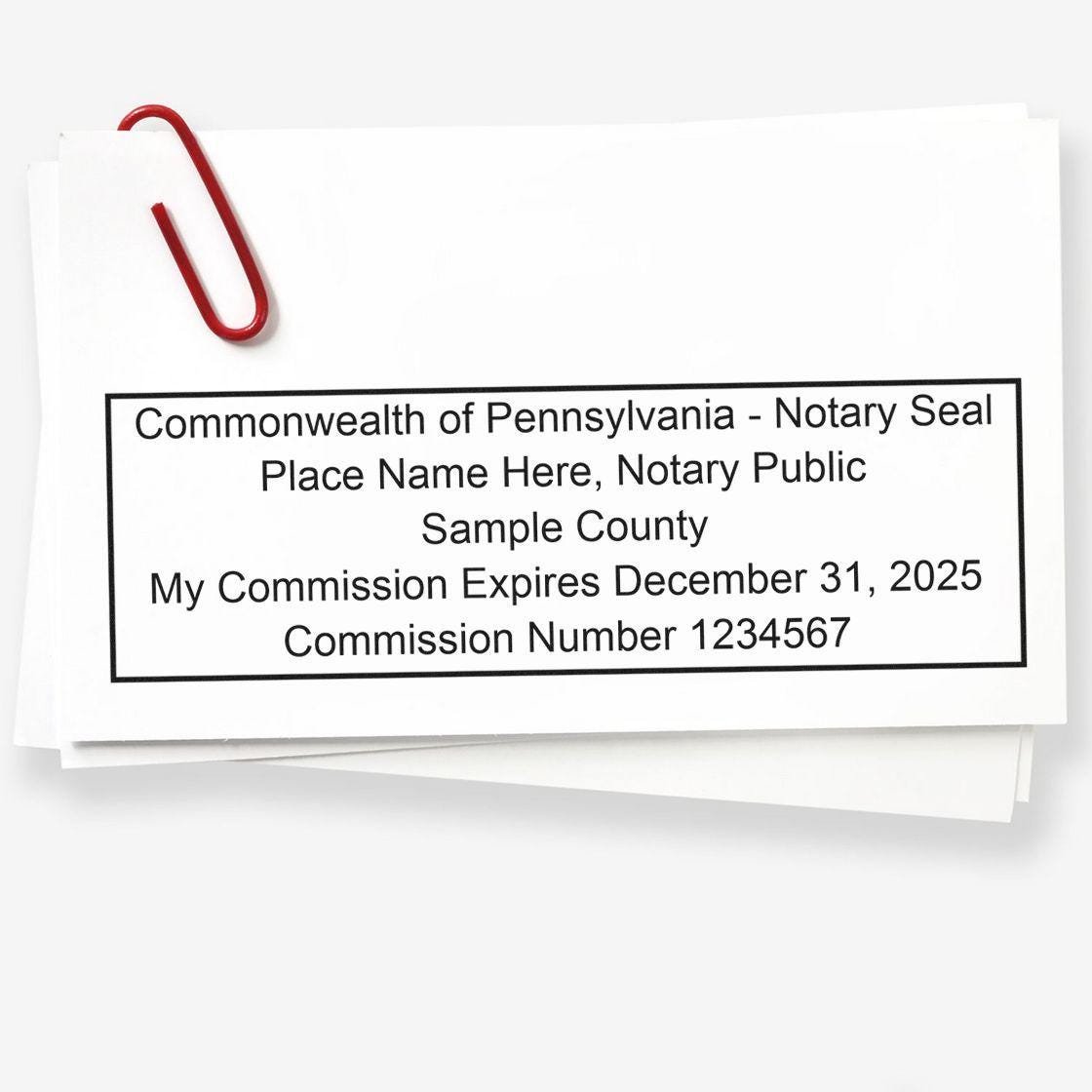
Understand Pennsylvania Notary Stamp And Seal Requirements
If you’re a Pennsylvania Notary Public, you already know the importance of having the right tools for the job. From notarizing legal documents to certifying signatures, each step must be handled with care and precision. Less often discussed but equally vital is how you acquire your Pennsylvania notary stamp and seal. Understanding these critical components and following official guidelines help ensure you perform your duties accurately and legally.
Why You Need A Notary Stamp And Seal
When you notarize a document, your goal is to confirm the authenticity of the signature and the signer’s awareness. To do that effectively, you need a reliable notary stamp and seal to indicate that you are authorized by the state, and that the notarized document carries legal weight.
- Establish Official Identity: Your stamp confirms that you are indeed a commissioned notary in Pennsylvania.
- Prevent Fraud: By placing your seal on a document, you can deter unauthorized alterations or forgeries.
- Add Formally Required Elements: Pennsylvania notary rules often require your commission expiration date and state-specific wording, all of which appear in or around your official imprint.
Legal Requirements For Pennsylvania Notaries
Pennsylvania’s Department of State has clear requirements for what your stamp or seal must include. It typically features your name, the words “Notary Public,” and “Commonwealth of Pennsylvania.” It also indicates the expiration date of your notary commission. Without these elements, your notarial act may be deemed incomplete or invalid. Always check with the Pennsylvania Department of State for current guidelines, as regulations can change over time.
Steps To Acquire Your Stamp And Seal
Getting your Pennsylvania notary stamp and seal doesn’t have to be stressful. By breaking down the process and double-checking each step, you can feel confident that you’re following official protocols.
Gather Essential Notary Information
Before placing your order, make sure you have the following:
- Your Legal Name As Commissioned: This should match the name you used when applying for your notary commission.
- Your Notary Commission Number: An important identifier issued by the state.
- Your Commission Expiration Date: This needs to be correctly displayed on your stamp or seal.
- Proof Of Commission/Appointment: You may be asked to show documentation verifying that you’re a duly commissioned notary in Pennsylvania.
Having all of these details on hand not only saves time but also helps ensure that your stamp or seal gets printed or engraved correctly.
Choose A Trusted Supplier
After you’ve confirmed your details, the next big question is where to buy your stamp and seal. The supplier you choose directly impacts factors like quality, turnaround time, and overall stress level. This is why many notaries prefer working with Acorn Stamps. We’re a family-owned business that has been serving notaries for 60 years. Since 1964, our passion for precision and stellar customer service has made us a top supplier of Pennsylvania notary stamps and Pennsylvania notary seals.
People often assume that any stamp or seal will do, but if you’re using a low-quality, poorly designed product, you risk missing essential information or producing an unreadable impression. This can introduce all sorts of problems down the line—anything from an invalid notarization to questions about the legitimacy of a signed document. By choosing a reputable, experienced provider, you avoid these headaches entirely.
Select The Right Stamp Or Seal Style
In Pennsylvania, notary stamps and seals can come in various styles. Each style is designed to offer a specific type of imprint and level of convenience.
- Pre-Inked Stamps: These deliver crisp impressions and last through thousands of uses before needing to be refilled.
- Self-Inking Stamps: Typically easy to use and reload, self-inking stamps often allow for quick notarizations when you need to handle multiple documents in a day.
- Embossing Seals: An embossed seal is especially valuable for adding a tactile element of authenticity. It’s harder to forge and makes your documents look very official, but it may not always be strictly required.
Feel free to mix and match. For instance, you might want a self-inking stamp for everyday use and an embosser for more formal documents.
Maintaining Your Notary Stamp And Seal
As a Pennsylvania Notary Public, you want each notarization to be clear, correct, and free of ink blotches or uneven impressions. Proper care for your Pennsylvania notary stamp and seal helps you achieve professional results day in and day out.
Inspections And Replacements
Make a habit of checking your stamp and seal every few weeks—or more often if you do a lot of notarizations. Look for any signs of wear, such as:
- Faded Impressions: If the ink isn’t dark enough or the embossed seal is no longer sharp, it may be time to replace or re-ink your device.
- Misaligned Text: Try stamping on a clean sheet of paper. If your text appears smudged or off-center, you might need a re-alignment or a new stamp.
- Inconsistent Ink Flow: If you have to press multiple times to get a clear impression, a new ink pad or re-inking can solve the problem.
Should you find any of these issues, avoid continued use of a compromised stamp or seal. Replacement supplies cost far less than dealing with the potential fallout of a dispute over an unclear impression.
Proper Usage And Storage
Remember to store your stamp and seal in a secure location, away from children, pets, or anyone who is not authorized to notarize documents. While Pennsylvania law doesn’t necessarily specify how your notary tools should be stored, it’s good practice to:
- Keep Your Stamp In A Locked Drawer: Only you or a designated person in your office should have access.
- Avoid Extreme Temperatures: Overly hot or cold environments can degrade ink or rubber stamps more quickly.
- Shield Embossers From Dust: Dust can accumulate on the raised lettering, causing messy imprints.
If you’re leaving your notary practice or your commission expires without renewal, Pennsylvania may require you to destroy or otherwise invalidate your seal and stamp. Refer to the Pennsylvania Department of State website for any final instructions.
Where To Buy Your Pennsylvania Notary Stamp And Seal
Selecting a trusted supplier means you’ll receive a top-quality product without unnecessary delays. At Acorn Stamps, our mission is to make the entire process hassle-free. Over the past 60 years, we’ve earned a reputation for:
- Super Fast Turnaround: We understand your time is valuable, so we work diligently to get your order shipped quickly.
- Stellar Customer Service: Confused about sizing, ink colors, or design layouts? Our expert team is here to answer your questions and guide you to the perfect choice.
- Family-Owned Commitment: Being family operated since 1964 means we incorporate personalized care into every order. We treat you like a neighbor, not just another transaction.
Because we focus on Pennsylvania notary stamps and seals, we know the specific guidelines that Pennsylvania notaries must follow. We keep up to date with state requirements, so we can help you stay compliant.
How Acorn Stamps Simplifies The Process
From commission verification to choosing between self-inking and embossing models, we handle the details so you can focus on what you do best: performing your notary duties. Our user-friendly ordering process ensures that you enter your details correctly and receive a proof of your stamp before it goes into production. This step helps ensure no mistakes end up on your final product.
Once you approve the design, we package your order securely and ship it off as soon as possible. If you have any questions or want additional supplies (like ink refills or replacement stamp pads), our team is only a phone call or email away.
FAQs About Pennsylvania Notary Stamp And Seal
Below are five frequently asked questions from notaries, along with some pointers to help you feel confident with each step of the stamping process.
Do I Need Both A Stamp And A Seal?
Technically, you need an official notary seal that meets Pennsylvania’s requirements, which can be a stamp or an embosser. Many notaries opt for both, using a stamp for quick daily tasks and an embossing seal for more formal documents.
How Soon Should I Order My Stamp After Receiving My Commission?
It’s best to order as soon as you have your commission details in hand. Waiting until you actually need to notarize a document can introduce delays if production times or shipping schedules don’t align with your immediate needs.
What Happens If My Stamp Impression Doesn’t Include My Commission Expiration Date?
Pennsylvania law usually mandates that the notary’s expiration date appears on the seal. If it’s missing, you may have to re-stamp the document or, in worst cases, face an invalid or rejected notarization. Always verify that your stamp or seal is up to date.
Can I Let Another Licensed Notary Use My Stamp And Seal?
You should never let anyone else use your notary tools, even if that person is also a commissioned notary. Your stamp is registered under your name and commission number. Using someone else’s stamp or letting another notary use yours could lead to legal complications.
What’s The Best Way To Care For My Self-Inking Stamp?
For self-inking models, remember to re-ink the built-in pad once impressions start fading. Keep a backup ink cartridge on hand so you’re not caught unprepared. Also, store it upright in a clean, dry place to prevent the ink from drying out or leaking.
By having a high-quality, properly maintained Pennsylvania notary stamp and seal, you’re showing your commitment to precision and responsibility in your role. Your stamp or seal is far more than just a piece of office equipment. It’s a tangible sign of trustworthiness that sets you apart as you oversee critical legal transactions.
Acorn Stamps is here to make sure you’re equipped with the very best. From the moment you gather your commission details to the day you receive your fully compliant stamp and seal, we aim to handle the process with care, service, and speed. That way, you can focus on your notary responsibilities—without worry or unnecessary stress. With over half a century in business, we’ve seen it all, and we’re ready to help you get set up for success.