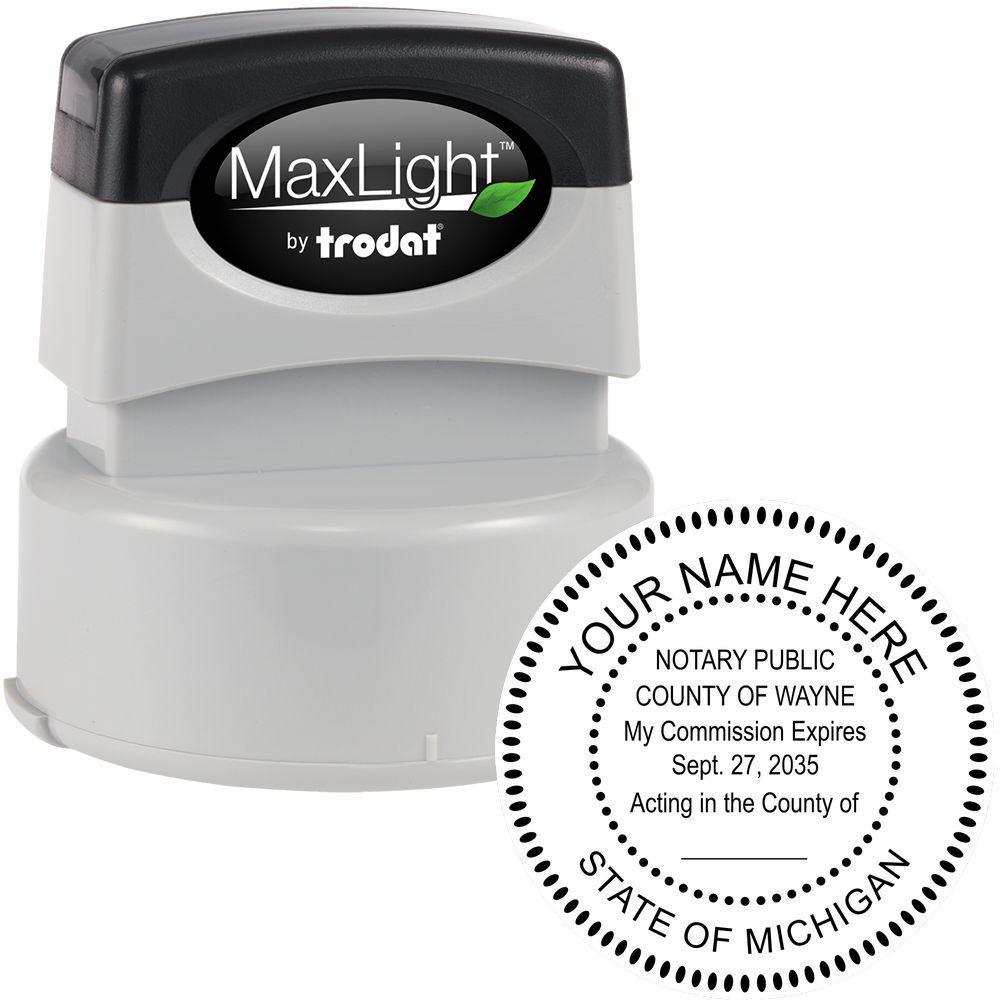
If you serve as a notary public in the Great Lakes State, understanding michigan notary seal requirements is crucial to performing your duties ethically and lawfully. Your notary seal not only attests to your credibility but also helps prevent fraud by offering an official mark that confirms the authenticity of documents. By staying up to date on state guidelines and best practices, you can ensure every notarization you complete is valid and professionally executed.
Understand Michigan Notary Seal Basics
Before you invest in any seal or stamp, it’s wise to know the basics. In Michigan, a notary seal consists of specific details that establish your authority and help people quickly verify your credentials. The seal can be either inked or embossed, and you’ll typically use it on legal papers such as affidavits, deeds, and various official forms.
Core Information The Seal Must Include
- Your name as it appears on your notary commission
- The words “Notary Public”
- The words “State of Michigan”
- The county where you received your commission
- Your commission expiration date
Some notaries wonder if you can add additional elements like a decorative border or a logo. In most cases, you may include design flourishes as long as they don’t obscure the mandatory information and your seal remains clearly legible. Think of these extras more as personal touches rather than functional requirements.
Why A Proper Seal Matters
A well-made seal offers more than just a professional look. Here’s why getting it right from the start matters:
- It prevents document rejections: Incomplete or hard-to-read seals can cause legal documents to be refused by courts or other authorities.
- It safeguards you legally: Maintaining a valid seal demonstrates that you take your responsibilities seriously and can protect you if questions about authenticity ever arise.
- It saves time: A clear, properly formatted seal reduces the time spent on corrections or re-notarizations.
Meet The Legal Requirements
Michigan’s laws define not just what goes on your seal, but also how and when you must use it. While the official language can seem daunting, knowing a few key rules will help you use your seal with confidence.
Know The Relevant Statutes
You can refer to the Michigan Notary Public Act for the specific legal framework. Though the text can be a bit technical, it outlines:
- Responsibilities of the notary
- Penalties for misconduct
- Rules for renewing and maintaining your commission
Whether you’re just starting out or have years of experience, revisiting the statute periodically keeps your knowledge fresh. Being proactive about compliance often spares you any subsequent headaches or fines.
Securing Your Commission
Before you can apply these laws, you need to hold a valid notary commission. Requirements for obtaining one generally include:
- Being at least 18 years of age
- Being a Michigan resident or maintaining a registered place of employment in Michigan
- Filing the proper application forms
- Taking an oath of office
Once your application is approved, you’ll receive a notary commission certificate that allows you to purchase and use a notary seal. Always check the expiration date on that certificate to ensure you know when it’s time to renew.
Design And Format Guidelines
Beyond containing the correct information, your seal must be readable and consistent. Faded, cluttered, or broken impressions may render a document invalid. Choosing a high-quality seal or stamp right from the start is a sensible investment in delivering professional, reliable notarizations.
Inked Stamp Vs. Embossed Seal
Two popular options exist for Michigan notaries:
- Inked Stamp: Provides a clear and bold impression on the document, making it easy to read and copy. It’s suitable for most legal and administrative tasks.
- Embossed Seal: Uses raised letters pressed directly into the paper. While it has a traditional look, the impression may not reproduce well in photocopies or scans.
Each style has its advantages. Many notaries opt for inked stamps in daily work due to the clarity, while embossed seals add an additional formal touch to certain documents. If your budget permits, you might consider having both on hand for maximum versatility.
Font Size And Legibility
Small or decorative fonts can be frustrating to read. To avoid confusion or rejection:
- Pick a legible typeface: Plain, block-style lettering works best.
- Aim for comfortable sizing: The text on your seal should be large enough to read without strain.
- Avoid over-embellishing: Too many decorative elements may interfere with the mandatory information.
Proper Use And Placement
Even a perfectly designed seal can cause issues if it’s poorly placed. The goal is always to ensure that whoever reviews a document can easily find and read your stamp or embossment.
Where To Place Your Seal
Ideally, you’ll apply the seal near your signature on the same page, but without covering any text. Consistency is key—placing your seal in different parts of the document can confuse clients or officials. If the document doesn’t have enough space, you can attach a separate certificate page, but be sure to reference the original document clearly.
When To Apply Your Seal
You’ll typically affix your seal after you witness a signature. Applying it prematurely or out of sequence can lead to errors or mistakes in your notarial record. Always confirm:
- The signer’s identity.
- The document’s completeness.
- The signer’s willingness.
Once these steps check out, you can confidently put your seal on the document, sign, and record the notarization in your log.
Keep Your Records Organized
Maintaining thorough records of your notarial acts is not just a good habit, it’s also required by state guidelines. In any dispute or claim of misconduct, your log can serve as proof of your diligence and adherence to the rules.
What To Include In Your Log
By properly documenting each notarization, you create a paper trail that protects you, your client, and any third party who may rely on the notarized document. Typically, your log should contain:
- Date and time of the notarization
- Type of document notarized (e.g., affidavit, power of attorney)
- Signer’s name and form of identification provided
- Your signature and the impression of your seal
- Any relevant notes or remarks
Digital Record-Keeping
With the growth of technology, some notaries opt for digital logs. While it can help keep everything in one place, ensure you use a reputable platform or software that is secure and tamper-proof. Always have a backup, since data corruption or accidental deletion could present a huge liability.
Select A Trusted Supplier
Where you get your notary seal matters as much as how you use it. A high-quality seal should give you sharp, clear impressions, last for thousands of uses, and meet all state specifications. This is where a reliable supplier can make your job easier.
Why Choose Acorn Stamps
If you’re looking for a source dedicated to meeting Michigan notary seal requirements, Acorn Stamps can help. We’re a family-owned and operated company that’s been in business since 1964, celebrating 60 years of stellar customer service. With our fast turnaround and attention to detail, you can expect:
- Top-quality Michigan notary stamps and seals that comply with state regulations.
- Clear impressions for consistent document acceptance.
- Customizable options to match your preferred style.
- Friendly, knowledgeable support to answer your questions.
By choosing a trusted supplier like Acorn Stamps, you reduce the risk of mistakes or subpar products. When your stamp or seal arrives, you can rest assured it’ll be ready for immediate use and hold up throughout your commission period.
Important Considerations When Shopping
- Verify compliance: Make sure the seal you’re buying is specifically approved for Michigan.
- Read reviews or testimonials: Get a sense of how other notaries feel about the product before you decide.
- Ask about warranties: A warranty or guarantee shows that the company stands behind its product.
- Inquire about turnaround times: If you’re pressed for time, be sure to choose a supplier known for quick delivery.
Frequently Asked Questions
Below are five common questions about Michigan notary seals that might come to mind as you open or renew your commission.
Do I Need A Seal For Every Notarization?
Yes, Michigan law typically requires using an official seal on all notarial acts. Each document you notarize should clearly show the seal alongside your signature and commission details.
Can I Share My Stamp With Another Notary?
No, your notarial seal is unique to your commission and must never be loaned out or shared. Keeping the seal in a secure location ensures no one else can misuse your credentials.
What Happens If My Seal Is Lost Or Stolen?
If your seal falls into the wrong hands, you could be liable for fraudulent activity committed in your name. Immediately report the loss or theft to local authorities and consider also informing the Michigan Department of State. You’ll want to order a replacement soon after.
How Often Should I Replace My Stamp?
You should replace it if it’s no longer producing crisp, clear impressions or if it’s worn out. High-quality stamps and embossers generally last for thousands of uses, so it pays to choose a reputable supplier from the start.
Can I Use An Electronic Notary Seal?
Michigan does allow electronic notarizations under certain conditions. However, be sure these solutions meet official guidelines for security. An electronic seal should still display all the essential details that identify you as a Michigan notary public.
Conclusion
Navigating Michigan notary seal requirements might feel daunting in the beginning, but it’s a straightforward process once you break it down. Every step—from selecting the right seal to placing it correctly and maintaining accurate records—plays a vital role in protecting not just your clients but also your own reputation. A properly executed notarization can mean the difference between a document that’s respected and one that faces unnecessary scrutiny.
When you’re ready to purchase or replace your notary seal, look to a trusted, family-owned provider like Acorn Stamps. Our experience spans six decades, and we’re here to help you meet all state requirements without any fuss. As you grow and refine your notarial practice, remember that staying informed keeps you in good standing and gives your clients the professional peace of mind they deserve.