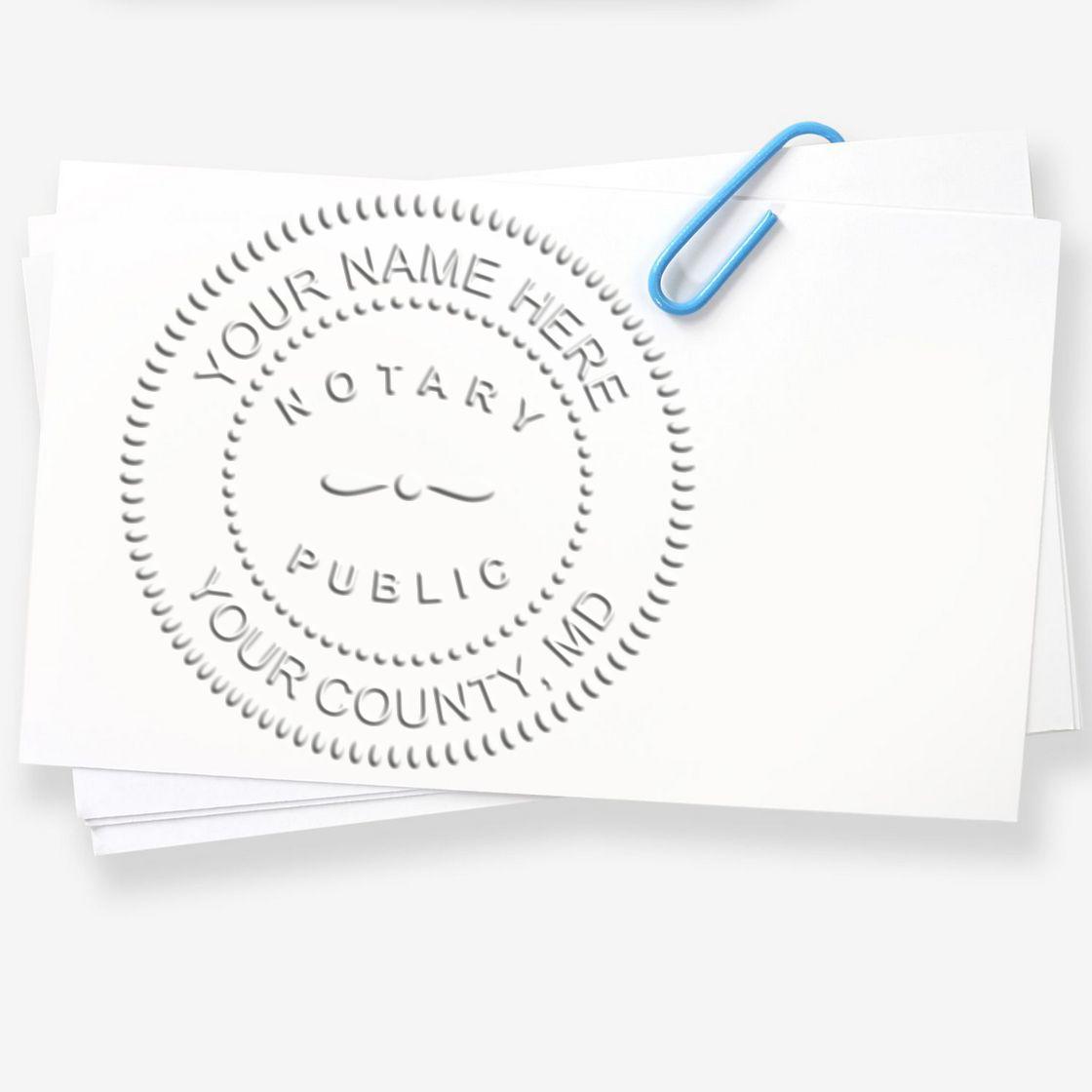
If you are a Maryland Notary Public, your Maryland notary public stamp is more than just another piece of office equipment. It is a vital tool that officially validates documents and demonstrates your commitment to upholding the responsibilities of your commission. Understanding the different stamp options, the mandatory requirements, and the best practices for using it can save you time, reduce errors, and help you maintain a professional reputation. Below is everything you need to know about selecting, caring for, and fully leveraging your stamp, all from a friendly, practical perspective.
Understand Your Maryland Notary Stamp
Your notary stamp serves as your personal mark of authenticity on forms and legal documents. Whenever you notarize a signature, you apply your seal to provide proof that the signer’s identity was verified and the document was executed lawfully. This small tool carries significant weight, as it ensures that transactions in Maryland meet legal standards.
Key Functions Of The Stamp
- Authenticates the identity of the signer.
- Demonstrates your official role as a Maryland Notary Public.
- Helps deter fraud by confirming the valid execution of documents.
By placing your stamp on contracts, affidavits, deeds, or other legal documents, you signal that all parties have complied with relevant regulations and guidelines.
Importance Of Compliance
Every state, Maryland included, has specific standards for notary stamps. These regulations ensure that notarized documents are both clear and recognizable. You are required to include your name, official title, commission expiry date, and other awareness elements that help verify the legitimacy of your notarial act. Failure to follow these guidelines can lead to serious legal repercussions or the invalidation of the notarized document.
Learn The Essential Requirements
Before purchasing a new stamp or updating your current one, it helps to understand Maryland’s specific rules regarding notary seals. The Secretary of State’s office provides detailed guidelines to ensure consistency, so you will want to stay on top of the latest information.
Maryland Regulations And Guidelines
Maryland law states that every notary public must use a seal during the performance of official acts. This seal contains specific information, such as your name as it appears on your notary commission, the words “Notary Public,” and the word “Maryland.” While the exact format can vary, it is crucial to ensure your stamp meets these requirements. Some key points include:
- Your name must match exactly what appears on your commission.
- The words “Notary Public” and “Maryland” should be included.
- The stamp should produce a legible impression on the document.
Because these marks can differ in layout or dimensions, double-check the size and style to make sure that the seal you select leaves a clear, easy-to-read imprint on all your official paperwork.
Expiration Date Details
Although Maryland does not require that your commission expiration date appear on the stamp, many notaries find it helpful to include. Doing so allows signers and other parties to see at a glance whether your notarial authority is still valid. If you decide to incorporate your expiration date, be sure to renew your stamp once you receive your updated commission.
Choose The Right Stamp
When shopping for a Maryland notary public stamp, you will discover a variety of options. Factors like ink delivery method, size, and design all make a difference. Some stamps focus on convenience, while others prioritize durability. If you already know you will be notarizing numerous documents on a daily basis, you might want a pre-inked stamp with a sharp, crisp impression. If you only notarize occasionally, maybe a simple rubber stamp and separate ink pad will suffice.
Self-Inking Stamps
A self-inking stamp includes a built-in ink pad that re-inks itself after each use. It is a popular option if you regularly notarize documents because:
- The ink is contained within the stamp body.
- You can make several imprints in quick succession.
- Maintenance is quite low.
Self-inking stamps typically offer thousands of impressions before the interior ink pad needs replacement. They are also easy to re-ink when the pad eventually dries out.
Pre-Inked Stamps
Pre-inked stamps undergo a different manufacturing process than self-inking varieties. Instead of using an internal ink pad, these stamps hold ink within the stamp’s body and allow it to seep through a special membrane. Advantages include:
- Ultra-crisp, clear impressions.
- Compact, sleek design.
- Minimal smudging thanks to consistent ink release.
If you perform detailed, high-volume notary work, a pre-inked stamp can make your documents look especially polished.
Traditional Rubber Stamps
While not as convenient as self-inking or pre-inked options, the classic rubber stamp remains a tried-and-true method. With a separate ink pad, you can control the amount of ink on each impression, which is helpful if you vary your stamping depth. This option is often economical and can be replaced easily. However, keep in mind that rubber stamps can be messier than other types and may slow you down if you need multiple notarial acts in a row.
Use It Properly
Having the right stamp is only part of the process. Proper usage ensures that your official actions meet legal requirements, protecting you and the document recipients. A mishandled stamp could result in invalidated documents or accusations of negligence.
Step-By-Step Stamping
- Verify Identification: Confirm the signer’s identity by checking a valid photo ID.
- Review Document: Make sure the document is complete and that the signer fully understands its purpose.
- Fill Out Notarial Certificate: Indicate the type of notarial act, such as an acknowledgment or jurat, and ensure all wording is accurate.
- Apply Stamp: Press your maryland notary public stamp firmly where designated, ensuring the text is entirely visible and readable.
- Sign And Date: Sign your name as it appears on your commission. Depending on the contract, you may need to add your commission expiration date.
Keep an eye out for any blank spaces or missing information in the document. These can be prime spots for fraudulent alterations. If something seems off, do not proceed until the necessary changes or clarifications are made.
Maintaining Your Stamp
Caring for your stamp is essential to avoid smudges, fading impressions, or incomplete details. Here are a few maintenance tips:
- Store It Properly: Keep it in a clean, dry place, away from direct sunlight.
- Clean The Surface: If you notice ink buildup, gently wipe the surface with a soft cloth.
- Replace Gaskets Or Pads: Do this promptly if impressions begin to look faint.
Regular upkeep helps you achieve consistently neat and professional results.
Discover Acorn Stamps
Choosing a reliable supplier for your notary needs is just as important as knowing the regulations. Whether you are renewing your commission or setting up your notary practice for the first time, you deserve both quality and convenience. That is where Acorn Stamps comes in. Family owned and operated since 1964, our team has been supplying maryland notary seals and stamps for 60 years. We pride ourselves on stellar customer service and super fast turnaround, making your ordering process smooth and efficient.
Wide Range Of Notary Products
At Acorn Stamps, you can find:
- Self-inking notary stamps
- Pre-inked notary stamps
- Traditional rubber stamps
- Embossing seals for a variety of applications
We design our stamps to meet Maryland’s official guidelines, and we offer personalization so that your commission details are properly displayed. If you need extra features like ink color options or lightweight travel stamps, our knowledgeable team is happy to guide you toward the best choice for your unique workflow.
Personalized Assistance
We are committed to more than just shipping a product to your doorstep. From clarifying Maryland’s notary stamp regulations to walking you through setup, Acorn Stamps focuses on helping you feel fully confident in every notarial impression you make. Our reputation as a premier supplier is built on genuine relationships with our customers, and we are always ready to answer any questions you may have about:
- The best stamp format for your volume of work.
- Proper storage or re-inking tips.
- Any new legislation that might influence your notary practice.
When you place your trust in Acorn Stamps, you know that you are covered by decades of expertise and a family tradition of delivering quality year after year.
Find Helpful FAQs
You may have a few questions about using or ordering a Maryland notary public stamp. Below are five frequently asked questions that notaries often bring up when they are just getting started or looking to upgrade their supplies.
Do I Have To Include My Commission Expiration Date On My Maryland Notary Stamp?
Maryland does not require that your commission expiration date be part of your stamp. However, including the date can make it easier for signers to confirm your credentials at a glance. If you do add it, remember to update or reorder your stamp after renewing your commission.
What Happens If My Stamp Impression Fades Over Time?
A faded stamp can invalidate your notarial act if critical details like your name or the words “Notary Public” are unreadable. To avoid issues, regularly inspect the clarity of your seal. If it starts to fade, you can either replace the ink pad in a self-inking device or re-ink a pre-inked version. For traditional rubber stamps, simply replace the pad or apply fresh ink.
Can I Use More Than One Type Of Stamp?
Absolutely. Many Maryland notaries keep both a self-inking stamp for everyday use and a traditional rubber stamp as a backup. This can be helpful when you are dealing with varying paper stocks or if you work in diverse environments—especially when a quick refill or multiple impressions are expected.
Is A Dry Seal (Embosser) Acceptable In Maryland?
Maryland requires an ink-based seal so that your commission information is reproducible on photocopied documents. While some notaries choose to use embossers in addition to their inked stamp, the legal requirement focuses on having an inked impression that remains easily legible upon duplication.
Why Choose Acorn Stamps Over Other Suppliers?
Acorn Stamps has been family owned and operated since 1964, providing over 60 years of dedicated service to notaries in Maryland and beyond. We handle each order with care, offer a wide range of customizable options, and support you with friendly, knowledgeable customer service. Our super fast turnaround also ensures you will have your new stamp or seal in plenty of time for your next notarial act.
By following the guidelines, selecting the best type of stamp for your routine, and properly maintaining your equipment, you can serve the public with confidence. Whether you are a first-time notary or an experienced professional, the right Maryland notary public stamp keeps your work official and compliant. If you are ready to upgrade or replace your seal, Acorn Stamps is always here to offer you practical advice, fast custom orders, and the personal touch of a family-run business. Feel free to reach out with any questions, and let us help you make each notarized document a smooth, seamless experience.