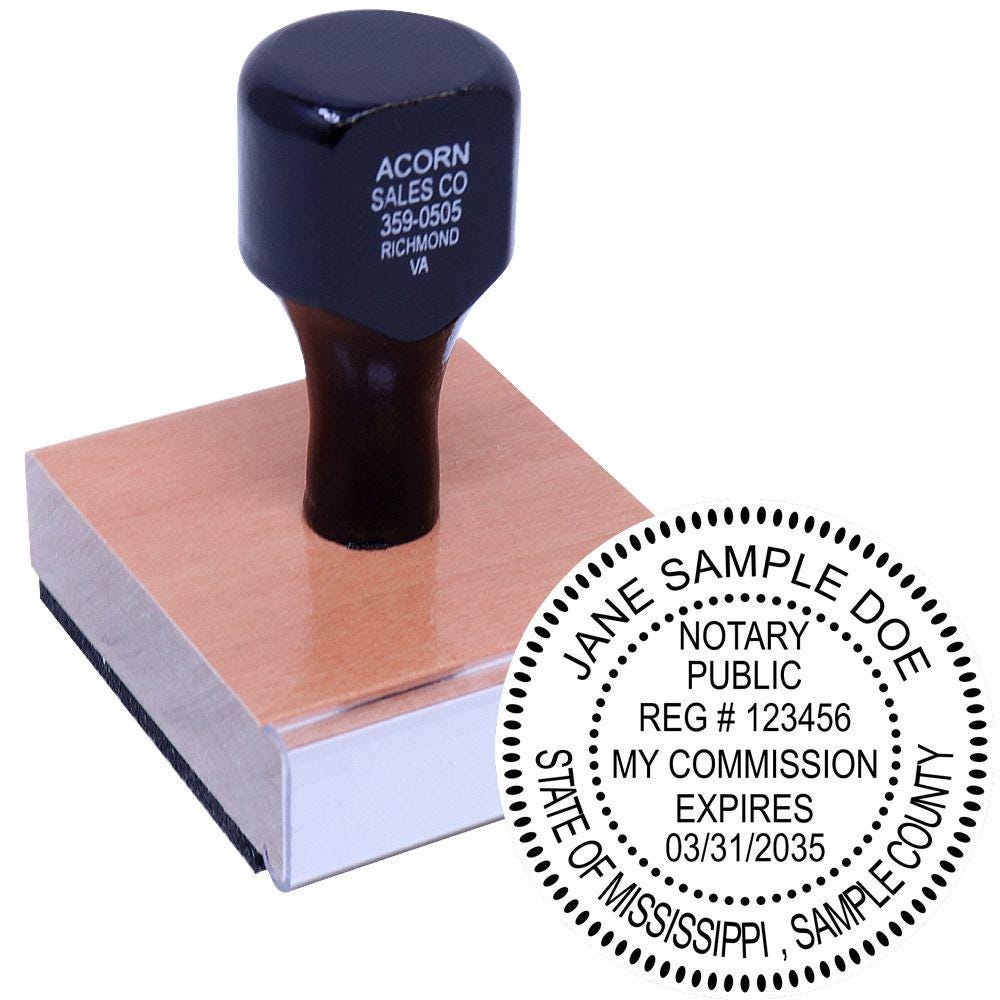
So you’ve received your commission as a Mississippi notary public and need the right Mississippi notary stamp and seal for your line of work. You might be unsure whether you only require a rubber stamp or if you also need an embosser. Perhaps you’re not sure how to find a reliable supplier or how to maintain your tools for long-lasting performance. This guide walks you through everything you need to make an informed decision and keep your documents official in accordance with state guidelines. By the end, you’ll know exactly what to look for, which features matter most, and how Acorn Stamps can help you every step of the way.
Acorn Stamps is proud to be a top supplier of Mississippi notary stamps and Mississippi notary seals. Family Owned and Operated since 1964, our team brings over 60 years of expertise and dedication to serving notaries like you. We’ve built a reputation for stellar customer service and super fast turnaround times, ensuring you always have the right tools on hand when you need them. In this article, you’ll discover how to select, use, and care for your notary stamp and seal so your commissions always run smoothly.
Understand Mississippi Rules
Because notary requirements can differ from state to state, it’s important to confirm that your Mississippi notary stamp and seal meets all local regulations. Mississippi mandates that you authenticate crucial documents, including affidavits and acknowledgments, with an official imprint or embossment. Your stamp or seal typically must include at least your name, the state of Mississippi, and the words “Notary Public.” Some stamping devices also allow space for your commission number and its expiration date.
Why Stamps And Seals Are Crucial
When you apply your stamp or seal to a document, you add immediate legitimacy. This mark proves you verified the signer’s identity, followed proper procedure, and carried out the notarial act in compliance with Mississippi law. Because your seal or stamp clearly identifies you as an active notary for the state, any document you sign is more likely to be accepted by banks, real estate companies, or government offices. Along with your signature, the stamp or seal is a visual confirmation that the document’s authenticity has been confirmed.
Unique Mississippi Requirements
Although most states across the US require notaries to use some type of marking device, Mississippi’s specifications might vary from neighboring states. Since you have a professional responsibility to follow these official guidelines, you’ll want to ensure your stamp or seal aligns with Mississippi’s design and content mandates. If you’re ever unsure, it’s wise to check with the Mississippi Secretary of State or consult documentation that highlights specific notary protocols. Curating your knowledge of these rules from the start will give you the confidence to handle every document effectively.
Know Key Stamp Features
Whether you’re brand new to notary work or an experienced professional, it pays to understand the essential features of a Mississippi notary stamp and seal. Though the final design depends on your personal preference, there are some common elements that will ensure you stay compliant and efficient during notarizations.
Physical Stamps Vs. Embossers
A traditional inking stamp is the most common option for Mississippi notaries. It’s quick, clear, and easy to use on various standard paper stocks. You simply press the device onto an ink pad (or use a self-inking model) and then apply a clear impression of your seal to the document. This approach offers consistent results for the majority of your notarization needs.
An embosser, on the other hand, creates a raised imprint by applying pressure through a metal die. It can give documents a more traditional or professional flair, and some notaries appreciate the tactile security it provides. However, an embossed imprint can be more difficult to photocopy or scan. Because Mississippi allows for either method, many notaries opt to carry both. The stamped seal leaves a clear visual record on any copies, while the embossed seal lends an official look and a sense of authenticity.
Vital Elements To Include
When you order your Mississippi notary stamp and seal, make sure it features several critical pieces of information. These can include:
- Your full name as it appears on your notarial commission
- The words “Notary Public”
- The state you serve, commonly “State of Mississippi”
- Additional details such as your commission expiration date or commission number (if required or preferred)
While Mississippi does not always require the inclusion of your commission number on the stamp or seal, adding it can enhance clarity, especially for clients and organizations who want a quick reference to your notarial credentials. Including an expiration date, if space allows, can also be helpful for compliance checks.
Choose Your Provider
A key step in selecting the ideal Mississippi notary stamp and seal is deciding where to buy it. Rather than shopping around at multiple stores, many professionals rely on a reputable, specialized company that truly understands the needs of notaries in your state.
Reasons To Trust Acorn Stamps
At Acorn Stamps, we recognize that your job requires reliability, accuracy, and exceptional customer support. Here are a few reasons you might consider us for your notary supplies:
- Family Owned And Operated Since 1964
Our company has more than 60 years of experience creating custom stamps and seals. Each device is crafted to the highest standards, thanks to the knowledge we’ve amassed over decades of service. You get the benefits of time-tested processes that consistently produce sharp, long-lasting impressions.
- Precisely Engineered Materials
We prioritize top-quality inks, rubber, and metal components to ensure your stamps and seals hold up to everyday use. Because you rely on these tools in professional, legal, and administrative contexts, our products are designed to perform flawlessly for thousands of impressions.
- Customization Options
Your notarial authority is unique, and so is your style. We offer customization so you can integrate required text, your name, and other important details with a layout that suits you. Whether you prefer a round or rectangular design, or choose an embosser over an inking stamp, we’ll produce a crisp, compliant tool that reflects your professional identity.
- Stellar Customer Service
We understand that your schedule can get hectic, which is why our staff is here to guide you through the ordering process. If you ever need help deciding on stamp ink color, text placement, or embossing orientation, our knowledgeable team is just a phone call or email away. That single point of contact is often a lifesaver when you’re juggling multiple tasks.
- Super Fast Turnaround
Because so many of our customers rely on notary stamps for their day-to-day tasks, we do everything we can to ensure you get your order promptly. In many cases, if you place your order by a certain time, we’ll ship it the same or next business day. This speed means you can start stamping and notarizing without extra delays.
When evaluating a provider for your Mississippi notary stamp and seal, think about how their expertise can strengthen your notarial duties. The last thing you want is a misaligned or inaccurate stamp that causes confusion or is challenged by a document recipient. By working with a knowledgeable partner like Acorn Stamps, you’ll save time, reduce errors, and keep your professional reputation strong.
Store And Maintain Properly
Even the most durable stamp or seal benefits from proper care. Because these devices contain metal and rubber components, you’ll want to store them in a way that preserves their condition and keeps the impression crisp. Simple habits can ensure your seal remains in great shape for the full length of your notarial commission, and potentially well beyond.
Handling Your Stamp
Regardless of whether you’re using a traditional or self-inking stamp, you should keep the impression surface clean and free of dried ink, dust, or debris. Try to avoid touching the stamp’s rubber face directly with your hands, as oils from your skin can degrade the surface over time. If you notice excess ink or residue, gently wipe the area with a damp cloth or paper towel. Avoid abrasive or harsh chemical cleaners, which can wear down the stamp faster.
Prolonging Its Lifespan
A few small steps can make a big difference in your stamp or seal’s longevity:
- Store your notary devices in a dry area.
- Keep them in protective cases or sleeves, especially for embossers, to prevent damage from accidental drops.
- Refill or replace ink pads regularly, and use official refills recommended by the manufacturer to maintain consistent stamping results.
- Check your embosser’s alignment if you notice uneven pressure or a partial imprint. Slightly tightening or adjusting the mechanism can prevent damage to the metal plates.
Use Your Stamp Confidently
Once you have the ideal Mississippi notary stamp and seal, your next step is mastering how to apply it accurately. Consistency is key. When you follow a repeatable process, you minimize mistakes and ensure each document you notarize can stand up to scrutiny.
Pre-Stamp Preparations
Before you authenticate any document, take a moment to confirm that the document is complete and ready for your notarial act. Mississippi law typically requires that the document signer appear before you in person, so make sure the individual is present and has valid identification. You should also verify that the signer’s name matches the name on the document and that there are no blank spaces that must be filled in. Checking these details in advance prevents the need for corrective measures later.
Correct Stamp Technique
When you go to apply your stamp or seal, always choose a clean spot on the page that doesn’t overlap signatures or text. If you’re using a self-inking stamp, position it vertically, press firmly, and then lift straight up to prevent smearing. If you have a separate ink pad, you’ll want to press the stamp onto the pad gently, ensuring the rubber surface is coated evenly with ink. Avoid pressing too hard on the ink pad, as that can lead to overly inky impressions.
With an embosser, try to apply firm pressure. If you press too lightly, you may not get a clear raised imprint. On the other hand, pressing too hard can damage the document or wear down the die plates prematurely. A quick practice session on scrap paper helps you get a feel for the pressure needed. Then, open the pages of the actual document to a sturdy surface before embossing to ensure a solid impression that remains legible.
Finally, record each notarization in your journal (if required in your jurisdiction) and double-check that everything on the document is accurate. This careful approach goes a long way toward building trust in your services and preventing any disputes about authenticity.
Troubleshoot Common Problems
While a dependable Mississippi notary stamp and seal rarely misbehaves, you might occasionally face minor issues. Handling these problems quickly is essential to maintain a professional appearance and uphold the quality of every notarized document.
Imprints Too Faint
If you notice that your stamp impressions are faint or incomplete, you might need to replace or re-ink your stamp pad. Ensure you’re using ink specifically formulated for notary or office stamps. Alternatively, the rubber on your stamp could be worn down. In that case, it may require a replacement stamp face or a whole new device. For embossers, faint marks often result from insufficient pressure or a misalignment of the die plates.
Dealing With Ink Smears
Smudges can occur if the ink is oversaturated or if you drag the stamp across the document while lifting it. Make sure you apply even pressure and lift the device straight up when stamping. If you consistently see excess ink, carefully blot the stamp once on a separate paper to remove any surplus. Changing to a higher-quality ink can also be beneficial. Generally, your best solution is standardizing your stamping technique across all notarized documents.
FAQs: Mississippi Stamp And Seal
Below are answers to some of the most common questions about Mississippi notary stamps and seals. These tips will help you ensure that you’re always following state guidelines while providing top-notch service to your clients.
Do I Need Both a Stamp and an Embosser?
You’re typically allowed to use either a rubber stamp or an embosser in Mississippi. However, many notaries prefer to have both. The stamp ensures a clear, inked impression that shows up on photocopies and scans, while the embosser lends documents a more formal, tactile mark. It ultimately comes down to personal preference, but you’ll find that each method has its unique benefits.
What Information Must Appear on My Seal?
Mississippi notary seals must generally include your name as it appears on your commission, the words “Notary Public,” and the state you’re commissioned in. Although not always mandatory, adding your commission number and expiration date can be helpful for clarity and compliance checks. Double-check with state guidelines for any recent updates on required elements.
How Often Should I Replace My Ink Pad or Refill My Stamp?
This depends on how frequently you notarize documents. If your impressions start to fade or appear uneven, it’s a sign that your ink supply is running low. Consider investing in a refill kit or replacement pad that’s meant for your specific brand and model of stamp. High-quality ink pads usually last awhile and ensure a consistently clean imprint.
Is It Legal to Notarize Electronic Documents in Mississippi?
Electronic notarization is allowed in certain contexts, but you need to follow specific state regulations that outline technology standards and identity verification. You still need your official notary seal or stamp to authenticate most physical paper documents, so your responsibilities remain similar. If you’re considering e-notarization, confirm that you’re meeting all electronic and remote notarization requirements set by Mississippi’s Secretary of State.
Where Should I Store My Notary Stamp and Seal?
Keep them in a secure, dry spot inaccessible to unauthorized persons. A locked drawer, a safe, or a dedicated office cabinet are great options. Proper storage not only protects your equipment from damage but also minimizes any risk of misuse. Maintaining a clean, well-organized environment for your supplies also helps you stay professional when clients come in for a notarization.
By familiarizing yourself with these FAQs, you’ll be better prepared to handle everyday procedures and keep your stamp or seal performing at its best. If you have additional questions or need personalized guidance, the friendly team at Acorn Stamps is always ready to help.Above all, remember that your Mississippi notary stamp and seal serves as more than just a mark on a page. It’s a testament to your hard work, reliability, and adherence to the official guidelines. When you choose a trusted supplier like Acorn Stamps, you’ll receive a product that lets you focus on your duties, rather than worry about potential stamping mishaps.
From selecting the design that suits your preferences to ensuring proper maintenance, you’re now prepared to fulfill your notarial responsibilities with confidence. Your stamp and seal reflect your professionalism and help validate the vital documents your clients depend on, so it’s worth taking the time to do things right. By following the recommendations outlined here, you’ll be ready to tackle any notarial task that comes your way—knowing you have just the right tools at your side.