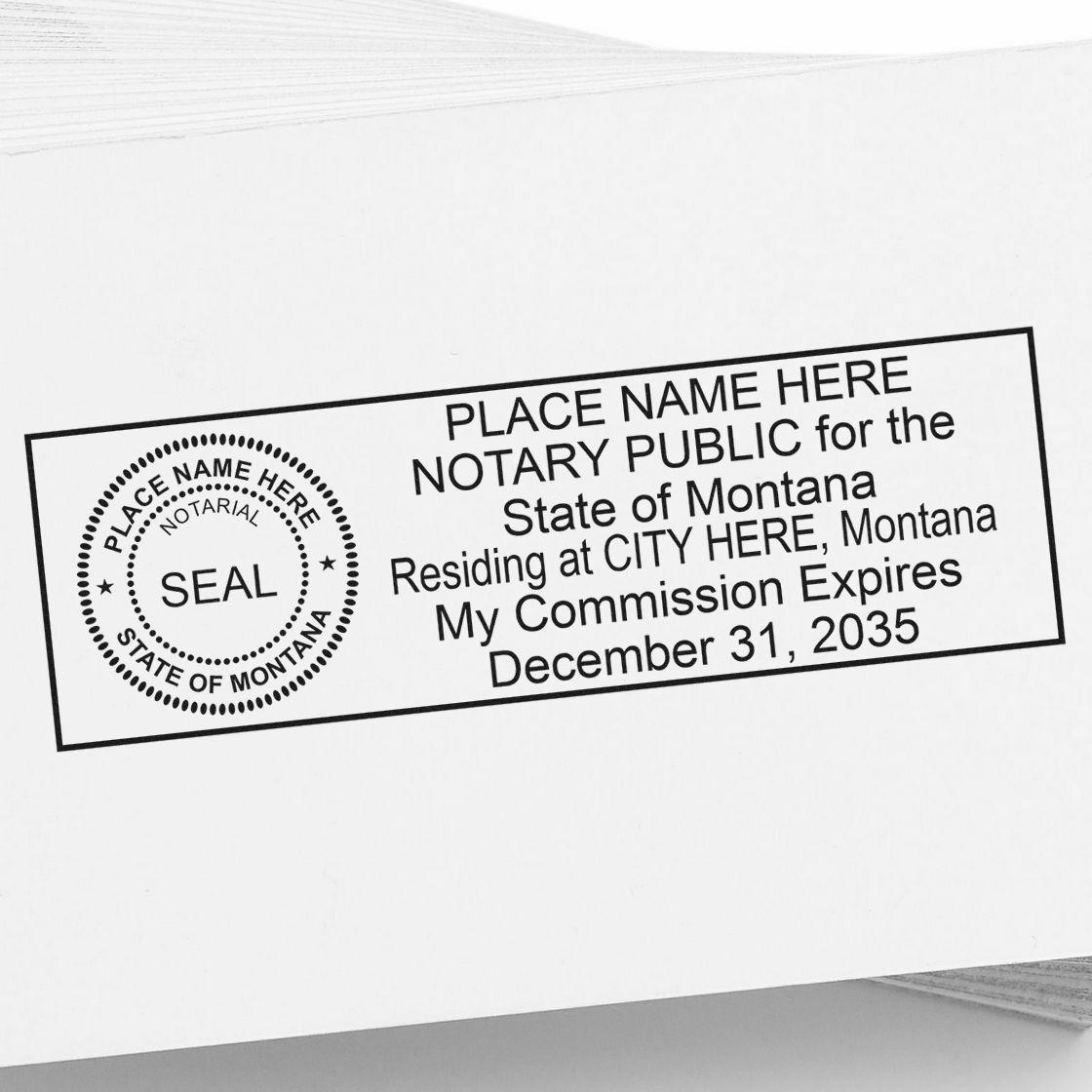
Natural light makes a home feel bigger. When it comes to your role as a Montana Notary Public, the right tool, like a reliable Montana notary stamp, can likewise illuminate and streamline your day-to-day tasks. Whether you are just starting out or have been notarizing documents for years, there is always more to learn about how to optimize your notary practice. Below, you will discover why the Montana notary stamp is so essential, how to choose the best option, and how to keep your stamp in peak condition for years to come.
Explore the Montana Notary Stamp
Your Montana notary stamp is not merely a piece of office equipment. It is a symbol of trust that tells clients their paperwork is in capable hands. Whenever you notarize a document, you help protect the legal and financial interests of the people counting on your services. This responsibility requires you to follow Montana’s state regulations precisely and use a notary stamp that meets official guidelines.
A proper stamp clearly displays your name, title, commission number, and other details so that signers and record keepers can trust the notarized document. With the right Montana notary stamp, you ensure that the people who rely on your notarial acts receive the clarity and legitimacy they need.
Why the Stamp Matters
- Accountability: Your stamp includes personal information tied to your commission, keeping you accountable for the notarial act.
- Legal Compliance: Montana law requires specific details to appear on every notary seal. Using a properly formatted stamp ensures you meet those guidelines.
- Professional Appearance: A clean, legible impression sets you apart as a notary who takes their role seriously.
Every stamp impression you make could be scrutinized later in court or by regulating authorities. Taking time to understand and invest in a high-quality, compliant stamp can save you headache and liability down the road.
Meet the Legal Guidelines
In Montana, notary laws exist to preserve the trustworthiness of notarized documents. You want to ensure you follow these regulations carefully so that every notarial act is valid. Requirements vary by state, but Montana typically specifies what information your stamp must include, how it should appear, and when to use it.
Core Requirements
- Your Name as Commissioned: The name on your stamp must match the name on your notary commission exactly.
- Commission Number: Montana law often requires your unique commission number on the stamp so agencies can verify its authenticity.
- Words “Notary Public for the State of Montana”: The exact wording may differ slightly, but it is crucial to identify which state has granted you notarial authority.
- Ink Color and Legibility: Some states allow specific ink colors, while others simply require clarity. You should pick a color that contrasts well on most documents.
- Shape and Size: Check the maximum size your stamp impression can be. Montana sets guidelines to ensure the seal is large enough to read without overshadowing the document.
Staying Up to Date
Montana regulations around notarial acts can evolve over time. That means you will want to keep an eye on any legislative changes that might affect how you perform your duties. Renewing or updating your montana notary stamp when your commission is renewed is an ideal time to confirm that your stamp still satisfies the latest rules. If you keep your commission status and stamp design aligned with any new mandates, you will avoid potential administrative hurdles or having to re-notarize documents.
Compare Stamp Types
When shopping for a Montana notary stamp, you may notice that you have several options. Each stamp type offers different benefits. Some come fully inked with re-inking capabilities, while others require a separate ink pad. Ultimately, you want to select a stamp that best fits your day-to-day notarization tasks. Below is a quick overview of the main types you might encounter.
Self-Inking Stamps
This style comes with a built-in ink pad that re-inks the die (the part that creates the impression) after each use. If you need to move quickly from one notarization to another, a self-inking stamp can save you time. Simply press down, and the stamp re-inks automatically.
- Pros: Convenient, fast impressions, minimal mess.
- Cons: May require more frequent ink pad replacement if you do high-volume notarizations.
Pre-Inked Stamps
In a pre-inked stamp, ink is embedded within the die itself. Each time you stamp, the die releases a small amount of ink. These stamps often produce crisp impressions and can handle thousands of uses before needing re-inking.
- Pros: Sharp, clean impressions, long-lasting ink supply.
- Cons: Typically cost more up front, can take slightly longer to re-ink once the original ink runs low.
Traditional Rubber Stamps
Rubber stamps require a separate ink pad. You press the stamp to the pad, then press it onto the document. If you prefer a classic approach, these might be what you picture for notary work.
- Pros: Affordable, easy to replace parts if the stamp or pad is worn out.
- Cons: Less convenient if you do high-volume notarizations, more prone to smudges if not pressed evenly.
Specialty Stamps for Montana
You might see specialty variations designed explicitly for Montana notary use. These can incorporate additional details or unique shapes authorized by the state. If you want to stand out or have a distinctive seal style, explore these options to see what meets Montana’s legal standards.
Maintain the Stamp’s Quality
Your stamp is more than a random office accessory. It is a vital tool for meeting the needs of your clients, from couples finalizing a mortgage to businesses verifying important contracts. Simple maintenance steps can prolong the life of your stamp and help you avoid last-minute printing issues.
Cleaning and Storage
Try to keep the stamp free from dust or debris, as foreign particles could smudge the impression. If your stamp has a protective cap or cover, use it. Store the stamp in an upright position, especially if it is a self-inking model. Laying it on its side could cause ink to flow improperly.
Re-Inking Best Practices
- Use the Right Ink: Each stamp type typically requires a specific ink formula that bonds well with the material.
- Avoid Over-Inking: If you pour too much ink, you may get messy, blurred impressions.
- Wait Before Use: Give the ink a few moments to settle into the stamp material properly.
Rotation and Replacement
If you perform many notarizations per day, consider rotating between two stamps. This not only extends the lifespan of each stamp but also provides an immediate backup if one starts failing. When you see faint or uneven impressions despite routine re-inking, it might be time to retire that stamp and get a replacement. Being proactive with rotation and replacement will ensure you are never caught off-guard in front of a client.
Enhance Your Professional Image
The stamp you choose is an extension of your professionalism. You never know when your client will share an image or a photocopy of a notarized document with colleagues, financial institutions, or even attorneys. A clear, crisp stamp not only complies with the law, it also signals to everyone involved that you take your commission seriously.
Personalizing Your Seal
Even within Montana’s guidelines, you can personalize the look and feel of your stamp in small ways, such as selecting a different grip or shape, as long as you respect state mandates about layout. Showing a bit of personality, while remaining within the rules, can help differentiate you from other notaries.
Additional Supplies
Sometimes, you might need an embosser in addition to your Montana notary stamp. An embosser creates a raised impression on paper, which many clients still find authentic and authoritative. While not always mandatory, an embosser can reinforce the legitimacy of hard-copy certificates and documents. You can also choose specialized stationery or keep official notarial certificates on hand for various transactions.
Trust Acorn Stamps
When you are ready to invest in a new Montana notary stamp, you will want a supplier who values both quality and your professional reputation. That is where Acorn Stamps can help. We have been a family-owned and operated business since 1964, serving notaries just like you for over 60 years. You get more than a top-tier stamp, our team is dedicated to helping you receive exactly what you need, when you need it.
Why Choose Acorn Stamps
- Stellar Customer Service: Your questions matter, and we are always ready to guide you toward the perfect stamp or seal.
- Super Fast Turnaround: We understand that time is crucial. Our streamlined production ensures you get your new stamp quickly.
- Attention to Detail: Each of our Montana notary stamps is crafted with precision, ensuring every impression meets state guidelines.
- Long-Standing Expertise: With decades in the industry, we know notary stamping regulations inside and out.
When you place an order with Acorn Stamps, you can be confident that you are not only purchasing the physical product but also the knowledge, experience, and commitment that come with it. From commission updates to maintenance advice, we have you covered.
Ordering a Custom Stamp
If you have special instructions or if you are renewing your commission and need brand-new details on your stamp, simply let us know. We can tailor your stamp to include any state-required elements, plus any additional details you want. Once your design is finalized, we will produce and ship it promptly, so you do not have to delay your client-based appointments.
Frequently Asked Questions
Do I Need Multiple Montana Notary Stamps?
It depends on how often you perform notarial acts. Having a backup stamp is helpful if you handle high-volume notarizations or do not want to risk running out of ink mid-notarization. Owning more than one can also protect you from downtime if your primary stamp wears out or gets misplaced.
Can I Use Any Ink Color for My Montana Notary Stamp?
Montana law usually focuses on legibility and clarity rather than specific ink colors. Still, most notaries choose a standard ink color like black or blue to ensure easy scanning and copying. You want to make sure any official documents you stamp remain clearly legible for years to come.
How Often Should I Re-Ink My Stamp?
The frequency depends on the volume of notarizations you perform and the type of stamp you have. Self-inking and pre-inked stamps both have built-in ink supplies that can last several thousand impressions. Pay attention to the clarity of each impression you make. If it starts fading or appearing uneven, it is time to re-ink.
What Happens If My Stamp Impression Goes Wrong?
Mistakes happen. If your stamp smudges or goes off-center, you can simply place a correct impression close by, but ensure the incorrectly stamped area is clearly voided or marked. Over time, you will develop a knack for positioning the stamp precisely. Also, keep the document’s signers informed on how to read your stamp if any part is unclear.
What Is the Difference Between a Stamp and an Embosser?
A stamp uses ink to create a clear, readable impression on a document. An embosser, on the other hand, creates a raised seal. In Montana, a notary stamp is specifically required to meet state guidelines. An embosser is sometimes used for extra authenticity or stylistic preference. However, the inked stamp typically fulfills official requirements for each notarized document.
Taking care of your Montana notary stamp is a responsibility that comes with your commission status. It is an essential tool for safeguarding the integrity of the documents you oversee. By knowing how your stamp works, where to source it, and how to maintain it, you will ensure that every notarization meets Montana’s legal requirements and leaves your clients feeling secure. Remember, Acorn Stamps stands ready to assist you in selecting and customizing the right stamp for your daily needs. With our commitment to quality craftsmanship and our decades of expertise, you can trust that your notary practice is in the best possible hands. From reliable equipment to friendly customer service, we are here to help you carry on the vital work that Montana notaries perform every day.