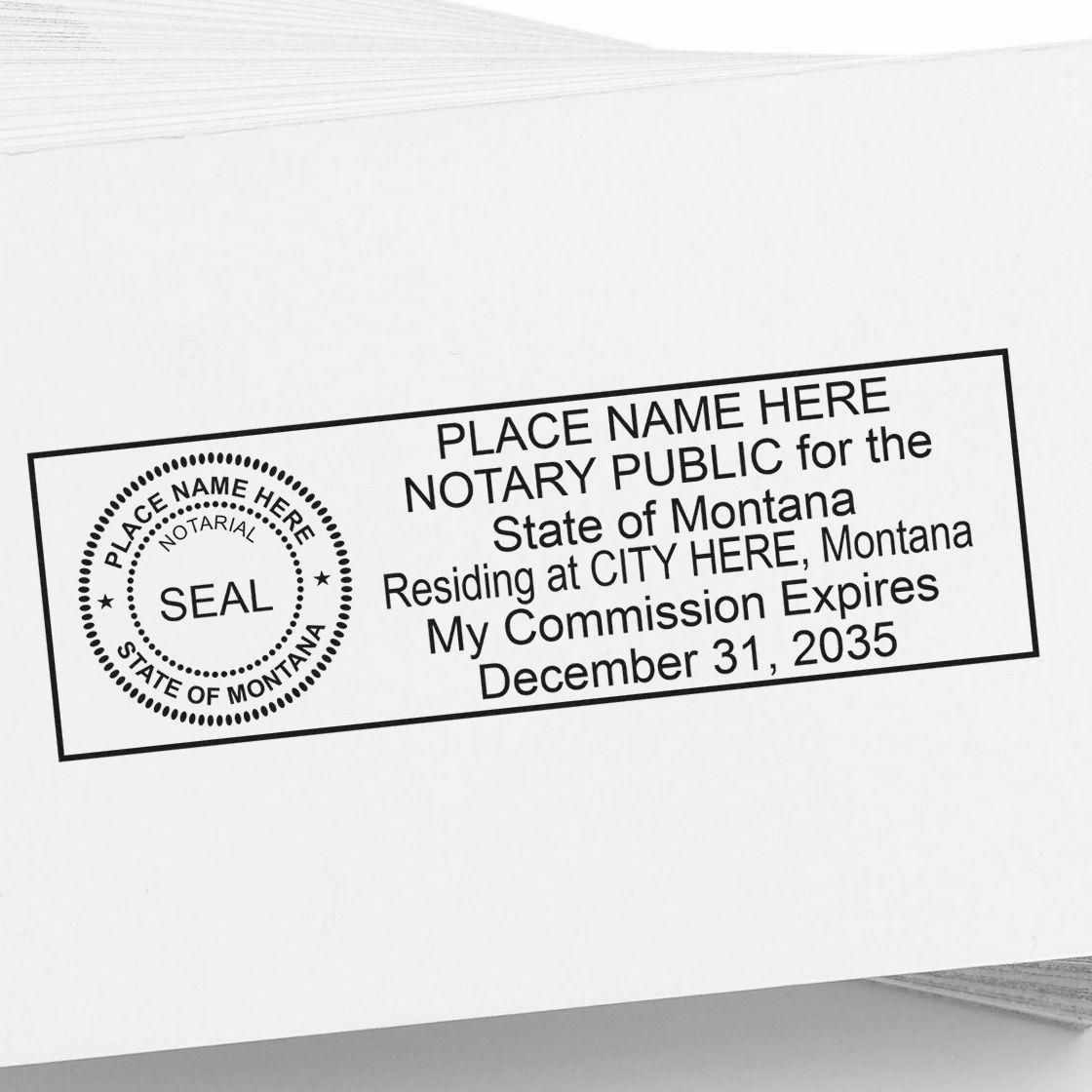
If you are newly commissioned or have years of experience as a notary public, choosing the right Montana notary public stamp can feel like a big decision. Your stamp is the official seal of your hard-earned commission, and it helps you authenticate documents with speed and precision. In Montana, there are specific guidelines to follow regarding what your seal should include, where to buy it, and how to maintain it. Because each notarial act you perform carries legal responsibility, it is important that you feel confident about the notary supplies you invest in. This guide will help you understand the factors that matter most in picking your stamp, so that you can fulfill your duties with ease and accuracy.
Understand Montana Notary Basics
Although each state has slightly different rules, Montana sets its own requirements for notary stamping. When you become a notary in Montana, you are authorized to perform specific functions such as administering oaths, taking acknowledgments, and certifying copies of certain documents. Each transaction requires a clear impression of your Montana notary public stamp to validate the authenticity of any document. Notarization in Montana can vary from one type of document to another. You might regularly witness property deeds, trust documents, or affidavits. Regardless of the type of paperwork, you should always ensure that you follow proper protocol: identify the individual who needs notarizing, check the validity of their ID, and record relevant details in your notary journal before you apply your stamp. Overlooking or skipping any part of this process exposes you to potential liability and legal consequences.
Why Your Stamp Matters
Your stamp makes an immediate, official statement. Not only does it confirm your status as a notary public, but it also helps prevent fraud by clearly marking the date of your commission expiration. Poorly inked, faded, or smudged stamps can create confusion and make your notarial act appear invalid. Montana law requires that the seal or stamp be legible and complete, so investing in a reliable and durable stamp is essential.
Typical Notary Duties in Montana
- Administering oaths and affirmations
- Examining proof of identity
- Notarizing signatures on legal and business documents
- Maintaining a chronological record of notarial acts in a dedicated journal
- Informing individuals of your role and ensuring their understanding of the notarial act
By adhering to these duties, you will strengthen the trust placed in you by clients and by the state of Montana.
Know the Legal Requirements
Montana’s notary seal regulations help maintain uniformity, reduce forgeries, and protect the public interest. Recognizing these guidelines ensures you stay compliant.
Seal Specifications
Montana law specifically dictates that your stamp or seal must present certain information, including:
- The words “Notary Public for the State of Montana”
- Your name exactly as it appears on your official notary commission
- The phrase “Residing at” followed by your city, to indicate your recorded residence
- An expiration date for your notarial commission
In some cases, you might also see the requirement for the state’s official emblem. Verify your current year’s rules with the Montana Secretary of State before purchasing your notary stamp to ensure you comply with all changes or updates.
Special Considerations
Montana allows notaries to perform remote online notarizations (RON) if they meet specific requirements. If you offer RON services, you may need an electronic stamp or embosser that meets the state’s additional security guidelines. Even in these more advanced settings, the seal image must still include the same core details as a physical stamp. Compliance is non-negotiable, because if your stamp does not meet the state’s guidelines, your notarizations might be considered invalid. Always double-check your seal’s design for any errors in printing or omitted details before using it the first time.
Compare Common Stamp Types
When you start shopping for your Montana notary public stamp, you will encounter two main categories: traditional rubber hand stamps and self-inking or pre-inked stamps. Each has benefits and drawbacks, so consider how often and where you will be performing notarial acts.
Traditional Rubber Hand Stamp
- Requires a separate ink pad
- Often compact and straightforward to use
- Typically less expensive than self-inking versions
- You control how heavily you ink the stamp, which can help you achieve clear impressions
Traditional rubber stamps require a bit more effort. You need to take an extra step of inking the stamp each time, which can slow you down if you perform higher volumes of notarizations. However, if you handle lower volumes or appreciate a simpler design, this might meet your needs.
Self-Inking or Pre-Inked Stamp
- Ink is integrated into the device
- Offers quick, consistent impressions
- Requires minimal storage space
- Generally more durable when used heavily
Self-inking or pre-inked stamps are convenient for busy notaries. With the ink already inside, you can stamp numerous documents quickly. You also avoid the complication of misaligning your stamp on the pad. However, they can cost more upfront. Additionally, once ink runs low, you either refill it or replace the entire cartridge.
Consider Key Stamp Features
Even if two stamps meet the same legal requirements and appear identical at first glance, they might deliver a different user experience. By looking at specific stamp features, you can zero in on the best product for you.
Impression Clarity
Crisp, smudge-free impressions save you from re-stamping and reassure signers that your stamp is legitimate. Seek a design that minimizes ink bleed. Ask sellers about the average life of the stamp before impressions begin to fade.
Longevity
High-quality plastic or metal components help stamps resist daily wear and tear. Invest in a brand you trust to avoid repeated repurchases. Over time, a durable stamp saves you more money than replacing cheaper alternatives frequently.
Ergonomics
If you handle large notarization volumes, an ergonomic grip and minimal force requirement can reduce strain on your hand and wrist. Test different stamps if you can, noting how they feel and how well they align on the page.
Ink Color and Refills
Montana does not explicitly require a specific ink color, but black or dark blue tends to be the default. Look into how easily you can replenish your ink and whether refills are widely available.
Choose a Trustworthy Provider
Selecting a reliable supplier is as important as picking the right stamp type. Working with a reputable business ensures your stamp follows Montana law, is well-made, and meets your specific notary needs.
Why Acorn Stamps?
One of the leading purveyors of Montana notary stamps and Montana notary seals is Acorn Stamps. As a family-owned and operated company since 1964, Acorn Stamps has delivered quality notary supplies for over 60 years. Whether you need a pre-inked stamp for long signing sessions or an embosser for that extra professional touch, you will find a range of options designed to meet Montana’s guidelines.
- Stellar customer service. Experts are on hand to answer your questions about design, compliance, or maintenance.
- Super fast turnaround. If you are in a hurry to begin your notary commission work, you can rest easy knowing your stamp will arrive promptly.
- Quality assurance. Because they have specialized in stamps and seals for decades, you can trust the craftsmanship is reliable.
Factors to Confirm Before Purchase
- Make sure your commission name is spelled correctly.
- Verify the accuracy of your “Residing at” city name.
- Confirm your commission expiration date is updated and current.
- Check the layout proof from the supplier if it is available.
Once your order arrives, do a quick test on a blank piece of paper to make sure all the text and design elements match exactly what you expect.
Use and Maintain Properly
After you have chosen your Montana notary public stamp, it is essential to take good care of it. A well-maintained stamp prolongs its lifespan and preserves the clarity of your notarial seal. By consistently following good habits, you also reduce the chance of errors that could lead to documents being rejected.
Stamping Technique
- Ensure the surface you are stamping on is smooth and hard. A soft or uneven surface can result in uneven ink coverage.
- Apply consistent pressure. Pressing too hard may cause ink to spread or blur, while pressing too lightly might result in a faint or partially missing impression.
- Practice a few times. Especially if your stamp is new or if you recently changed its ink pad, run a few test stamps before using it on official documents.
Cleaning and Storage
- Wipe excess ink from the stamp face or embosser regularly with a lint-free cloth.
- Keep your stamp in a clean, dry place, away from direct sunlight, which can dry out or fade the ink.
- Store the stamp upright or in the designated holder to prevent damage to the impression area.
- If you use a self-inking or pre-inked stamp, watch the ink levels. Refill immediately once you notice a drop in brightness or clarity.
Security Tips
Your notary stamp is an official implement of your commission. Treat it with the same level of care you would any highly sensitive tool:
- Never let others borrow your stamp.
- Keep it locked in a secure drawer or cabinet when not in use.
- Regularly check for signs of tampering or misuse.
Being vigilant about your stamp’s security protects you from the liability of fraudulent notarizations.
Common Questions
Below are five frequently asked questions about selecting and caring for your Montana notary public stamp.
Do I need to purchase an embosser as well as a stamp?
While an embosser can add a professional look, Montana does not require it. A clear inking stamp is typically all you need for valid notarizations. However, some notaries choose to pair a stamp with an embosser for extra authenticity. If you decide to get an embosser, ensure its design includes the same text required by Montana law.
Is there a specific ink color required by Montana?
Montana does not mandate a particular ink color. Most notaries opt for black or dark blue because these colors copy and scan well. Regardless of your choice, it is best to use a color that creates a legible imprint on typical paper stock.
How often should I replace my notary stamp?
That depends on your usage and how well you maintain the stamp. Some high-quality stamps can last for thousands of impressions before they need a refill or replacement. If the impression becomes faint or unreadable, it is time to add ink or invest in a new stamp.
What happens if my commission information changes?
If you change your legal name or relocate within Montana, you will need to update your commission information with the Secretary of State and obtain a new stamp. Using a stamp with outdated details is not valid. Always confirm that your stamping information matches your current notary records.
Why choose Acorn Stamps over a local office supply store?
Acorn Stamps is a family-owned and operated company that has specialized in notary supplies for over 60 years, so you can count on knowledgeable customer service and high-quality products. By working with an experienced provider, you will receive a stamp explicitly designed for Montana’s rules, and you will benefit from super fast turnaround on your order.
In the end, your Montana notary public stamp is a symbol of trust, reliability, and integrity. By choosing a well-crafted, legally compliant product from a reputable source like Acorn Stamps, you will feel confident every time you press that seal onto a critical document. With the right stamp in hand, you can perform your official duties swiftly, clearly, and responsibly.