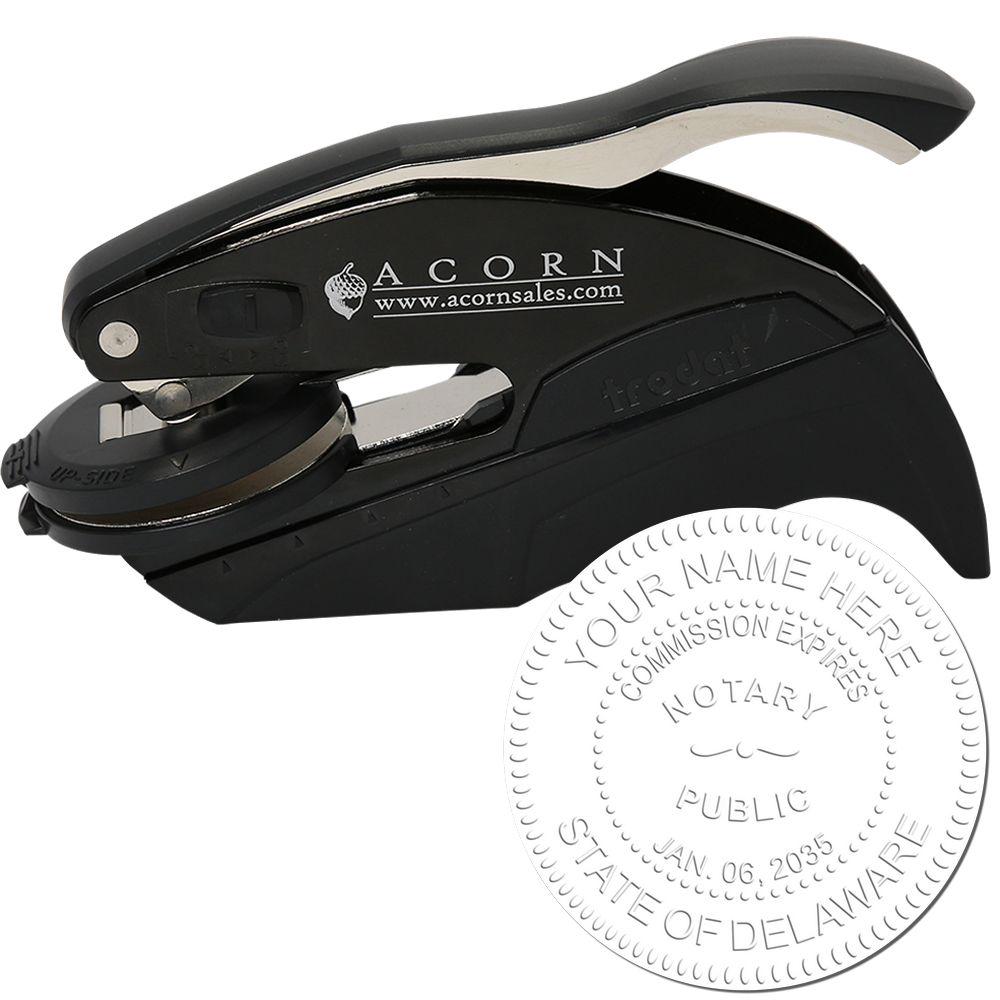
Whether you are just starting out as a notary or looking to replace an old seal, choosing the best Delaware notary public stamp is a key step in respecting local regulations and enhancing your professional image. Delaware has specific guidelines for how your notary stamp or seal should appear, but you also have plenty of options when it comes to style, functionality, and quality. By balancing these considerations, you ensure your stamp works properly every time, prevents confusion or rejection, and reflects your dedication to precise, trustworthy service.
Below, you will find practical tips that cover everything from verifying legal requirements to assessing stamp quality. You will see why your final choice can influence your daily efficiency, the impressions you make on clients, and even the longevity of your notarial career. Along the way, we will highlight ways Acorn Stamps—family owned and operated since 1964—can provide you with the high-quality tools and stellar service you expect.
Understand Your Delaware Notary Public Stamp
Your Delaware notary public stamp is more than just a tool for imprinting official information. It represents the authority granted to you by the state. Anytime you notarize a document, your stamp publicly confirms your role as a trusted witness. Because it is central to each transaction you handle, you need a stamp that meets state guidelines while standing up to frequent use.
What The Stamp Conveys
- Identification: Your name, commission number, and state details all appear in the stamp impression.
- Authenticity: The seal proves that you are recognized by Delaware as an appointed notary public.
- Professionalism: A crisp, clean stamp underscores your commitment to proper record-keeping and accuracy.
Your notary stamp directly affects the validity of important legal documents. Each time you press the seal onto a page, you are effectively confirming that the signer’s identity has been verified and that you have followed correct notarial procedures. This level of responsibility is exactly why selecting the right stamp is crucial.
Follow Delaware State Requirements
Every state has its own notarial regulations, and Delaware is no exception. Before you finalize your purchase, make sure you understand the set of requirements you must follow to keep your commission valid.
Key Rules And Guidelines
- Approved Wording: The text on your notary stamp must reflect the exact wording recognized by Delaware law. Check with the Delaware Department of State for the precise language to include, such as your name and the phrase “Notary Public.”
- Commission Information: Delaware requires you to include your commission expiration date or commission number in your seal. Cross-check those details for accuracy.
- Legibility: The impression should be fully legible. If the stamp design is too elaborate or the letters too small, you risk blurred or distorted imprints.
- Format Options: Although many notaries choose a round seal, rectangular stamps are often acceptable if they follow official guidelines. Look into the official shapes allowed in Delaware to avoid compliance issues.
Adhering to these set standards is key to preserving the validity of your notarized documents. If you make assumptions about what is permissible, you can wind up with a stamp that is denied or deemed illegible in a legal dispute.
Compare Different Stamp Types
Once you verify that a stamp design follows Delaware rules, you can focus on stamp type. Notary stamps come in several formats—each with distinct benefits. Think about how often you will use your stamp, whether you want portability, and how concerned you are about ink refills or re-inking.
Self-Inking Stamps
- Built-In Ink Pad: Self-inking stamps come with an internal ink pad. After each press, the stamp automatically re-inks itself.
- Speed And Convenience: Because there is no external pad, applying your seal is fast and mess-free.
- Easy Maintenance: You simply refill or replace the built-in ink pad.
Pre-Inked Stamps
- Crisp Impressions: Pre-inked models often deliver sharper impressions than standard self-inking stamps, which can be useful for documents requiring impeccable clarity.
- High-End Option: They tend to cost more upfront, but deliver longer-lasting ink capacity.
- Slower Dry Times: They can take a fraction of a second more to dry than self-inking stamps, but often it is hardly noticeable.
Traditional Rubber Stamps
- External Ink Pad: You press the rubber stamper onto a separate ink pad, then imprint the document.
- Budget-Friendly: Usually less expensive, though you may need to replace or re-ink pads more often.
- Classic Feel: Some notaries prefer the tactile process of using a classic rubber stamp, even if it results in an extra step.
Your decision will partially depend on usage. If you handle a high volume of notarizations, a low-maintenance option like a self-inking or pre-inked stamp may be your best bet. For occasional use, a traditional option might be perfectly fine—just invest in a high-quality rubber and a reliable ink pad so your impression remains clear.
Check Quality And Durability
Meeting legal specifications is only half the equation. If your stamp wears out prematurely or yields patchy markings, you can lose time and money replacing it. Poor-quality impressions also reduce the perceived professionalism of your notarial services.
Material Construction
- Stamp Body: Choose a body made from durable plastic or metal that can withstand constant handling over time.
- Ink Quality: Look for stamps that use quick-drying, fade-resistant ink, ensuring your seal remains sharp for years.
- Mechanisms: For self-inking and pre-inked models, read up on how easily the stamp re-inks itself or how long a typical ink reservoir lasts.
Testing Impressions
When you first receive your Delaware notary public stamp, it is a good idea to test multiple impressions on sample sheets:
- Clarity: Confirm all letters and numbers are legible.
- Even Coverage: Check for missing spots or excess inky residue around the edges.
- Consistency: The second or third impressions should be as crisp as the first.
If you notice inconsistent or faint markings, contact the supplier for a replacement. Stamps don’t have to be fragile or finicky—especially if you select a well-made product from a reputable company.
Seek Reliable Customer Service
Accessibility and timely help are vital when you rely on notary tools every day. Delays in processing or shipping can disrupt your workflow, while poor customer support can leave you stranded if there is an issue with your order.
Acorn Stamps’ Focus On Customer Care
If you value a personalized experience, you will appreciate Acorn Stamps, a family-owned company that has been operating since 1964. With over 60 years of service under their belt, they pride themselves on being a top supplier of Delaware notary stamps and seals. You can expect:
- Stellar Customer Service: From answering questions about Delaware law to assisting with custom designs.
- Super Fast Turnaround: Quick processing ensures you can start notarizing with your updated stamp or seal as soon as possible.
- Family Values: Their decades of experience translate to trusted, consistent craftsmanship across various notary supplies.
In the event you need a replacement pad or a completely new stamp, the right supplier will get you back on track with minimal downtime. When your career depends on having a functional seal, a reliable partner is invaluable.
Frequently Asked Questions
Below are some common questions about selecting and maintaining your Delaware notary public stamp. Reviewing these can help you avoid confusion and make the most of your notary commission.
Do I Need A Specific Stamp Design For Delaware?
Yes. Delaware requires specific wording, including your name and commission details. The design can be round or rectangular, but it must follow laws for clarity and official text.
When Should I Replace My Notary Stamp?
Replace your stamp if you notice blurred or incomplete impressions. Regularly test it on scrap paper to confirm it remains sharp. If you cannot fix issues with an ink refill, it’s probably time for a new stamp.
Is A Self-Inking Or Pre-Inked Stamp Better?
Both are popular for speed and convenience, but pre-inked stamps often produce extra-crisp impressions. If you handle large volumes of documents, self-inking stamps can be practical due to easy refilling.
What If Delaware Changes Its Notary Requirements?
You are responsible for using a compliant seal. Keep an eye on the Delaware Department of State’s official site or subscribe to their updates. If changes take place, you may need a new stamp design.
Are Stamps From Acorn Stamps Guaranteed?
Yes. Acorn Stamps stands behind its products. Should your stamp arrive with any issues, contact their helpful customer service team for guidance on a replacement or refund. With these points in mind, you are ready to select a high-quality Delaware notary public stamp that reflects both the legal requirements you must follow and your personal standard of professionalism. By combining a clear, compliant design with sturdy materials, you help protect your reputation from day one. Reliable suppliers such as Acorn Stamps can ensure your order meets state regulations and quickly ship you the notary tools you need. Ultimately, the right stamp will allow you to focus on your clients, confidence, and fulfilling your notarial duties with ease.