Understanding Georgia notary seal requirements is your first step to carrying out official notarial acts in the Peach State. You may have already discovered there are specific guidelines to follow — from how your seal looks to where and when to use it. Paying attention to these details helps you avoid costly mistakes and maintain a professional reputation. Below, you’ll find a comprehensive breakdown of what your duties entail, which factors can affect your stamp or seal, and why having a reliable supplier on your side makes all the difference.
Understand Georgia Notary Seal Basics
Before you can perform notarial acts, it’s crucial to know what your seal is, why you need it, and how it works.
A notary seal is a distinctive tool that authenticates your signature and validates official documents. In Georgia, you rely on this seal to confirm that you’re a commissioned notary and that each document you notarize is legitimate. Under state law, a notary public is someone who can witness signatures, administer oaths, and certify copies of certain documents. While the seal might look like a small piece of stationery, it carries a significant amount of legal weight.
What Sets The Seal Apart
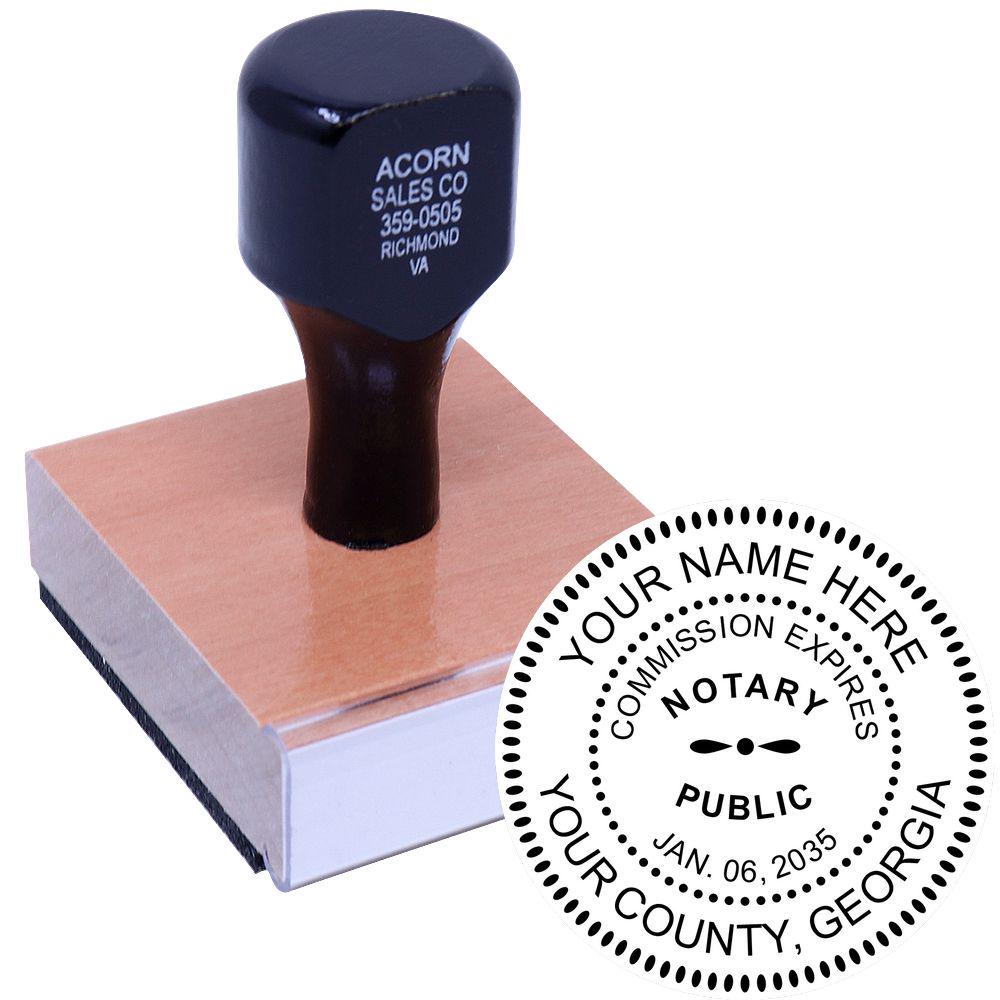
- It’s personalized: Your seal should display your name as it appears on your commission, your commission expiry date, and the words “Notary Public” and “Georgia.”
- It’s your signature backup: Alongside your signature, your seal gives each notarized document official validity.
- It communicates credibility: When people see your seal, they learn that you have the authority to notarize documents in Georgia.
Traditional Stamp Versus Embosser
In Georgia, you’ll find two popular ways to mark your notary seal: the rubber ink stamp and the embosser. Although both are acceptable, the ink stamp is more common because it creates a clear, easily readable mark on paper. An embosser may offer a professional look by leaving a raised impression, but it might be harder to photocopy or scan. Some professionals choose to have both types so they can use whichever best suits the document at hand.
Follow The Official Rules
Every state imposes specific rules on how notary publics conduct business, and Georgia is no exception. Familiarizing yourself with these regulations will help protect you from penalties or rescinded commissions.
Commission Requirements
You must first apply for a notary commission in the county where you reside (or conduct business if you’re not a Georgia resident). Once approved, your commission typically lasts four years. Pay close attention to any renewal deadlines so you can keep your status up to date without interruption. During your appointment, you’re expected to:
- Keep your seal secure and never lend it out.
- Perform notarial acts according to Georgia code.
- Maintain a notary journal (though Georgia doesn’t legally require it, many professionals consider it a best practice).
Seal Appearance And Details
Georgia law states that your official seal must include your name, the words “Notary Public,” and the referring state. Beyond that, you can add expiration dates or a county reference if you wish. However, double-check with your local county clerk because some counties have their own guidelines.
You should also use the exact name on your commission papers for your seal. For instance, if you applied as “Jane Ann Doe,” you shouldn’t order a seal that only says “Jane Doe.” The consistency ensures your documented acts align with your official record.
Explore Common Seal Types
Selecting the right tool can streamline your day-to-day notarial work. Choosing between a self-inking stamp, a pre-inked stamp, or an embosser can be a bit confusing, but each style serves different preferences.
Self-Inking Stamps
A self-inking stamp contains a built-in ink pad that re-inks automatically after each use. Here’s why self-inking seals are popular:
- Speed: You can stamp multiple documents in quick succession.
- Cleanliness: The self-contained pad helps you avoid messy ink spills.
- Durability: Many models last for thousands of impressions before needing a pad replacement.
Pre-Inked Stamps
Pre-inked stamps create crisp, professional impressions. They hold an ink reservoir inside, offering:
- Sharp detail: They’re often favored for their precise, clear prints.
- Less pressure needed: A gentle push makes a clean mark, reducing strain if you have many documents.
- Easy refilling: Once ink starts to fade, a few drops of refill ink can extend its life considerably.
Embossers
An embosser uses pressure to create a raised seal in the paper. Though it’s a timeless choice, be aware:
- Legibility: The raised impression might not appear as clearly in scanned or photocopied documents.
- Professional appeal: It often looks more formal and may impress clients who appreciate tradition.
- Portability: While handheld embossers exist, they can be bulkier than stamps.
Ultimately, your decision may hinge on personal style, your typical workflow, and local preference. You might even choose to keep both a stamp and an embosser on hand so you can use the ideal method for each scenario.
Know Where To Use It
Not every document requires a notary seal, but when it does, you need to place it accurately to prevent any legal challenges. Generally, the correct practice is to stamp near your signature or in a designated notarial certificate area. Always confirm you have enough blank space so the seal is complete and legible.
Official Documents
Typical documents that require notarization in Georgia include:
- Real estate deeds and property transfers
- Powers of attorney
- Affidavits
- Car title transfers
- Certain legal affidavits or statements
Each time you notarize, ensure you follow a proper identification process for the signer and review the document carefully. If the document provided includes a notarial certificate, affix your seal where indicated. If not, you may provide a loose certificate or add a statement such as: “Signed and sworn before me on [date].”
Digital Notarization
Georgia has authorized remote online notarization (RON) under certain conditions. While the practice is still relatively new, you might create an electronic seal. This seal operates as a digital signature and is used with secure platforms that verify each participant’s identity. If you’re exploring RON, check the latest state regulations to ensure you comply with specific requirements like approved software or platform usage.
Avoid Common Mistakes
Even the most diligent notary public can occasionally slip up. Recognizing pitfalls — and how to avoid them — helps you maintain a solid professional track record.
Overusing The Seal
Some new notaries get stamp-happy, thinking it adds extra credibility. However, using your seal when it’s not legally required or stamping multiple times on a single line can lead to confusion. Stick to standard practices so your documents don’t appear cluttered or incorrect.
Incorrectly Spelling Your Name
Because your legal name must match the one on your commission, it only takes one minor inconsistency to cause problems later. Double-check your name on the seal, taking note of any middle initials and suffixes.
Neglecting Expiration Dates
While not all Georgia seals must display your commission’s expiration date, it’s generally a good practice to include it. Failing to update a new seal when your commission renews is a common oversight. An expired seal can invalidate your notarial act, so set up reminders to replace your seal whenever you renew your commission.
Renew And Update Your Seal
Every four years (or sooner if you move counties or legally change your name), you’ll need to reapply for your notary commission in Georgia. Once reappointed, you should order a brand-new seal that reflects the correct information.
How To Renew
- Submit your application: Complete and sign a renewal application at your county clerk’s office or through the state’s designated portal if available.
- Pay the fees: Renewal fees vary by county, so check local guidelines.
- Update your seal: Obtain a new seal that accurately reflects your renewed commission’s expiration date.
Keep in mind that if you move out of your original county, you may still continue to serve until your commission expires. However, if you establish a new residence in a different county, you may need to re-register your commission. Always check your specific county’s rules.
Handling Name Changes
If you legally change your name, you can keep using your existing notary commission until it expires, but the name on your seal must match your legal name. You might either:
- Update your seal immediately to reflect your new legal name.
- Wait until you renew your commission.
In either case, always let your county clerk know about your name change as soon as possible to avoid confusion and potential disputes.
Choose A Trusted Supplier
Whether you’re getting your very first notary seal or renewing after a recent move, you want a supplier who understands Georgia notary seal requirements inside and out. That’s where Acorn Stamps excels. Family owned and operated since 1964, Acorn Stamps brings 60 years of expertise to every order. You can expect:
- Stellar customer service: Knowledgeable staff who help you find the perfect stamp or embosser for your needs.
- Super fast turnaround: Your new seal ships quickly, so you don’t miss a single notarization opportunity.
- Quality craftsmanship: Each stamp is built for sharp impressions, reliability, and durability.
When you’re ordering something as crucial as your official notary seal, a trustworthy supplier makes all the difference. With Acorn Stamps, you’ll have peace of mind knowing you’re purchasing an accurate and compliant product every time.
Frequently Asked Questions
Below are five common questions you may have about georgia notary seal requirements.
Do I Need To Include My Commission Expiration Date On The Seal?
Including the date is not explicitly required by Georgia law, but many notaries choose to add it. Doing so can make your seal more authoritative and help keep track of when you need to renew. However, if you do choose to include it, remember to order a new seal as soon as you renew your commission to keep the date accurate.
What Happens If I Lose Or Misplace My Seal?
You should report a lost or stolen seal to the relevant authority immediately. Failing to do so can put you at risk for liability if someone uses your seal fraudulently. You’ll likely need to obtain a replacement as soon as possible to continue performing official notarial acts.
Can I Share My Stamp With Another Notary Public?
Absolutely not. Each notary public in Georgia must maintain an individual seal that corresponds to their own name and commission. Sharing or lending your stamp can lead to serious legal repercussions, including the revocation of your commission.
Is A Notary Journal Required By Georgia Law?
Georgia doesn’t mandate the use of a journal, but it’s generally seen as a best practice. Keeping a log of every notarization you perform not only protects you from potential disputes but also serves as proof of your diligence and professional integrity.
How Much Does A New Seal Cost?
The price can vary based on factors such as seal style, customization options, and shipping. With Acorn Stamps, you’ll find competitive prices and high-quality materials that stand up to frequent use. Remember, investing in a reliable seal now helps you avoid costly replacements later.
By staying informed about Georgia notary seal requirements, you ensure that every sworn document you handle meets the standards of state law. Whether you’re brand new to notarial work or approaching renewal, understanding the ins and outs of seals, stamps, and embossers sets you up for success. A knowledgeable supplier like Acorn Stamps can help you maintain accuracy and compliance so you can focus on serving your community professionally and confidently.