If you have ever felt overwhelmed by the steps involved in becoming a notary public, you are not alone. Understanding Maryland notary requirements is essential before you can begin serving your community with confidence. From confirming your eligibility to obtaining reliable notary supplies, each step helps ensure that every notarization you perform is valid and trustworthy. In this guide, you will learn exactly how to simplify your path to meeting these requirements, so you can focus on helping others and excelling in your notary role.
Embrace Maryland Notary Requirements
Maryland imposes certain guidelines to ensure the quality and legality of notarial services. By meeting these guidelines, you will not only protect yourself but also your community from the consequences of improper notarizations.
Why You Need a Notary Commission
To perform official notarizations in Maryland, you must have a valid commission. This commission verifies that you meet state standards and have the authority to witness and certify important legal documents. Whether you are notarizing property deeds or loan documents, you want to make sure every signature you validate meets legal requirements.
- Legal Standing: Your notary commission grants you the legal ability to confirm the validity of affidavits, acknowledgments, and more.
- Community Service: Friends, family, and local businesses often need a notary available on short notice. Having your commission allows you to provide this valuable service.
- Personal Growth: By becoming a notary, you enhance your professional skill set and open up additional avenues for growth, especially if you work in law, real estate, or financial services.
The Key Responsibilities
Once commissioned, your responsibilities extend beyond merely stamping a signature. Maryland has specific expectations for how you should conduct every notarization:
- Witnessing Signatures: You must be physically present to confirm the identity of every signer.
- Maintaining Records: Proper documentation keeps you organized and ensures a clear audit trail.
- Verifying Willingness: You must confirm that the signer is choosing to sign the document freely, without coercion.
- Avoiding Conflicts: You cannot notarize documents if you have a personal or financial interest in the transaction.
Staying aware of these obligations reduces the likelihood of legal risks and ensures every notarization is done confidently.
Steps to Obtain Your Commission
Even though Maryland notary requirements may appear detailed, obtaining your commission can be straightforward if you break it down into clear steps.
Confirm Basic Eligibility
Before applying, you must confirm that you meet the state’s requirements for age, residency, and character:
- You must be at least 18 years old.
- You must be a Maryland resident or have a place of employment in Maryland.
- You should not have a felony conviction on your record unless you have received a pardon or restoration of your rights.
As you verify your eligibility, it helps to double-check the current Maryland guidelines in case any changes have been announced by the state.
Submit Your Application
Once you have ensured you are eligible, you need to complete and submit the official notary application. Most of the process can be handled via mail or online submission, depending on your county’s instructions. In this stage, you will typically provide:
- Proof of Residency: For instance, a valid driver’s license or utility bill.
- Application Fee: Exact amounts can vary, so check the state’s latest fee schedule.
- Personal Information: Full name, date of birth, and contact details.
You may also be required to complete a notary course, depending on state requirements at the time you apply. This ensures you fully understand the responsibilities and limitations of a notary public.
Wait for Approval
After you submit your paperwork, you will wait for official approval from the state. At this point, you can prepare for your commission by studying the Maryland Notary Handbook and clarifying any points that feel confusing. Once approval arrives, you will be ready to take the oath of office. Many notaries choose to do this at a local circuit court clerk’s office, ensuring all required procedures are followed correctly.
Know Your Essential Tools
One of the most important parts of meeting Maryland notary requirements is having the right tools. Beyond the knowledge and authority you gain by going through the commission process, you need specific supplies to carry out your duties properly.
Maryland Notary Stamp and Seal
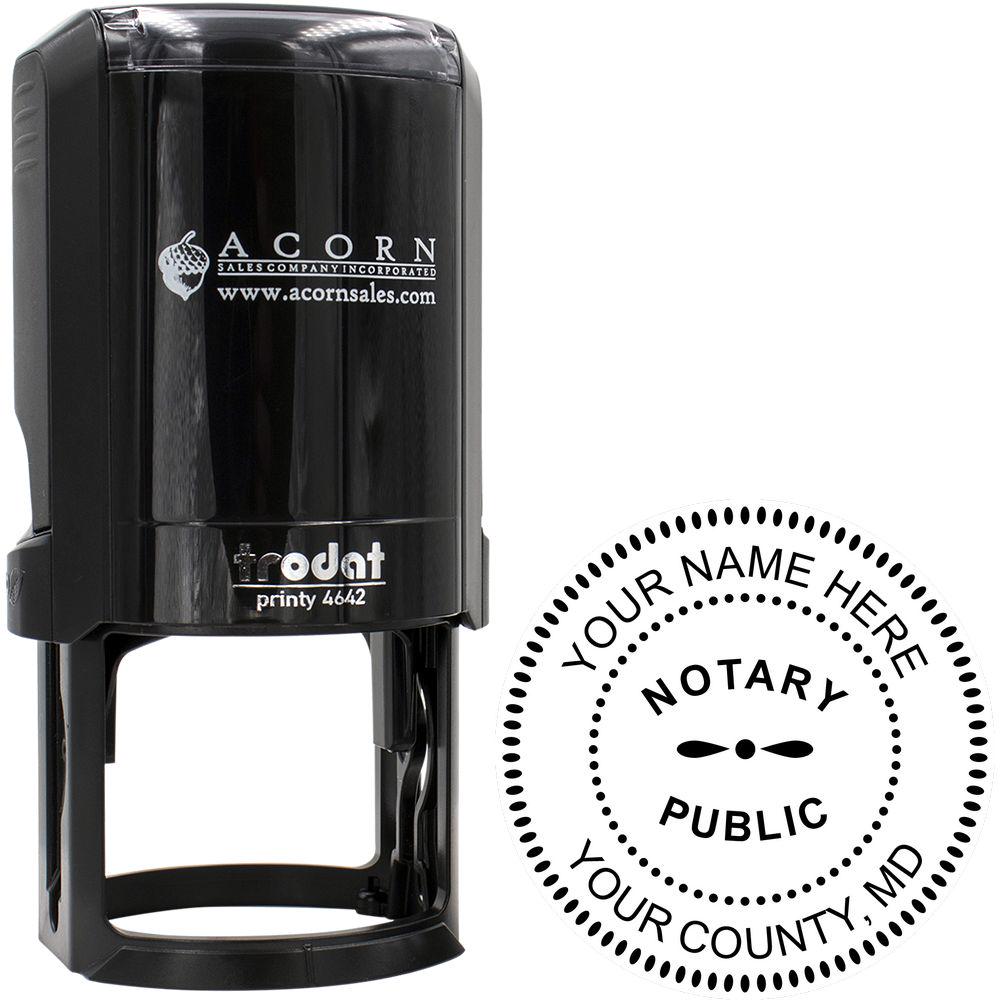
In Maryland, you are required to use an official seal when notarizing documents. This seal may be:
- An Ink Stamp: Imprints your notary information directly onto documents.
- An Embosser: Creates a raised image on the document for an added layer of security.
You may even choose to have both, depending on your personal preferences or clients’ needs. Regardless of the style, the seal must clearly display your name, title, and commission expiration date. Getting a high-quality Maryland notary stamp and seal is critical to avoid smudges or unclear impressions.
Notary Journal and Record-Keeping
Though a journal is not explicitly required by Maryland state law, many notaries choose to maintain one for added protection. A notary journal serves as a chronological record of the documents you have notarized. It can include:
- Date and time of notarization
- Document type (e.g., deed, affidavit)
- Name of signer and contact information
- Signature or thumbprint of the signer (where permitted)
Keeping a notary journal helps you keep track of your transactions, provides proof of your diligence if a document’s validity is questioned, and makes it easier to recall each notarization if any legal investigation arises in the future.
Maintain Compliance With State Laws
Once you have completed the initial steps and begun notarizing documents, you want to maintain compliance with all applicable regulations. Staying current on any amendments to Maryland notary requirements can protect you from fines or legal complications.
Renewal and Continuing Education
Maryland notary commissions typically last four years. As your term nears its end, you will receive a renewal notice or should regularly check for updates from the state so you do not miss your renewal deadline. Along with your renewal paperwork, you should also take advantage of training materials or refresher courses offered by recognized notary organizations. Staying updated on best practices keeps you prepared for any legal shifts that could affect your duties.
Managing Updates or Changes
Circumstances can prompt changes to your notary information. For instance, if you move to a new address in Maryland or change your legal name, you must notify the state as soon as possible. Prompt notification ensures your commission remains valid and your seal information is up to date. Failing to keep your records updated can lead to confusion during signings, or even legal challenges if a document’s authenticity is called into question.
Leverage Resources From Acorn Stamps
Equipping yourself with quality tools counts just as much as understanding state regulations. At Acorn Stamps, we pride ourselves on serving the Maryland notary community with top-notch products and dependable support, so you spend more time notarizing and less time worrying about product quality.
Family-Owned Since 1964
Acorn Stamps has been in business for 60 years, bringing you decades of experience and care. We are family-owned and operated, so you always get that personal touch when you trust us with your notary supply needs. We understand the importance of reliability to your work, which is why we have spent years perfecting our product line to meet exacting standards.
Reliable, High-Quality Supplies
Your notary stamp and seal must create clear, crisp impressions that endure the test of time. If a stamp fades after a few uses, it could cast doubt on the validity of your notarized documents. At Acorn Stamps, our team works tirelessly to ensure every product meets Maryland regulations and we stand behind our quality. When you invest in a Maryland notary stamp and seal from us, you can rest assured that your tools are built to last.
Speed and Stellar Service
We recognize that fast turnarounds can be crucial, especially if you have pressing deadlines to meet for clients. Acorn Stamps offers super-fast turnaround times so you do not have to lose business while waiting on your supplies to arrive. Our friendly customer service team is here to guide you through every step, from choosing your stamp style to answering any lingering questions about using your seal correctly.
FAQs About Maryland Notary Requirements
Below are five frequently asked questions to help you clarify any remaining concerns you might have as a new or experienced Maryland notary.
How do I apply for a Maryland notary commission if I do not live in Maryland?
If you are employed in Maryland, you can still apply for a commission even if you do not live in the state. You will need to submit proof of employment, such as a letter from your employer or a recent pay stub, along with your application.
Can I notarize documents in any Maryland county once I am commissioned?
Yes. Your commission applies statewide, giving you the authority to notarize documents in all Maryland counties. However, make sure you always log the details of your notarizations correctly and follow any specific local guidelines that may exist.
What happens if I lose my notary seal?
If your notary stamp or seal is lost or stolen, immediately notify the Maryland Secretary of State. You should also complete any required forms to record that your official seal is no longer in your possession. Then, invest in a new seal that meets state standards to continue performing your duties.
Is a journal required by Maryland law?
Maryland does not currently require you to maintain a notary journal. However, keeping a journal is highly recommended. It records the vital details of each notarization, strengthens your credibility, and can protect you if a notarized document is questioned down the line.
Where can I find official updates on notary regulations?
The Maryland Secretary of State’s website is the best place to look for the latest information. Updating your knowledge periodically ensures you respond swiftly to any regulatory changes, so your notarizations remain valid and legally binding.
Acquiring and using the right notary supplies, understanding your legal responsibilities, and renewing your commission on time collectively lay a solid foundation for your career as a Maryland notary public. Look to Acorn Stamps for trusted Maryland notary stamps and seals that meet both state requirements and your personal standards for professionalism.
When you simplify your life by having the right products and resources at your fingertips, you can devote your energy to the real task at hand: providing reliable notarial services that benefit your community. By following the guidelines, staying up to date on Maryland notary requirements, and using quality tools, you can turn your notary commission into a positive and fulfilling endeavor.