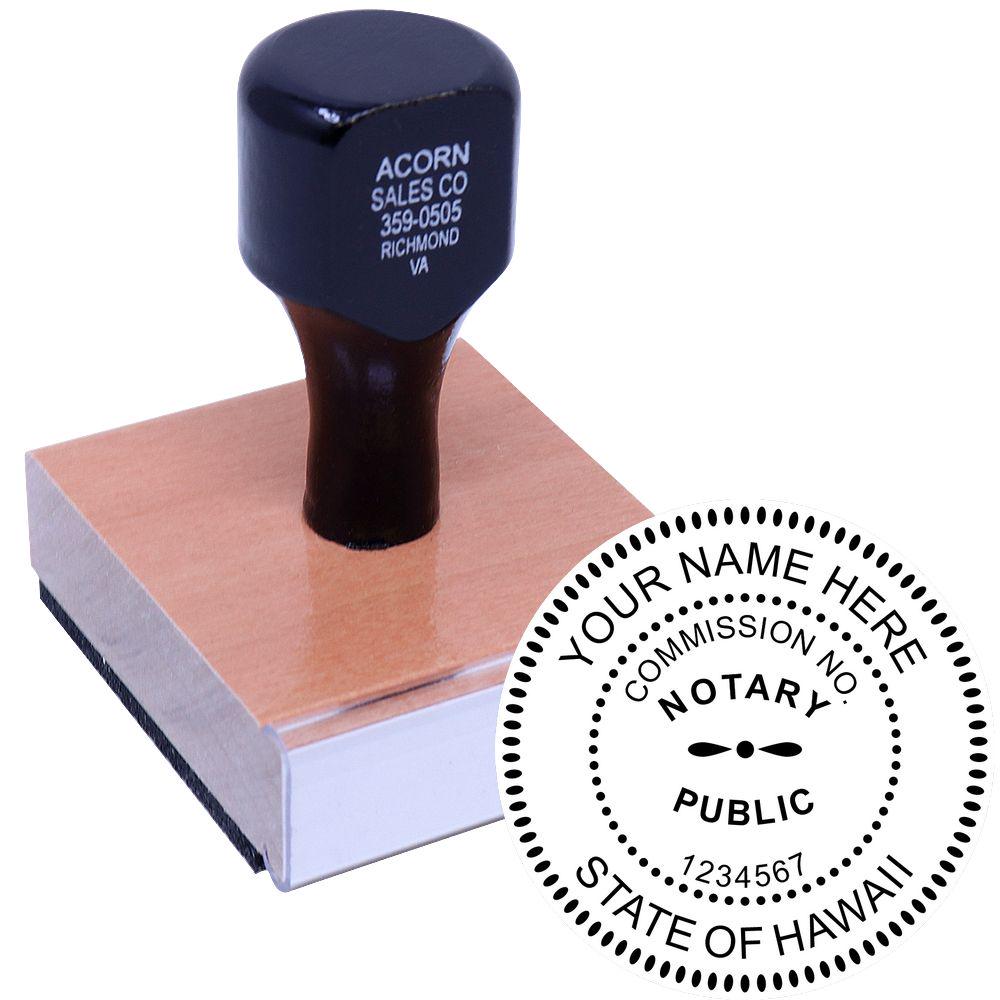
Choosing the best Hawaii notary stamp is a key step in maintaining the professionalism and legality of your notarial acts. As a Hawaii Notary Public, you need a stamp that meets state requirements, stands up to frequent use, and delivers clean, readable impressions every time. Below, you will find essential tips for selecting and caring for your notary stamp, along with insights into why you might consider Acorn Stamps, a trusted name in providing Hawaii notary stamps and seals.
By following these guidelines, you can feel confident in your selection and ensure that the documents you notarize reflect the credibility and accuracy your clients expect.
Role of Your Hawaii Notary Stamp
Your Hawaii notary stamp is more than a simple office tool. It is a vital element that verifies your authority as a notary and imparts an official seal on each document you handle. Understanding its function can help you select a stamp that not only meets legal standards but also supports your day-to-day needs.
- The stamp verifies your legal capacity. Whenever you stamp a document, you confirm that you are acting within the bounds of Hawaii law as a commissioned notary.
- The stamp adds protection. Because your official notary stamp includes specific data such as your name and commission number, it reduces the chance of fraudulent activity.
- The stamp establishes consistency. Whenever you notarize a document, your stamp and signature indicate uniformity and authenticity, regardless of the document type.
Legal Recognition
In Hawaii, the state government formally outlines the specific details required on your notary stamp. By ensuring that your stamp design meets these stipulations, you create a verifiable and authorized record of each signing. The consistent use of a proper Hawaii notary stamp helps uphold the integrity of legal transactions.
Official Data
Your stamp’s design must typically show your name, commission number, and the words “Notary Public” along with “State of Hawaii” or a similar state designation. This data makes it easy for recipients to confirm the legitimacy of a notarized document. When you handle critical transactions such as real estate closings or power-of-attorney forms, the clarity of your stamp is crucial for legal acceptance.
Review Hawaii’s Notary Requirements
Before you purchase or customize your notary stamp, you need to confirm local regulations. Hawaii has specific guidelines concerning notary public seals, and complying with these helps ensure that your notarial acts are valid.
- Check the Hawaii Department of the Attorney General website. This is often your best starting point for the most current notary rules.
- Know your commission number. You generally need to include it on your stamp or seal.
- Use correct language. You should confirm what exact text must appear on your stamp, like “Notary Public” and “State of Hawaii.”
Commission Rules
Hawaii notaries must keep their stamps and seals in their own charge at all times. These items should never be loaned or delegated to someone else. If you end your role as a notary or your commission expires, you must properly dispose of or destroy the stamp to prevent misuse. Familiarizing yourself with these regulations ensures that you remain compliant throughout your commission.
Renewals and Extensions
Another important aspect involves commission renewals. If you choose to continue as a notary, you will want to plan ahead so you can update your Hawaii notary stamp if your commission number or expiration date changes. Staying informed about renewal deadlines helps you avoid any delays where you might be without an active stamp.
Compare Different Stamp Types
While all Hawaii notary stamps share the common function of authenticating documents, not all stamps are created equal. You can pick from several formats, including self-inking stamps, pre-inked stamps, and even traditional rubber stamps that require a separate ink pad.
Self-Inking Stamps
A self-inking stamp comes with a built-in ink pad and can produce multiple impressions before needing to be refilled. This convenience makes them a popular choice for notaries who handle a high volume of signings or prefer a device that is quick to use.
- Pros: Fast operation, typically mess-free, good for frequent use.
- Cons: May dry out if unused for extended periods, limited color options.
Pre-Inked Stamps
Pre-inked stamps rely on ink stored inside the stamp itself, producing crisp and clean details. Because the ink saturates the surface more thoroughly, these stamps often yield sharper lines and longer-lasting impressions.
- Pros: High clarity, durable, needs refilling less frequently
- Cons: Slightly higher cost, can take a moment longer to “re-ink” between impressions
Traditional Rubber Stamps
Rubber stamps with a separate ink pad offer a classic approach. You press the stamp onto the ink pad before stamping your seal onto the document. Some notaries appreciate the tactile control, while others find it more cumbersome.
- Pros: Typically lower cost, customizable
- Cons: Requires an external ink pad, more prone to uneven impressions
Selecting one of these options depends on how many notarizations you complete daily, your preference for convenience, and your personal budget. No matter which style you choose, make sure it contains all the required elements mandated by Hawaii law.
Focus on Key Features
Beyond simply meeting state regulations, your Hawaii notary stamp should include features that enhance its usability and longevity. Thinking about factors like ergonomics, durability, and ink quality can help you choose a stamp that functions smoothly throughout your commission.
Ergonomics
If you are frequently stamping documents, a comfortable grip makes the difference between a seamless experience and one that causes strain. Look for handles or mounts designed to fit naturally in your hand. Lightweight but sturdy materials can help minimize wrist fatigue.
Durability
A well-constructed notary stamp can make thousands of impressions without losing clarity or alignment. When comparing products, look for reinforced plastic or metal bodies that can withstand daily use. Deeper engraving (for some stamp types) often results in sharper, more precise images.
Ink Quality
The quality and reliability of your ink are critical. You want impressions that resist smudging and remain legible over time. Some inks are formulated specifically for archival documents, meaning they will not fade. If you deal with official records that must stand up to scrutiny for years, consider an ink designed for long-term durability.
Portability
Mobile notaries who serve clients at offsite locations will need a compact stamp that fits easily into a bag or briefcase. If you travel frequently, you might lean toward a self-inking or pre-inked model with a secure cover to prevent leaks or accidental stamping.
Follow Usage Best Practices
Even with the ideal Hawaii notary stamp, you will want to follow best practices to safeguard its performance and your own notarial integrity.
- Inspect regularly: Before each notarization, take a quick look at your stamp to confirm that the text is still clean and readable.
- Stamp on a flat surface: A stable work area helps you make a crisp impression.
- Apply consistent pressure: Push down evenly to avoid partial or blurred images.
- Avoid over-inking: If you use a separate ink pad or must refill your self-inking stamp, follow the manufacturer’s instructions to prevent drips and smudges.
- Store in a safe place: Keep all notarial supplies, including your stamp, out of reach of unauthorized persons.
Handling Smudges or Misprints
Mistakes sometimes happen. If your impression is unclear, do not stamp repeatedly over the same spot. Instead, draw a line through the erroneous stamp impression, then restart on a fresh space. This approach upholds the authenticity and readability of your document. Always remain conscious of the fact that every stamp impression becomes part of the permanent record.
Record-Keeping Tips
Hawaii requires you to maintain certain records of your notarial acts, typically in a notary journal. Document when and where you stamped each transaction, along with important details about the signer and the type of document. Should a dispute or question arise later, your records provide evidence of due diligence.
Maintain and Replace Properly
To guarantee that you always produce a clear, valid impression, it is important to keep your stamp clean, refill ink when needed, and replace any worn-out components. Proactive care will help you avoid surprises during a crucial notarization.
Cleaning Your Stamp
- Use a lint-free cloth. If ink builds up on the surface, remove it gently with a cloth or mild cleaning solution recommended by the manufacturer.
- Avoid harsh chemicals. Strong cleaners can degrade the stamp’s rubber or polymer surface.
- Dust protective covers. If your stamp includes a retractable cover, occasionally wipe it to prevent dust or debris from entering and harming the stamp’s impression edge.
Knowing When to Replace
Even high-quality stamps wear down over time, especially under heavy use. If you notice fading, distortion of letters, or any feature that compromises clarity, it is time to replace or refurbish your stamp. This ensures every document is legally compliant and resistant to misunderstanding.
Streamlining the Process
A little planning saves you headaches in the long run. Ordering a new stamp before your current one completely wears out means you can seamlessly switch tools without interrupting your notarial work. If your commission details change, such as a name or address update, you will need a newly engraved stamp to stay compliant with Hawaii regulations.
Why Choose Acorn Stamps
When it comes to personalizing your Hawaii notary stamp, the supplier you choose can make a significant impact on both your daily convenience and your professional reputation. Acorn Stamps is a family-owned and operated business that has been serving notaries for 60 years. Founded in 1964, Acorn Stamps focuses on delivering stellar customer service and super-fast turnaround times.
Top Supplier for Hawaii Notary Needs
Acorn Stamps specializes in Hawaii notary stamps and seals, ensuring that you get a product tailored to state guidelines. If you have any uncertainties about local requirements, Acorn Stamps can guide you, thanks to decades of hands-on experience providing notary tools to professionals across the Aloha State.
Dedicated to Quality
From self-inking to pre-inked designs, Acorn Stamps offers an array of options crafted from durable materials. Every stamp is made with attention to detail so that you receive crisp, consistent impressions on each notarization. Because Acorn Stamps values longevity, the materials they select help prevent the degradation that leads to fuzzy or incomplete images.
Stellar Customer Service
As a company that has remained family-owned throughout its long history, Acorn Stamps brings a personal touch to every order. When you have questions about ink type, layout, or care instructions, their knowledgeable staff is ready to help. This level of support extends beyond the purchase itself, so you can be sure you are getting guidance on everything from design modifications to step-by-step usage tips.
Super-Fast Turnaround
In some cases, you may need a replacement stamp urgently, especially if your old stamp gets damaged or a legal detail—such as your name—changes. Acorn Stamps is known for fast processing and shipping, helping you avoid downtime and keep your notarial duties running smoothly.
Frequently Asked Questions
Why Do I Need a Hawaii Notary Stamp?
You need a Hawaii notary stamp to officially validate the documents you notarize. It serves as proof of your authority and includes essential details such as your name, commission number, and the state designation. This helps prevent fraud and reinforces the legality of each notarized act.
How Do I Correct a Smudged Impression?
Should you notice a smudge or partial impression, simply draw a line through the incorrect stamp, and certify the document again on a clear section. It is best to avoid restamping over the same area. Always check your stamp before each use to ensure that all details are sharp and distinct.
What If My Commission Information Changes?
If your name or commission number changes—through renewal or other official processes—you will need a new stamp that accurately reflects your updated information. Continuing to use a stamp with outdated details could lead to rejected documents. It is wise to order your replacement stamp from a reliable supplier such as Acorn Stamps as soon as possible.
Do I Need an Embossed Seal as Well?
While an embossed seal can add an extra layer of authenticity, Hawaii generally requires just a stamp for basic notary acts. That said, some documents or clients might request an embossed seal. If you work with records that must be recorded in counties or states with different preferences, having an embossed seal in addition to your Hawaii notary stamp could be beneficial.
When Should I Replace My Stamp?
Regularly check the clarity of the imprint. If you see missing or distorted text, or your notary details are no longer legible, it is time to replace your stamp. Also, plan on a new one if your commission is renewed under a different number or if you change your name. A worn-out or outdated stamp may compromise the legality of your notarized documents.By keeping these tips in mind, you will be well on your way to finding the perfect Hawaii notary stamp for your professional needs. Remember, a stamp that complies with local regulations, offers top-tier clarity, and feels comfortable in your hand can support you in providing reliable service to your clients.Whether you are starting your notarial journey or renewing your existing commission, investing in a high-quality stamp is a must. And when you want a supplier you can count on for fast turnaround, guidance on compliance, and a friendly, family-owned approach, consider Acorn Stamps. With 60 years of experience behind every product and a commitment to supporting Hawaii notaries, you can depend on them to deliver a stamp that stands the test of time.