Essential Kentucky Notary Seal Requirements You Should Know
If you are a newly commissioned Kentucky Notary Public or you are looking to renew your credentials, understanding Kentucky notary seal requirements is crucial. Your notary seal does more than just stamp documents, it represents your legal authority in the Commonwealth of Kentucky.
In this guide, you will explore what the seal represents, the rules you must follow, and practical tips for staying compliant. By the end, you will feel confident in your notarial responsibilities and know how to properly use, store, and maintain your seal to protect yourself and those who rely on your services.
Understanding The Role Of A Notary In Kentucky
A notary public in Kentucky acts as an impartial witness to the signing of important documents. Your main duties include verifying identities, administering oaths, taking affidavits, and ensuring documents are free from fraud or coercion.
Even though your responsibilities might feel straightforward, you have a serious obligation to follow state law meticulously.Kentucky has its own set of rules for commissioning and operating as a notary. These rules define certain documents you can notarize, restrictions to your power, and, of course, the essential stamp or seal requirements.While the office of a notary public may not be as complex as that of an attorney or judge, it serves as a vital legal checkpoint in everyday transactions, real estate agreements, sworn statements, business contracts, and more.
Why The Kentucky Notary Seal Matters
You might wonder why so much emphasis is placed on notary seal regulations. The seal you use authenticates your notarial acts. It signals to recipients that the document was properly verified, that the signers’ identities were checked, and that the document was executed under legitimate circumstances.If there is a dispute in the future, your properly affixed seal can be a key indicator that the document was handled correctly.
Because it holds legal weight, your seal must be designed and used according to Kentucky law.An improperly formatted seal or an expired commission date can invalidate your notarization, potentially casting doubt on an entire legal transaction. For that reason, the state ensures you only obtain and use your seal in strict compliance with existing statutes.
Must-Have Components Of A Valid Kentucky Notary Seal
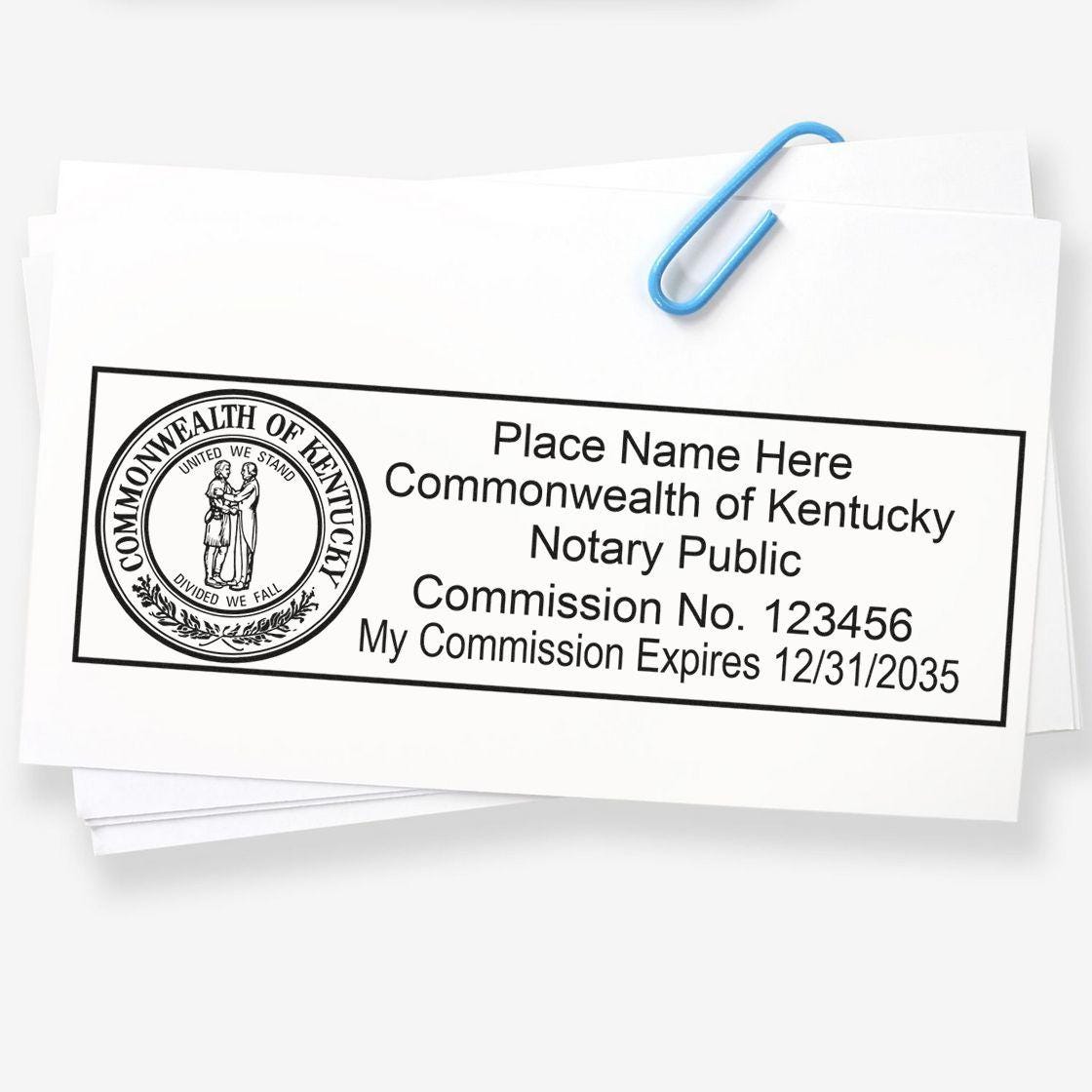
Staying on the right side of Kentucky notary seal requirements begins with understanding exactly what your seal needs to include. While some details can vary slightly depending on suppliers, there are a few non-negotiable components.
1. Legible Text
Your seal should display your name as it appears on your notary commission. Any abbreviations or deviations from your official commissioned name may lead to confusion or even invalid notarizations. Likewise, ensure the wording “Notary Public” is included to reflect your position.
2. State Of Commission
Because every notary operates under a specific state’s jurisdiction, your seal must clearly include “Commonwealth of Kentucky” or a similar state reference that is acceptable under Kentucky law.This marks the territory where you are authorized to perform notarial acts.
3. Commission Number (If Applicable)
Notaries in Kentucky may be assigned a commission number. If your notary commission includes such an identifier, do not overlook adding it to the seal.This step helps maintain a traceable record of your notary acts, linking them directly back to your credentials.
4. Commission Expiration Date
One of the most critical parts of any notary seal is the commission expiration date. In Kentucky, it is standard to have this date clearly visible on the seal. This helps clients instantly recognize whether or not your authority is still in effect.If your commission expires, you cannot perform notarial acts until it is renewed.
5. Size And Shape
While Kentucky does not mandate a specific shape or size for your seal, it is generally recommended to use a circular or rectangular design that fits comfortably on a document.The text must be legible and sufficiently imprinted, regardless of whether you use a pre-inked, self-inking, or classic rubber stamp.
Process To Obtain And Use A Kentucky Notary Seal
1. Complete The Commissioning Steps
Before you ever get to the seal, you will need an official notary commission from Kentucky. You must be at least 18 years old, reside in or be employed in the Commonwealth, and meet other state-defined qualifications.Once you have your commission, you will be eligible to create (or order) your notary seal.
2. Order From A Trusted Supplier
With your valid commission in hand, your next step is to purchase your seal. You are free to choose your preferred authorized supplier, but be sure you are ordering a seal that adheres to Kentucky’s rules.If the supplier claims to follow Kentucky notary specifications, confirm that they include the correct text, spacing, and expiration date. A seal that does not comply might lead to frustration- and legal issues- down the line.
3. Test Your Seal
When your seal arrives, test it on a blank piece of paper. Inspect the ink impression to ensure it is sharp and easily readable. Check that your commission expiration date and any other required text are fully visible.If the impression is smeared or the letters run together, contact your supplier for a replacement or correction.
4. Always Verify Expiration
A critical part of using your seal is being mindful of your commission’s expiration date.If there is any uncertainty about your commission’s validity period, confirm with the Kentucky Secretary of State or any updated guidelines on your renewal process.Once your commission expires, your notarial acts are no longer recognized as valid, even if the document has your seal.
5. Keep A Notary Journal
It is a recommended best practice (though not always legally mandated) to keep a record of the documents you notarize. A notary journal helps protect both you and the public by offering a trail of proof, should any legal challenge arise.Document the signer's name, date, type of document, and method of identification. While this is not strictly a seal requirement, it pairs closely with good seal usage.
Practical Tips For Compliance
Following the core Kentucky notary seal requirements is straightforward once you understand them, but it helps to have some practical advice on ensuring day-to-day compliance.
Secure Your Seal
Always keep your seal in your possession to avoid misuse. If your seal or stamp is lost or stolen, report it promptly to the appropriate authorities and be prepared to replace it.Unauthorized use of your seal can lead to fraudulent notarizations, for which you could be held responsible.
Mind Document Clarity
Aim to place your seal near your signature, as space allows, without overlapping important text. If a document is crowded, find a clear area to stamp so that every character remains readable.
Use An Embosser In Special Cases
Kentucky law does not forbid you from using an embosser in addition to an ink stamp. An embossed seal can add an extra layer of authenticity, particularly for official documents or those requiring a raised imprint.However, an embosser alone may not fully comply with the ink impression requirement, so read the state guidelines carefully if you opt to use one.
Prepare For Renewals
Keep track of when your commission is set to expire. You will want to begin your renewal process well ahead of time to avoid a gap in your ability to notarize.Once you are successfully renewed, update your seal if the expiration date has changed.
Selecting A Reliable Supplier
One of the biggest challenges you may face is finding a reputable company that both provides a quality product and understands the nuances of Kentucky notary seal requirements. This is where Acorn Stamps can step in to support you.
As a family-owned business operating since 1964—proudly celebrating 60 years of service—Acorn Stamps provides Kentucky notary stamps and seals with stellar customer care and super-fast turnaround times.
Your seal is more than just a marking—it is a symbol of your legal role. Working with a supplier that knows Kentucky’s regulations and can walk you through any customization options will reduce the chance of errors. Plus, partnering with a company that focuses on personalized service ensures you have reliable assistance if you ever need a replacement or a quick fix.
Quality You Can Trust
- High-quality materials that withstand frequent use.
- Clear, precise impressions ensure every detail is legible.
- Fast shipping that gets your seal to you when you need it.
- Knowledgeable customer support to guide your purchase decisions.
When you are working on legal documents that affect people’s livelihoods and rights, a dependable stamp or seal is not a luxury, it is a must. If you are starting to explore your options, remember that what you choose up front can save you from future headaches.
5 Frequently Asked Questions
Below, you will find some of the most common questions about meeting Kentucky notary seal requirements. If you do not see your question answered here, consider reaching out to a trusted supplier or checking official references from Kentucky’s notary commissioning authorities.
Do I Need Both A Stamp And An Embosser?
You are required to use an inked seal that clearly displays the required details. An embosser can be an optional addition for a more formal look, but it typically does not replace the need for an ink stamp. Always verify your latest state regulations before deciding.
Can I Share My Seal With Another Notary?
No. Your seal is personal and tied exclusively to your commission. Letting someone else use your seal can lead to unauthorized notarizations and potential legal issues.
What Do I Do If My Commission Expires?
If your commission expires, you must renew it before performing any further notarial acts. Once renewed, you may need to obtain a new seal with your updated expiration date. Notarizing documents with an expired commission is considered invalid.
How Often Should I Replace My Seal?
There is no strict requirement to replace your seal unless the details on it have changed or it no longer makes a clear impression. However, if you renew your commission and your seal still reflects an old expiration date, you will need an updated version.
Where Can I Get High-Quality Kentucky Notary Supplies?
Acorn Stamps is a highly regarded supplier of Kentucky notary stamps and seals, offering top-notch products and friendly customer service.With 60 years of experience as a family-owned and operated business, you can expect reliable performance and quick turnaround times on all notary supplies.
Final Thoughts
Complying with Kentucky notary seal requirements is not just about checking boxes, it is about honoring a system that protects the integrity of legal documents for everyone involved. When you order a seal, you want to make sure the design includes every element mandated by Kentucky law.
In addition, use your seal responsibly by keeping it secure, placing it cleanly on every document, and staying vigilant about your commission expiration date.Acorn Stamps is here to support you throughout your journey. Whether you are a first-time notary or a seasoned pro, you deserve products and guidance that set you up for success.
Consider double-checking your existing seal if you have any questions about compliance, and look out for new developments from the Kentucky Secretary of State to stay current on regulations.
By following these guidelines and partnering with a trusted supplier, you will be able to fulfill all of your notarial duties confidently—and help ensure that important transactions are carried out smoothly and securely.