If you plan to become a notary in Alaska, it is important to understand the alaska notary requirements before taking on any official duties. As an Alaska Notary Public, you hold a position of trust that helps authenticate legal documents, verify identities, and deter fraud. Whether you are getting ready to apply for your first commission or renewing your existing one, meeting the specific notary obligations in Alaska sets you up to serve your community effectively.
Below, you will find essential information on qualifications, application steps, ongoing responsibilities, and the supplies you need to perform your duties. You will also discover tips on how to stay compliant throughout your commission. Let this friendly overview guide you through the process so you can fulfill your responsibilities with confidence.
Understand The Basic Qualifications
When considering the alaska notary requirements, you should first make sure you meet all the basic eligibility rules. Although the specific obligations might seem straightforward, it helps to know exactly what is expected from you before you delve into the application process. These foundational requirements ensure that you hold the credibility and capability needed to perform notarial acts responsibly.
Key Eligibility Points
- You must be at least 18 years of age.
- You need to be a legal resident of Alaska or maintain a place of employment in the state.
- You cannot have been convicted of a felony or any crime involving dishonesty, unless you have received a pardon or your conviction has otherwise been set aside.
- You should possess a reasonable understanding of the duties and responsibilities of a Notary Public.
Meeting these criteria not only confirms you are permitted to serve as a notary but also helps you avoid complications or delays with your application. By validating your eligibility beforehand, you save time and resources when you begin the formal application process.
Complete The Application Process
After confirming you meet the initial qualifications, your next step is to successfully apply for your notary commission. This process typically involves filling out an application form, securing a notary bond, and paying the required fees to the Alaskan authorities. While it might sound simple at first glance, approaching each phase with caution and attention to detail ensures that your commission is granted without delay.
Research The Right Forms
Different states have varying formats for their applications, and Alaska is no exception. Take the time to locate the official Notary Public application from the appropriate agency in Alaska, often found on a government website related to professional licenses. Since the formalities can change, be sure you are using the latest version of the form or instructions so you avoid any rejections for outdated documents.
Obtain A Notary Bond
In Alaska, you are required to secure a notary bond, which is a financial guarantee that safeguards the public against potential errors or misconduct. Although a notary bond protects the public, you may still be responsible for addressing any legitimate claims made against your bond. Therefore, it is important to practice caution and follow all laws carefully to avoid any liabilities. Typically, a bond provider or insurance company can help you understand what coverage is necessary and how to maintain it throughout your commissioning period.
Pay The Required Fees
Alaska charges a commission fee that you must pay at the time you submit your application. Keep in mind that these fees can occasionally change, so always verify you have the most current application guidelines. Paying a fee that is too high or too low can delay processing of your documents.
Secure Your Notary Tools
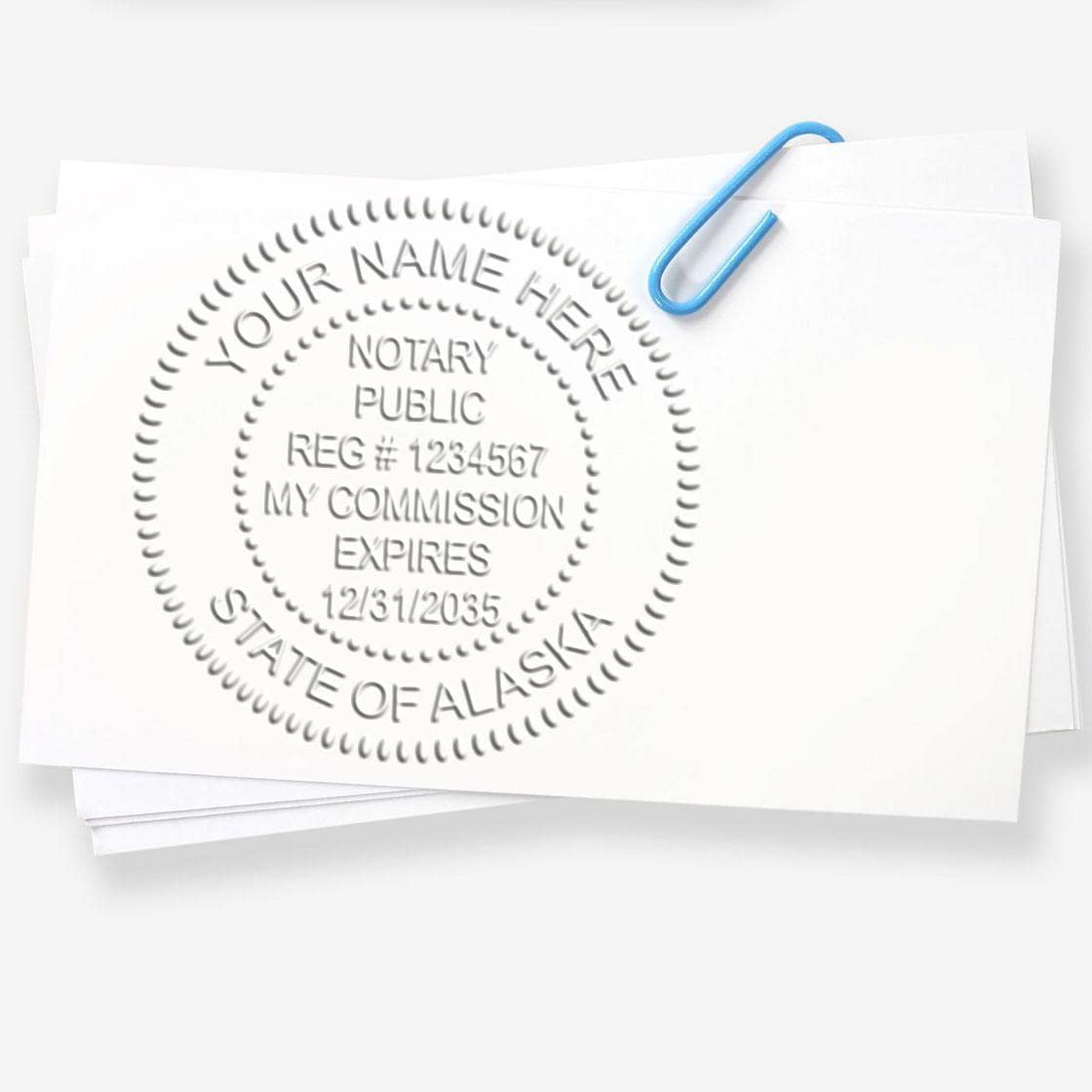
Once you have submitted your application and received approval, you are officially commissioned. However, your responsibilities do not stop there. One of the most significant alaska notary requirements is that you equip yourself with the right notary stamps and seals. Without these tools, you cannot fulfill the most crucial aspect of your responsibilities: properly notarizing documents.
Alaska Notary Seal And Stamp Essentials
- Your notary stamp should clearly display your name and the words “Notary Public.”
- A seal that includes the state name, your commission number, and the commission expiration date.
- The design of the stamp and seal can vary, but it must be compliant with Alaska’s guidelines.
High-quality notary supplies help you produce clear, official imprints every time you notarize a document. Using substandard or outdated equipment could lead to unreadable impressions, causing confusion for signers and recipients alike. Investing in reliable supplies ensures you maintain credibility during the notarization process.
Why Quality Tools Matter
Because you serve as a trusted gatekeeper for official documents, you should never cut corners when choosing your notary stamps or seals. Sharp, clear impressions are key to demonstrating your professionalism and ensuring that your notarizations stand up to scrutiny in legal or financial contexts.
Perform Duties With Compliance
Becoming an Alaska Notary Public is not simply about obtaining a commission certificate and a seal. You also need to maintain a deep understanding of your responsibilities. By following the rules, you help uphold the integrity of official documents and protect yourself from financial and legal risks.
Validate Signers’ Identities
One of the core alaska notary requirements focuses on taking careful steps to confirm the identity of individuals seeking notarization. Ask for government-issued photo identification, such as a driver’s license or passport. If you encounter individuals without the necessary identification, refer to Alaska’s guidelines for alternative methods of verification (for example, credible witnesses).
Keep An Accurate Notary Journal
While Alaska does not require every notary to maintain a journal, it is strongly recommended you keep a consistent record of every document you notarize. This log can act as your best form of defense if any disputes arise regarding a past notarization. A well-maintained journal includes:
- The date and type of notarization performed.
- The signer’s name and proof of identification.
- The document’s nature (e.g., deed, contract, affidavit).
- Any special circumstances or additional notes.
Uphold Ethical Conduct
Your role as an Alaska Notary Public demands a high level of trustworthiness, confidentiality, and impartiality. Refrain from notarizing documents if you have a direct financial or personal interest in the transaction. Similarly, avoid giving legal advice or drafting legal documents unless you are a licensed attorney. Failing to comply with these guidelines could put your commission at risk.
Keep Your Commission Current
Receiving your commission is only the start. Remember, it is your responsibility to keep track of when your commission expires and renew it accordingly. If you allow your commission to lapse, you cannot legally perform notarial duties. Keep an organized schedule or reminder system to track your commission end date so you start your renewal process promptly.
Renewal Steps
- Complete a renewal application form at least several weeks before your commission is set to expire.
- Obtain or renew your notary bond, ensuring it is valid for the new commission term.
- Pay any applicable renewal fees to the appropriate Alaska Notary authority.
- Replace your notary stamp and seal if you are required to update any details, such as a changed name or revised commission information.
By staying ahead of your renewal requirements, you minimize the risk of interruptions to your notarial practice. If you move, change your name, or experience any other significant life changes, be certain to follow Alaska’s rules for updating your notary records. Compliance with these regulations maintains the continuity of your commission and prevents any gaps in your legal authority to notarize documents.
Resources For New Notaries
As you embark on your notary journey, you will find a variety of resources that can expand your knowledge and keep you informed about policy updates. State authorities, notary associations, and professional communities all provide support and training materials that can enhance your skills.
- State Government Websites: Keep a close eye on official Alaska websites for the latest updates on notarial acts, administrative changes, or fee adjustments.
- Professional Associations: Local and national organizations often offer workshops, online courses, and articles about best notary practices.
- Community Forums: Peer-to-peer forums let you connect with other notaries, ask real-world questions, and share experiences.
Utilizing these resources ensures you remain well-informed about the latest regulations and methods for providing impeccable notarial services to your community.
Why Choose Acorn Stamps
When it comes to meeting the requirements for your Alaska notary supplies, it is essential to rely on a dependable provider. Acorn Stamps is a family-owned and operated business that has served notaries for 60 years (since 1964). That level of experience translates into a commitment to stellar customer service and superb product quality.
- Wide Selection Of Alaska Notary Stamps And Seals: You can find the exact notary tools you need, compatible with state requirements.
- Super Fast Turnaround: Saving time matters when you need to get your notarial gear quickly.
- Personalized Assistance: Not sure which specific stamp or seal is best for your needs? The friendly team at Acorn Stamps can guide you toward the right product.
- Long-Standing Reputation: A heritage of six decades in the industry showcases their dedication to serving notaries effectively.
Prioritizing top-quality supplies gives you peace of mind, credibility, and a consistent image of professionalism each time you notarize a document.
Frequently Asked Questions
Below are some of the most common questions regarding alaska notary requirements, the notarization process, and your obligations as an Alaska Notary Public.
What If I Do Not Meet The Eligibility Criteria?
If you do not meet the eligibility criteria (age, residency, or other requirements), you cannot serve as a notary in Alaska. It is best to wait until you satisfy the necessary qualifications before submitting an application. Submitting an application that does not meet the requirements will likely result in rejection and loss of application fees.
Do I Need Specific Training To Become A Notary In Alaska?
Although Alaska does not require formal training courses, it is highly recommended that you educate yourself about notary laws and best practices. Look for workshops or reputable online resources provided by professional notary associations and state agencies. Becoming informed will help ensure you understand your duties thoroughly.
Can I Notarize Documents For Family Members?
It is best to approach notarizing for immediate family members with caution because of potential conflicts of interest. While Alaska does not categorically prohibit notarizing for relatives, you must remain impartial. If there is any chance your impartiality could be challenged, it is wise to refer them to a different notary.
What Happens If I Move Within Alaska Or Change My Name?
If you change your name or address, Alaska requires you to notify the appropriate notary authority. You may need to file an update form, adjust your bond, or update your notary stamp and seal. Taking care of these details promptly ensures you will remain in compliance and maintain your commission without interruptions.
Do I Need To Keep A Notary Journal?
Alaska does not mandate the keeping of a notary journal, but it is strongly recommended. A journal provides a clear record of all notarized documents and is extremely valuable if a dispute arises later. Include details such as the date, names of signers, forms of identification, and the type of notarization performed.
By staying informed about your responsibilities, following the guidelines outlined in this post, and utilizing reputable suppliers like Acorn Stamps, you will set yourself up for success as an Alaska Notary Public. Ensuring you meet all alaska notary requirements helps protect both you and your clients, maintaining the trust that makes notarial acts so vital in the legal system.