Iowa Notary Requirements: Simplifying Your Notary Journey
Understanding Iowa Notary Requirements
If you are looking to serve your community by handling the official witnessing of signatures, you will want to familiarize yourself with Iowa notary requirements. As a commissioned notary in Iowa, you play a critical role in verifying identities and preventing fraud. Whether you are renewing your commission or just beginning to explore the notary field, knowing all the key regulations helps you succeed.
Why Iowa Notary Regulations Matter
The notary process in Iowa protects parties entering into agreements by ensuring proper identification and willingness to sign. Your official stamp or seal, along with your signature, confirms the integrity of any notarized document. Adhering to Iowa notary requirements not only maintains legal validity but also strengthens public trust in the document certification process.
Basic Eligibility Checklist
To become an Iowa notary, you must:
- Be at least 18 years of age
- Live or work in the state of Iowa
- Have no felony convictions that disqualify you from holding a notarial office
- Complete the application process outlined by the Iowa Secretary of State
Navigating these requirements can feel daunting at first, but once you understand the steps, you will see that maintaining your commission is straightforward. With the right resources, you can enjoy a fulfilling notary practice that benefits individuals and businesses throughout Iowa.
Becoming A Commissioned Notary
Before you can officially place your stamp on important documents, you must go through Iowa’s commissioning procedure. Here is a simple breakdown of how you become an Iowa notary public from start to finish.
Complete Your Application
To apply, you will fill out the official Iowa notary application provided by the Iowa Secretary of State. This form typically requires:
- Your full legal name and contact information
- Proof that you meet the eligibility guidelines
- Signature and date to confirm the accuracy of the information
Be sure to check for any deadlines or updates on the Iowa Secretary of State’s website. Taking a moment to ensure your application is filled out correctly can save you from having it returned for amendments.
Submit Fees And Documentation
Once your application is complete, you will pay the appropriate fee and submit all required documentation. Fees may vary over time, so confirm the correct amount with the state. In many cases, you can pay by check, money order, or electronic payment if offered. What matters most is submitting your application packet on time.
Secure Your Notary Bond (If Required)
While not all states require a bond, Iowa may request proof of a notary bond or other security. This bond ensures that you can cover any damages if you are found liable for neglect or misfeasance in your notarial duties. It serves to protect the public and uphold the integrity of notarial acts.
Await Commission Confirmation
After you have met the necessary conditions and your application is approved, you will receive confirmation of your notary commission. Keep an eye on your mail or email—your official notary credentials will arrive, signaling you are now ready to acquire your Iowa notary stamp or seal and begin performing notarizations.
Essential Tools And Supplies
One of the most important parts of fulfilling Iowa notary requirements is having the proper notary supplies. Most notably, you will need an Iowa notary stamp or notary seal, along with any other tools that help you carry out your responsibilities more effectively.
Understanding The Notary Stamp And Seal
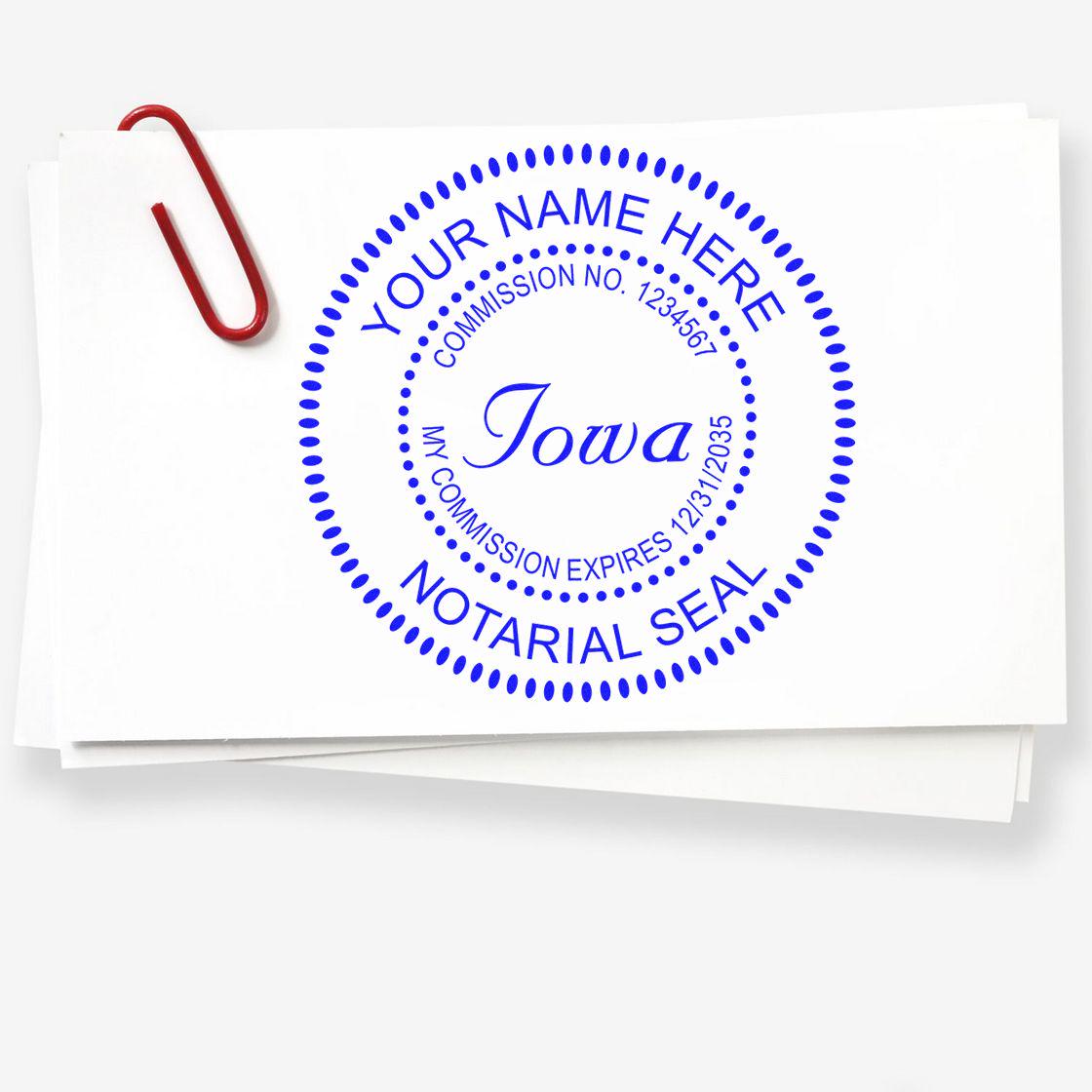
In Iowa, your notary stamp or seal is your official marker. It verifies your name, commission number (if applicable), and the words "Notarial Seal" or a similar variation. Here is a quick reference for the difference between a stamp and a seal:
- Stamp: Usually a self-inking device containing your notary information
- Embossing Seal: A crimping device that physically imprints a raised design on the page
Both are acceptable in Iowa, but depending on the document, one might be more commonly used than the other. Be sure to confirm with your client or the requesting party to see if they prefer a particular style. Properly affixing your stamp or seal is crucial for the notarization to be valid.
Finding A Reliable Supplier
When choosing a supplier for your Iowa notary stamp and seal, you want both quality and affordability. At Acorn Stamps, we pride ourselves on being a top supplier of Iowa notary stamps and Iowa notary seals. As a family owned and operated business since 1964, we have more than 60 years of experience delivering:
- Stellar customer service
- Super fast turnaround on orders
- Close attention to detail in every stamp and seal
We understand that once you receive your commission, you might be eager to start working right away. Our streamlined processes help you get your notary tools quickly, so you can fulfill your notarial duties with confidence.
Additional Helpful Supplies
In addition to your stamp or seal, consider stocking up on:
- Notary record books: Keep track of every notarial act by noting the date, type of document, and signer information.
- Ink refills: For a self-inking stamp, extra ink ensures consistent, clear impressions.
- Storage cases: A protective pouch or case helps prevent damage to your stamp or seal and keeps it free from dust and debris.
By investing in the right supplies, you will streamline your day-to-day notary tasks and maintain a professional image.
Maintaining Your Commission
After becoming a notary, adhering to Iowa notary requirements involves keeping your commission in good standing. Staying aware of renewal dates, updating your contact information, and following the relevant regulations protect both you and the public.
Know Your Renewal Timeline
In Iowa, your notary commission comes with an expiration date. To ensure you can continue offering notary services without interruption, begin the renewal process well before your commission ends. You will typically:
- Submit a renewal application
- Confirm any updated address or name changes
- Pay the renewal fee
Mark these dates on your calendar. Renewal is generally straightforward if you stay on top of the process.
Update Your Stamp And Seal As Needed
If any key details change (for example, your name due to marriage or divorce), you may need to obtain a new notary stamp or seal with updated details. Using outdated or incorrect stamp information could invalidate a notarization, so it is crucial to ensure everything matches your commission certificate.
Recordkeeping And Compliance
Good records are your strongest ally if questions arise about a past notarization. A well-maintained notary journal includes:
- Date and time of each notarization
- Type of document notarized
- Name and address of the signer
- Type of identification presented
Iowa notary requirements might not mandate a record book for every type of document, but thorough records minimize risk and demonstrate your professionalism. In the event of an audit or legal query, you will appreciate having accurate details at your fingertips.
Best Practices And Responsibilities
Once you have your Iowa notary stamp and commission, you need to apply a high ethical standard in your work. Fraud prevention lies at the heart of the notary role. By following best practices, you honor your commission and protect the individuals who rely on your services.
Verify Identities Properly
Always request a valid, government-issued photo ID from the person signing a document. Even if you recognize them, verifying their identity per Iowa guidelines is essential. This step is critical in preventing forgery and fraud.
Ensure Willingness And Competence
A signer must be willingly participating in the transaction and be of sound mind. If you suspect that someone is uncertain or coerced, it is your right and responsibility to refuse the notarization. You ensure each document meets the standard of a legitimate agreement by confirming the signer understands what they are signing.
Complete The Notarial Certificate
Every official notarization ends with a signed and sealed notarial certificate. Whether attached or pre-printed on the document, the notarial certificate should mention:
- The venue (state and county)
- The date of notarization
- Your signature as the notary
- Your stamp or seal impression
Accurate completion of the certificate cements your role in verifying the document’s authenticity. If you are unsure of the correct wording in a specific situation, consult Iowa’s official notary guidelines for clarity.
Avoid Common Pitfalls
- Notarizing a document you have not fully reviewed or do not fully understand
- Performing a notarization when the signer is not in your presence
- Failing to keep track of your commission expiration
Staying mindful of these pitfalls helps you keep your notary practice running smoothly and ensures you continue fulfilling your community’s needs responsibly.
Putting It All Together
Being a notary in Iowa means you carry an important responsibility, but the process of becoming and remaining commissioned does not have to be overwhelming. By following Iowa notary requirements at each stage—from application to renewal—and by diligently verifying signers and maintaining accurate records, you can build a respectable notary practice.
Whenever you need new or replacement notary supplies, Acorn Stamps stands ready to meet your needs. As a family owned and operated business since 1964, we have spent six decades refining our notary stamp and seal production. We are proud to offer speedy turnaround and exceptional customer support, so you can get your Iowa notary stamp or seal quickly and efficiently.
Armed with the right knowledge and tools, you will be well-prepared to safeguard the legality of important documents and transactions for your fellow Iowans. Each notarization you perform reflects your professionalism, commitment, and adherence to Iowa’s regulations.
FAQs
How Long Does It Take To Become A Notary In Iowa?
The application and processing time varies, but you can usually complete your forms and pay the fees within a few days. Once you submit everything, you may receive your confirmation from the Iowa Secretary of State in a few weeks. Always allow extra time in case the office requests additional information.
Do I Need A Notary Journal In Iowa?
Iowa does not explicitly require keeping a notary journal for all notarizations, but it is highly recommended. Maintaining a thorough log of each act helps protect you if any questions arise about a past notarization. It also demonstrates your commitment to best practices.
Can I Use An Embossing Seal Instead Of A Stamp?
Yes. Iowa allows you to use an embossing seal or a notary stamp. The key is to ensure your device clearly displays the essential notarial details, including your name and the words “Notarial Seal” or similar wording. Check current state guidelines if you are unsure.
What If My Personal Information Changes During My Commission?
If you legally change your name, address, or other critical details, you should notify the Iowa Secretary of State’s office promptly. You will likely need a new notary stamp or seal that reflects your updated information. Failing to update your records could lead to complications or questions about your legitimacy as a notary.
Where Can I Get An Iowa Notary Stamp Or Seal?
You can order them from Acorn Stamps, a family owned and operated company serving notaries since 1964. Our notary stamps and seals meet all Iowa state guidelines. With our super fast turnaround and stellar customer service, you can have your official supplies in hand quickly to begin (or continue) your notary work with confidence.
By following these guidelines and securing the right supplies, you will meet Iowa notary requirements with ease. Whether you are notarizing a simple affidavit or an important business contract, your role remains vital in preventing fraud and verifying signatures for the people of Iowa. Let your professionalism shine, and enjoy the sense of accomplishment that comes with every properly notarized document.