You already know that meeting Delaware notary requirements is essential for serving your community and safeguarding the integrity of official documents. Whether you are just beginning your notary journey or looking to refresh your knowledge, understanding each requirement will help you excel in your role. Below, you will discover the ins and outs of becoming a Delaware Notary and how to ensure you are meeting every standard along the way. From explaining eligibility factors to outlining what you need for your official Delaware notary stamp or seal, you will find everything you need to protect your commission and maintain a professional edge.
Understand Delaware Notary Requirements
Delaware notary requirements may sound technical, but they exist to ensure notaries carry out their duties with integrity and accuracy. Your primary responsibility is to serve as an impartial witness when individuals sign important documents. By verifying identities and administering oaths, you help prevent fraud and uphold the legal standing of contracts, affidavits, and more.
Key Roles and Responsibilities
- Verifying signers’ identities using valid identification
- Ensuring signers are willingly entering into agreements or statements
- Administering oaths and affirmations
- Completing a notarial certificate stating details of the notarization
You act as a gatekeeper for official documents, making sure everything you handle meets strict legal standards. Because of your unique position in the justice system, the State of Delaware enforces specific guidelines that you must follow.
The Basic Qualifications
You will need to meet a few baseline criteria before applying for your commission. Although the details can vary slightly, you typically must:
- Be at least 18 years old
- Be a Delaware resident or maintain a place of employment in Delaware
- Have no felony convictions or disqualifying misdemeanors
- Be able to read and write English
These requirements ensure you have the maturity and good character to execute notarial acts properly. If you fulfill these criteria, you are on track to begin the application process.
Complete The Application Process
Before you can stamp your first document, you will need official recognition as a notary. Delaware’s commissioning process underscores how critical this position is. Taking the time to complete it correctly will save you headaches down the line.
Submitting Your Application
The State of Delaware typically manages notary applications through its designated government office or online portal. While each step can vary, you can generally expect to:
- Fill out an application form that includes your personal information and background details.
- Provide information regarding any criminal history if relevant.
- Pay the required application fee to cover administrative costs.
- Await correspondence indicating that you may take an oath of office, if required.
Once you receive approval, you will confirm your commission by taking your oath. Keep in mind that your commission has an expiration date, so you will need to renew it periodically to stay active.
Preparing for State-Specific Procedures
States approach notary commissioning a little differently. In Delaware, you may be required to schedule an appointment to take your oath or complete specific steps to finalize your status. Make sure you read any state guidance thoroughly. Missing a simple deadline can delay your commission and create confusion for potential clients who need your service.
Maintain Your Commission
Earning your commission is just the beginning of your role as a notary in Delaware. Ongoing responsibility comes with the territory, and you will want to be fully aware of renewal processes, record-keeping requirements, and any continuing education options that may arise.
Renewal Deadlines and Procedures
Most Delaware notary commissions last for a few years, after which you must file for renewal. By setting a reminder well in advance of your expiration date, you avoid last-minute stress. Timely renewal usually requires you to:
- Verify your continued eligibility
- Submit a renewal application by the stated deadline
- Pay a renewal fee
- Possibly provide updated background information
If you let your commission lapse, you could lose notary privileges. Staying on top of renewal ensures you can continue serving clients and protecting important legal documents without interruption.
Maintaining Accurate Records
Although Delaware does not always require notaries to keep a journal of every notarization, it is generally good practice to maintain clear records of the documents you notarize. Keeping a log helps you:
- Stay organized
- Protect yourself in case of future disputes
- Demonstrate your professionalism and reliability
Make sure to record basic details: date of notarization, type of document, names of signers, and any identification numbers. Thorough records allow you to reference specific transactions, boosting your credibility and avoiding confusion if questions arise later.
Choose The Right Supplies
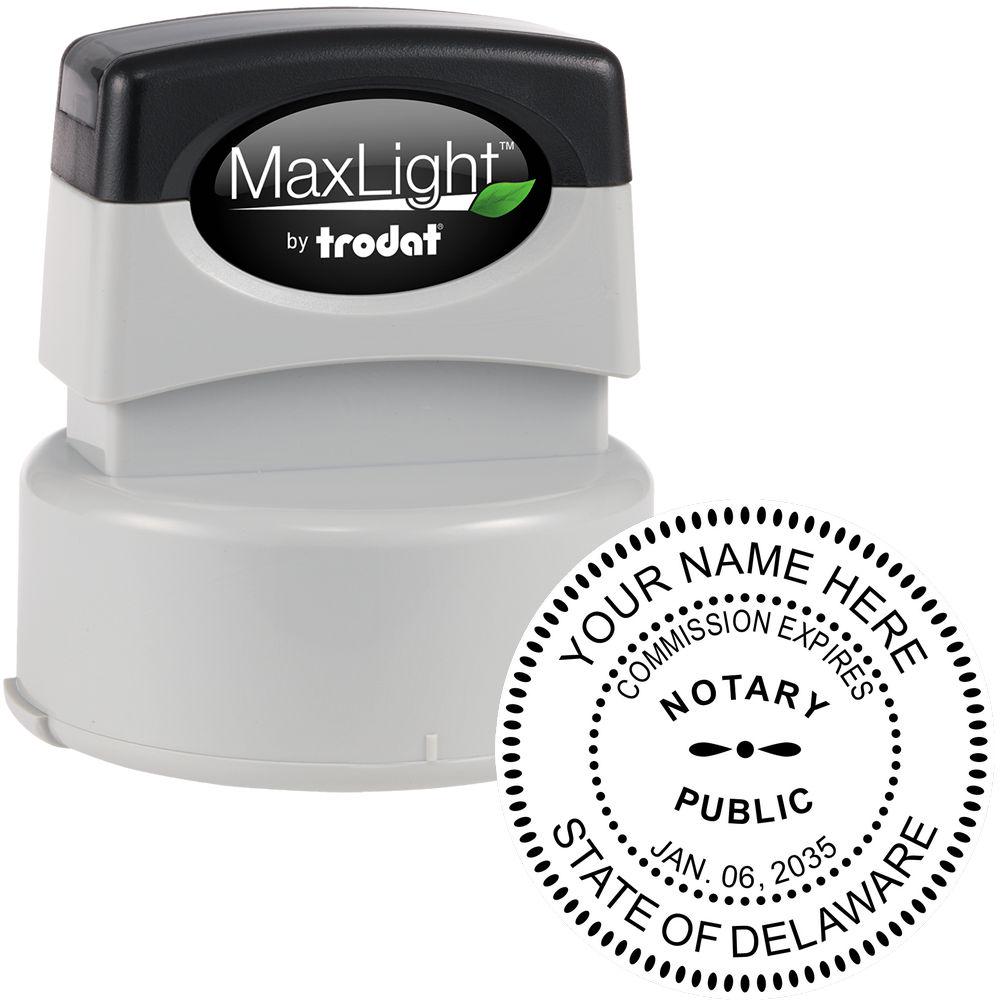
Your Delaware notary stamp or seal is more than just a tool, it is a symbol of your official authority. Selecting the best notary supplies ensures clear, precise imprints on every document you notarize. Documents that have smeared or illegible stamps risk being rejected by the authorities.
Delaware Notary Stamp vs. Embossing Seal
You can use either a rubber-ink notary stamp or an embosser in Delaware, but many notaries opt for one or both depending on the document type. Here is what you need to consider:
- Notary Stamp: Quick, easy, and produces a clear inked impression. Perfect for high-volume notary tasks like real estate closings or official letters.
- Embossing Seal: Has a raised impression often preferred for appearance, but it may be harder to read for archival or verification purposes.
Some notaries apply both an inked stamp and an embosser for added security. Whatever your preference, ensure your device adheres to Delaware’s guidelines regarding size, shape, and required text.
Selecting a Trusted Supplier
Choosing a reliable source for your notary stamp or seal means you will get consistent, high-quality impressions every time. At Acorn Stamps, you will find:
- Quality Delaware Notary Stamps and Delaware Notary Seals that meet state standards
- Friendly customer service dedicated to guiding you through your purchase
- Super fast turnaround, so you are ready to notarize without unnecessary delays
- A family-owned and operated ethos, proudly serving professionals for 60 years
With so much riding on every notarization, you deserve durable, precise tools that reflect your professionalism. You do not want to re-stamp multiple times or struggle with faint impressions. Partnering with a trusted supplier makes all the difference.
Stay Compliant With Regulations
A notary’s responsibilities include staying informed on the regulations that govern your commission. Requirements do change, and you must keep your ear to the ground to adapt quickly.
Understanding Prohibited Acts
On top of the tasks you should perform, regulations also outline actions you must avoid. Examples include:
- Notarizing a document if you have a personal interest in the transaction
- Providing legal advice, unless you also happen to be a licensed attorney
- Pre-dating or post-dating notarizations
- Overstepping state-specific guidelines for remote notarization, if applicable
Violations can lead to fines, lawsuits, or revocation of your commission. You will want to keep yourself informed through official state notices, reputable notary associations, or seminars.
Handling Special Situations
Occasionally, you will encounter unusual requests: administering an oath to someone who does not have a standard form of identification, or re-verifying an individual’s identity for a second time. In such instances, do not guess. Familiarize yourself with Delaware law and, if needed, seek guidance from state authorities or credible professional organizations. This diligence keeps your commission in good standing.
Follow Quick Tips For Success
Becoming a successful notary in Delaware takes more than stamping documents. Simple, everyday habits can help you forge a reputation for reliability and accuracy. Here are a few quick tips:
- Keep a current copy of Delaware’s notary handbook (if available) as a reference.
- Stay patient with clients unsure of the process, guiding them calmly through each step.
- Prepare an organized workspace. Keep your stamp or seal, journal, and necessary forms in a dedicated spot.
- Double-check details like the signers’ names and the current date before completing a certificate.
- Encourage signers to read documents fully before asking for your signature or seal.
By combining thorough knowledge with daily good practices, you will become the notary people trust.
Frequently Asked Questions
Below are five FAQs about Delaware notary requirements to help you clarify any lingering doubts.
How long is a Delaware notary commission valid?
In most cases, your notary commission remains valid for several years, typically four years, though the duration can sometimes vary. Check your official documentation for the exact expiration date and plan to renew on time.
Can you notarize documents for family members?
Generally, it is discouraged or outright prohibited to notarize for immediate family members, especially if you have a financial or beneficial interest in the transaction. Verify any Delaware-specific regulations for a definitive answer.
Is a notary journal required in Delaware?
Delaware does not always mandate keeping a journal, but maintaining one is considered best practice. Documenting each notarization can protect you if questions arise later and can enhance your professional reputation.
Which notary tools are required by law?
Delaware typically requires you to use an official notary seal or stamp that states your name and commission details. Verify specific regulations on size, shape, and wording to ensure compliance.
Where should you get a Delaware notary stamp or seal?
Choosing a reputable supplier is crucial. Acorn Stamps, family-owned and operated since 1964, is a top choice for Delaware notary stamps and Delaware notary seals. You can expect stellar customer service, a swift turnaround, and the highest-quality materials.
By following these guidelines and continually staying informed on Delaware notary requirements, you will protect yourself and those who depend on your services. Whether you are renewing your commission or purchasing a fresh stamp, a thorough understanding of state requirements keeps you at the top of your game. When you pair your knowledge with quality supplies from a trusted source like Acorn Stamps, you can fulfill your role with confidence and pride.