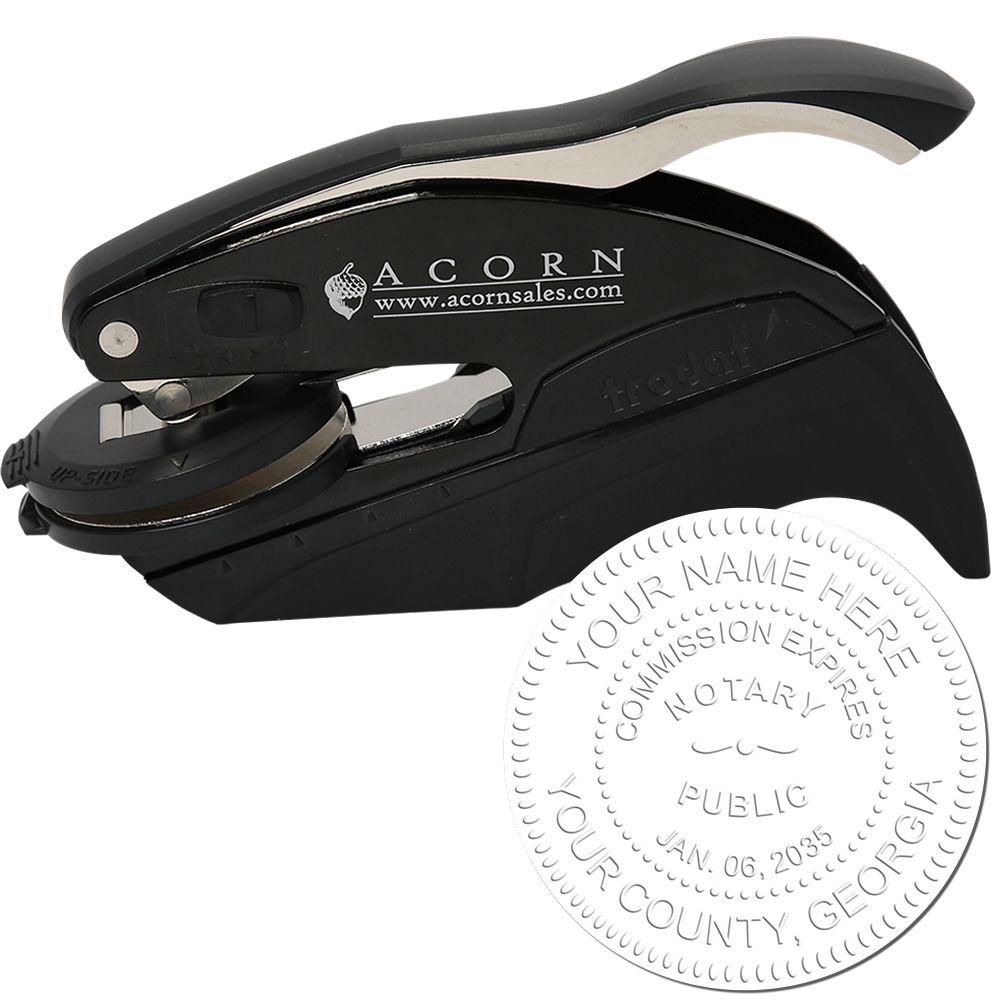
Georgia Notary Embosser: The Basics
If you are a Georgia Notary Public or plan to become one, a Georgia notary embosser is one of the most important items in your toolkit. This simple device creates raised impressions on documents, adding a tactile and visible layer of authenticity to your notarizations. In Georgia, official notarial acts must reflect professionalism and accuracy, and your embosser helps you achieve both.
When you emboss a page, you are effectively creating a seal that people can verify by touch or by sight. This extra validation can be especially useful when dealing with sensitive legal, financial, or real estate documents. While the state of Georgia recognizes notary seals in different forms, many professionals prefer an embosser because it offers added security against tampering. A raised seal is harder to replicate or alter compared to an ink-based stamp.
Beyond security, a well-placed embossment enhances the credibility of your notarial act. By making the seal easier to notice, it also offers reassurance to those signing the document. Whether you are notarizing affidavits, deeds, or other official forms, the presence of a clean and precise raised seal can help you stand out as a notary who takes each task seriously.
What Makes It Unique
- Embossers create a three-dimensional seal, compared to the flat impression of a rubber stamp.
- Many Georgia notaries find embossers to be more durable, with fewer smudging issues.
- An embosser can be used alone or alongside an ink-based notary seal for higher visibility.
Choosing the right Georgia notary embosser can make your work more straightforward and give clients confidence in your services. In the following sections, you will learn why an embosser is vital, how to use it correctly, and what steps to take to ensure it stays accurate and reliable throughout your notarial commission.
Why a Professional Embosser Matters
You might be wondering if all embossers work the same. After all, an embosser is just a handheld tool that clamps down on paper, right? In practice, the quality of your Georgia notary embosser can dramatically affect the authenticity of your seal, your day-to-day work efficiency, and—even more importantly—your professional reputation.
Quality and Legality
The State of Georgia has specific guidelines for how a notary seal should appear. While Georgia does not mandate a particular shape or size, your seal must legibly show specific information. A professional embosser ensures the following details are clear and easy to read:
- State of commission (Georgia)
- Your name as it appears on your notary commission
- The words “Notary Public”
If your seal’s text is faint or misaligned, recipients of the notarized document may question its validity. By investing in a high-quality embosser with well-defined dies, you avoid potential issues of unreadable impressions.
Professional Appearance
Documents that need notarization are often tied to major life events, such as purchasing property, adopting children, or creating estate plans. Anyone relying on your notarial services wants to feel their documents are in good hands. When you use a sturdy, well-crafted embosser, the raised seal immediately conveys a sense of authority and care.Remember that first impressions mean a lot in the notarial world. A crisp seal free of smears or overlapping edges can make a difference in how comfortable clients feel about trusting you with their sensitive paperwork.
Smooth Work Process
A reliable embosser makes your job easier. Low-quality versions can jam, produce uneven impressions, or wear out quickly. By contrast, a professional-grade tool is designed with ergonomics and longevity in mind. Your hand and wrist will thank you when you are embossing multiple documents daily. Plus, a well-constructed embosser reduces the possibility of user errors, so you spend less time re-confirming your seals or discarding invalid impressions.
How to Use a Georgia Notary Embosser
Even if your embosser is top-of-the-line, it serves little purpose without correct usage. Following simple yet critical steps can help you avoid improper embossing or an unclear seal that might invalidate your notarization. Here is a straightforward process to guide you.
Step 1: Prepare the Document
Before you reach for your embosser, inspect the document you will be notarizing to make sure it is complete. Double-check that all names, dates, and necessary signatures are present and accurate. If there are any blank spaces, encourage the signer to fill them in, or draw a line through any areas that must remain blank. This reduces the chance of fraudulent additions later.
Step 2: Align the Embosser Perfectly
Locate the part of the document designated for your notarial seal. Typically, this will be near the notarial certificate or adjacent to your signature. Slide the edge of the embosser over the paper so you can view exactly where you want the raised seal to appear.
- Hold the embosser firmly but comfortably.
- Make sure the text on the embosser’s die lines up in a readable orientation.
- Double-check there are no folds or wrinkles in the page that might distort the seal.
Step 3: Press Down Steadily
Once aligned, apply consistent and even pressure to clamp the embosser onto the page. Avoid pressing down too forcefully, as this can cause the paper to tear. With most well-made embossers, a moderate amount of pressure is enough to create a distinct impression. As soon as you release, lift the embosser away and confirm that the text appears clearly in its three-dimensional form.
Step 4: Confirm Legibility and Placement
Check the impression for clarity. Is your name visible? Can you read “Georgia” and “Notary Public” without squinting or guessing? If you notice any faint lettering or off-center details, consider placing your seal again on a clean copy of the document—only if your state’s regulations allow a redo. Otherwise, you will need to execute a fresh notarization on an unmarked page.
Maintaining Your Embosser
A worn or dirty embosser may produce unclear seals, which can raise questions about a document’s genuineness. Maintaining a Georgia notary embosser is relatively straightforward, but it is critical to extending the life of your device and ensuring faithful impressions every time.
Storage Best Practices
The raised dies inside the embosser can become misaligned or scratched if they rub against hard surfaces. Whenever you are finished with your notarial work for the day, store your embosser in a pouch or protective case. Keep it away from extreme temperatures or direct sunlight, which can weaken some materials over time.
Proper Cleaning
You do not need elaborate solutions or chemicals for routine cleaning. A soft cloth or cotton swab is often enough to remove dirt and debris from the device’s moving parts. If you do notice any intense buildup, a gentle wipe with mild soap and water should do the trick. Always ensure the embosser is thoroughly dry before using it again.
Regular Checks
Periodically inspect the engraved die plates for any signs of wear or cracks. If the metal is bent or the letters are becoming too smooth, your seal may not look clear. In those instances, you may need to replace the die or invest in a new device. Frequent usage will accelerate wear, so plan accordingly and monitor the clarity of your embossing at least once a month.
Avoiding Common Pitfalls
- Do not store heavy objects on top of your embosser, as constant pressure can warp the plates.
- Keep your fingers and any cords away from the lever to prevent accidental pinching.
- Never attempt repairs on your own if something breaks. Contact a reputable supplier or professional.
Choosing the Right Supplier for Your Embosser
In many states, you can purchase notary embossers and other supplies from a variety of stores or online shops. However, not every supplier can offer the same quality or care. As a Georgia Notary Public, you rely on these tools for critical tasks, so choosing the right provider is more than a preference—it can be the difference between a smooth day of notarizing and potential document rejections.
Why Acorn Stamps Is a Trusted Choice
If you are searching for a reliable source for your Georgia notary embosser, Acorn Stamps is a name to remember. Family owned and operated since 1964, they bring more than 60 years of service to customers seeking the highest-quality stamps and seals. Their dedication to stellar customer service and super fast turnaround times sets them apart in a market where precision and timely delivery are crucial.
Acorn Stamps focuses on creating embossers and stamps that comply with Georgia’s notarial requirements. Each device is designed for optimal grip, legibility, and durability. Plus, if you ever have a question about maintenance, usage, or even more general notary procedures, their knowledgeable support team is ready to guide you.
By choosing a trusted supplier, you can be sure that your notary commitments are backed by a tool that will stand up to daily wear and tear. More importantly, you demonstrate to your clients that you value reliability and professionalism—two qualities that can help you build a strong reputation among individuals and organizations that rely on your services.
What to Look for in a Supplier
- Clear compliance with Georgia’s notary regulations.
- High-quality materials that resist bending or rust.
- Speedy production and shipping times for urgent orders.
- Responsive customer service for troubleshooting issues.
Even if you decide to explore different vendors, focus on finding a supplier who takes their role as seriously as you take yours. You have important legal responsibilities, so equip yourself with an embosser that meets (or exceeds) all the requirements for Georgia notaries.
5 FAQs About Georgia Notary Embossers
Below are some frequently asked questions about Georgia notary embossers. If you are unsure about the rules or best practices, these insights may help you feel more confident about delivering top-notch notarial services.
Is an embosser required by law in Georgia?
Georgia law does not mandate the use of an embosser specifically. However, every notary is required to use a seal that includes their name, the state of Georgia, and the words “Notary Public.” Many notaries choose embossers for their added security and professional appearance.
How often should I replace my embosser?
This depends on how frequently you use it and how well you maintain it. If the impression becomes unclear or the plates show signs of wear, it might be time for a replacement. A well-kept embosser from a reputable supplier can last for several years.
Do I need to use an inked notary seal in addition to my embosser?
In Georgia, an embosser is acceptable on its own, as long as it meets the legal requirements. Some notaries use an inkless embosser for security and an ink stamp for clarity. Ultimately, the choice is yours, but be sure the final outcome satisfies the state’s guidelines for readability.
Where should I place the seal on documents?
Always place your seal near your signature or the notarial certificate. Avoid covering text or interfering with signatures or important dates. If a document specifically designates space for the notarial seal, use that area to keep everything neatly organized.
How do I keep my embosser secure when I am not using it?
Georgia law expects notaries to protect their seals from misuse. Store your embosser in a locked drawer, safe, or other secure location. Never leave it lying around in a public space. This helps guard against unauthorized use that could compromise your notarial commission.
By following these guidelines, you can handle your Georgia notary embosser with confidence, maintain its effectiveness over time, and reassure clients that they can rely on you for professional, legitimate notarizations. Whether you are new to the profession or have served as a Georgia notary for years, a high-quality embosser and a trustworthy supplier can make your day-to-day tasks smoother and more rewarding.