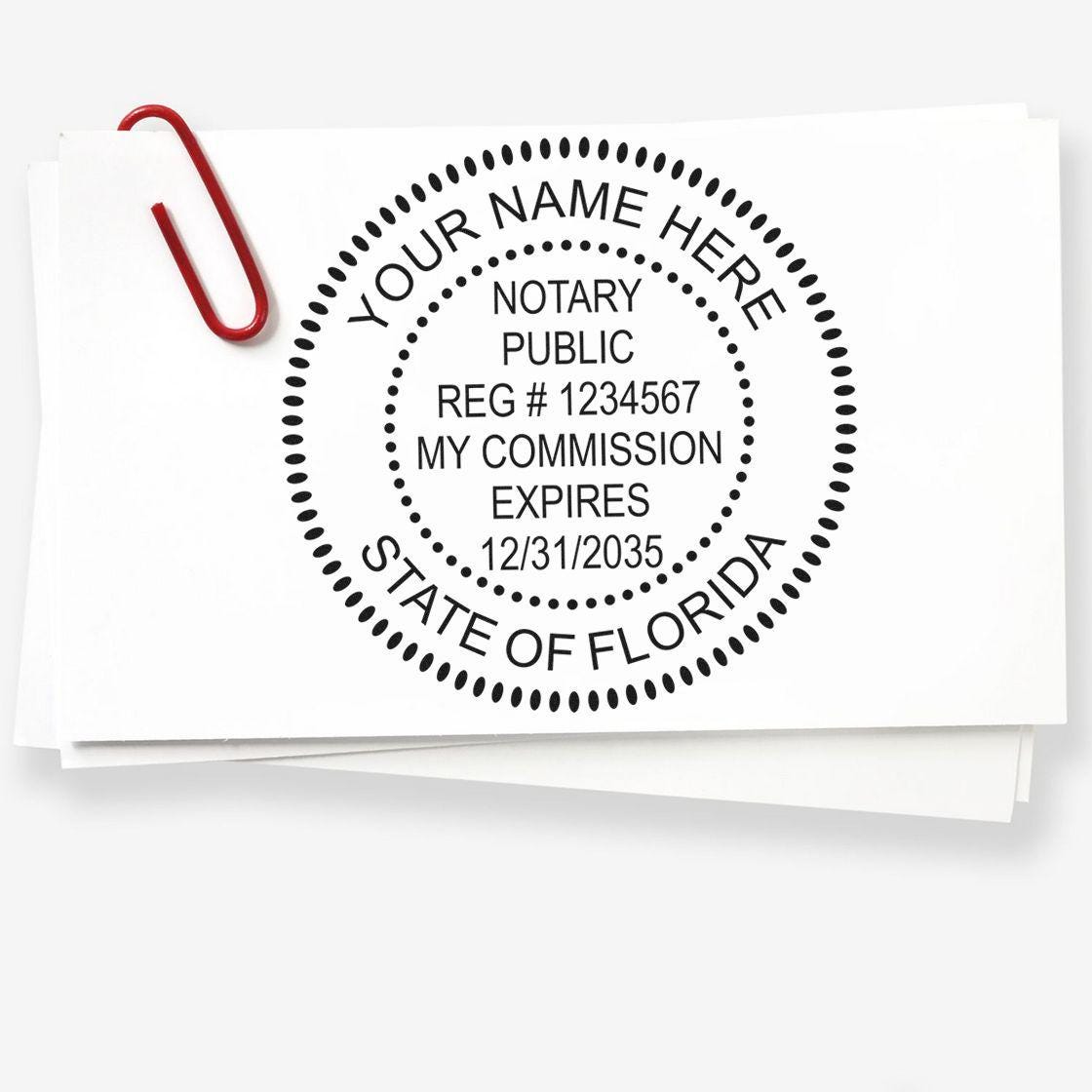
Why an FL Notary Stamp Matters
If you serve as a Florida Notary Public, your FL notary stamp is more than just a simple marking device. It is an essential tool that affirms the authenticity of your work and cements your role as a trusted public official. When you place your stamp on important documents, you confirm that you have verified identities, witnessed signatures correctly, and followed a consistent standard of accuracy.
Because Florida law mandates the proper use of notary seals and stamps, you need a reliable stamp that complies with state guidelines. The right FL notary stamp streamlines your workflow too, helping you complete signings, acknowledgments, and other notarial acts with confidence. Whether you are processing property deeds, officiating loan documents, or overseeing estate paperwork, an effective notary stamp ensures you provide services that stand up to legal scrutiny.
In a profession rooted in integrity, you cannot afford to overlook the importance of a well-made notary stamp. Having one that is durable, accurate, and meets Florida’s criteria helps you maintain your professional image and avoids needless do-overs caused by incomplete or smeared impressions. Simply put, an FL notary stamp expedites your tasks and helps you deliver the kind of reliability your clients or employers expect.
Understanding Florida Notary Requirements
Before you begin stamping documents, you must confirm that you have met all legislative and administrative guidelines for notaries in Florida. Generally, you must be at least 18 years old, have a valid Florida driver’s license or other state-approved form of identification, and complete a notary education course. You then apply through the Florida Department of State, where you pay a fee and take an oath of office.
Once the application is approved, you receive your commission certificate. This certificate must remain current for you to act as a notary. Keep in mind that periodic renewals are necessary, typically every four years. Renewal requirements may include completing updated education courses, so always stay informed about changes in regulations.
After you receive your notary commission, you must have a notary seal or stamp. According to Florida statutes, your seal should include specific elements, such as the words “Notary Public-State of Florida” and your notary commission number. Double-check that the name on your stamp matches the name shown on your commission certificate. Investing in a high-quality Florida notary stamp helps you stay within legal boundaries while projecting a professional image.
Enhancing Reliability With Quality Stamps
You want to ensure your stamp remains crisp and legible throughout its lifetime. A worn-out or subpar stamp might smear, fade, or fail to leave a clear impression. That could be more than just a mild annoyance. It might render stand-out documents unusable, forcing you and your clients to re-sign and re-stamp.
When you rely on a well-constructed FL notary stamp:
- You reduce the risk of ink blotches that can obscure your commissioned name or ID number.
- You save time by not having to restamp or reprint documents.
- You demonstrate a commitment to professionalism, because clear, neat imprints reflect your sense of responsibility.
A robust stamp makes your workflow smoother. As a Florida Notary Public, completing notarized paperwork quickly and accurately is part of your day-to-day responsibilities. When you have a dependable stamp by your side, you can boost both client satisfaction and your own peace of mind.
Choosing the Right Stamp for Your Needs
Determining which type of FL notary stamp works best for you depends on a few factors, including your preferences, frequency of use, and the kinds of documents you handle. While the state of Florida sets rules regarding what the stamp must display, you have some flexibility in style and format. Below are some common options to consider.
Rubber Hand Stamp
A rubber hand stamp is the old-school classic. It requires a separate ink pad, so you press the surface of the stamp onto an inked pad and then place the imprint on the page. If you need a lower-cost option and do not mind carrying a small ink pad, a hand stamp might work well for you.
Self-Inking Stamp
A self-inking stamp has a built-in ink pad and can often produce thousands of consistent impressions before you need to replace the ink. These stamps are popular for notaries who move between different offices or locations throughout the day, because you can simply uncap the device and stamp your documents. If speed and convenience are a priority, a self-inking stamp might be your best bet.
Pre-Inked Stamp
A pre-inked stamp stands out for its crisp, detailed imprints. It uses a gel-based ink to deliver sharp and precise notary seals. While pre-inked stamps may be slightly pricier than other varieties, many professionals appreciate the high-quality impression they produce. If consistent neatness is your main concern, you may gravitate toward a pre-inked option.
No matter which style you choose, make sure the stamp clearly displays all legally required information. This typically includes a border or seal outline, your commission name, your commission ID, and the words “Notary Public-State of Florida.”
Tips for Proper Use and Maintenance
You can dramatically lengthen the lifespan of your FL notary stamp through the right storage, cleaning, and re-inking practices. Additionally, making a clear impression on every document ensures you meet Florida’s legal standards. Below are some quick tips you can use in your day-to-day notarial tasks.
- Keep Your Stamp in a Safe Place
Always store your notary stamp in a secure, dry area. If your job requires frequent travel, use a dedicated pouch or small case to protect it from dust and accidental exposure to extreme heat or cold.
- Practice Consistent Impressions
Before stamping an official document, make a quick test impression on scrap paper. This helps ensure the ink distribution is even and prevents an unreadable stamp from going onto an important page.
- Clean the Surface Occasionally
Unwanted ink buildup can interfere with clarity. Wipe the surface of the stamp gently with a damp cloth or paper towel if you notice dried ink or particles clinging to the surface.
- Re-Ink or Replace When Fading Occurs
Once you see your imprints getting lighter or splotchy, it is time to re-ink (if you have a self-inking or pre-inked model) or invest in a new ink pad. When your stamp is consistently producing poor-quality imprints, consider replacing it altogether.
- Ensure Compliance at All Times
Make sure your stamp meets all Florida Department of State guidelines and that you have an updated commission. If your name changes or your commission expires, you will need to update your stamp to reflect these changes.
By adhering to these maintenance strategies, you will minimize downtime and guarantee that your stamp remains readable and professional through even the busiest signing sessions.
Why Pick Acorn Stamps
When it comes to ensuring reliable performance, look no further than Acorn Stamps. Family owned and operated since 1964, with over 60 years of service under their belt, Acorn Stamps has earned a reputation for quality Florida notary stamps and seals. You can count on them for:
- Stamps that meet or exceed legal requirements, providing you with total peace of mind.
- Stellar customer service, guiding you through each step from ordering to maintenance.
- Super fast turnaround times, perfect for those last-minute or emergency orders.
- A family-owned commitment to building lasting relationships, supported by decades of industry know-how.
Finding a dedicated partner that understands the nuances of Florida notarial guidelines can streamline your work even further. Whether you are looking for the simplicity of a self-inking stamp or the crisp clarity of a pre-inked model, Acorn Stamps can help you locate just the right tool for your personal preferences and professional needs. In the end, picking a supplier that prioritizes your success as a notary means you can get your tasks done efficiently and maintain a solid reputation with your clients.
Five FAQs About Florida Notary Stamps
Do I Need a Stamp if I Already Have a Seal Embosser?
In Florida, you must use an inked stamp that shows the required information, regardless of whether you also have an embosser. While an embosser can add an extra layer of security, it typically does not replace the official inked stamp.
How Do I Re-Ink My Self-Inking or Pre-Inked Stamp?
When your impressions start to fade, follow the manufacturer’s instructions for adding ink. With most self-inking stamps, you remove the ink pad and place a few drops of compatible ink onto the pad. For pre-inked stamps, there is often a small reservoir you fill with specialized ink. Always use the recommended refill ink to avoid damaging the stamp.
What Happens If My Name or Commission Number Changes?
If you change your legal name or renew your commission and receive a new number, you must update your notary stamp to match the new details. Although you can continue stamping until the end of your current commission period, Florida law states that all information on the stamp must be accurate once a new commission takes effect.
Can I Customize the Design of My Stamp?
Yes, but you must still display the essential components required by Florida law. You can choose different ink colors, fonts, or border designs, provided the text remains legible and complete. Choosing a more personalized design can help distinguish your notary stamp, but clarity and compliance should always be your top priorities.
How Often Should I Replace My Stamp?
This depends on how frequently you use it. Most high-quality stamps will provide thousands of clear impressions before they need a refill or replacement. If the text or numbers on the stamp are wearing down and causing illegible marks, consider replacing the stamp to remain in compliance and to keep your notarial acts valid.
By making an informed choice about your FL notary stamp and sticking to Florida’s guidelines, you ensure that each document you handle is professionally notarized. With all that in mind, you can focus on helping clients, managing documentation, and playing a crucial role in maintaining trust in legal and financial transactions.
If you want to work with an experienced provider, consider Acorn Stamps for your Florida notary stamp and seal needs. Leverage their extensive industry knowledge, stellar customer service, and high-quality products so you can get your work done right, every single time.