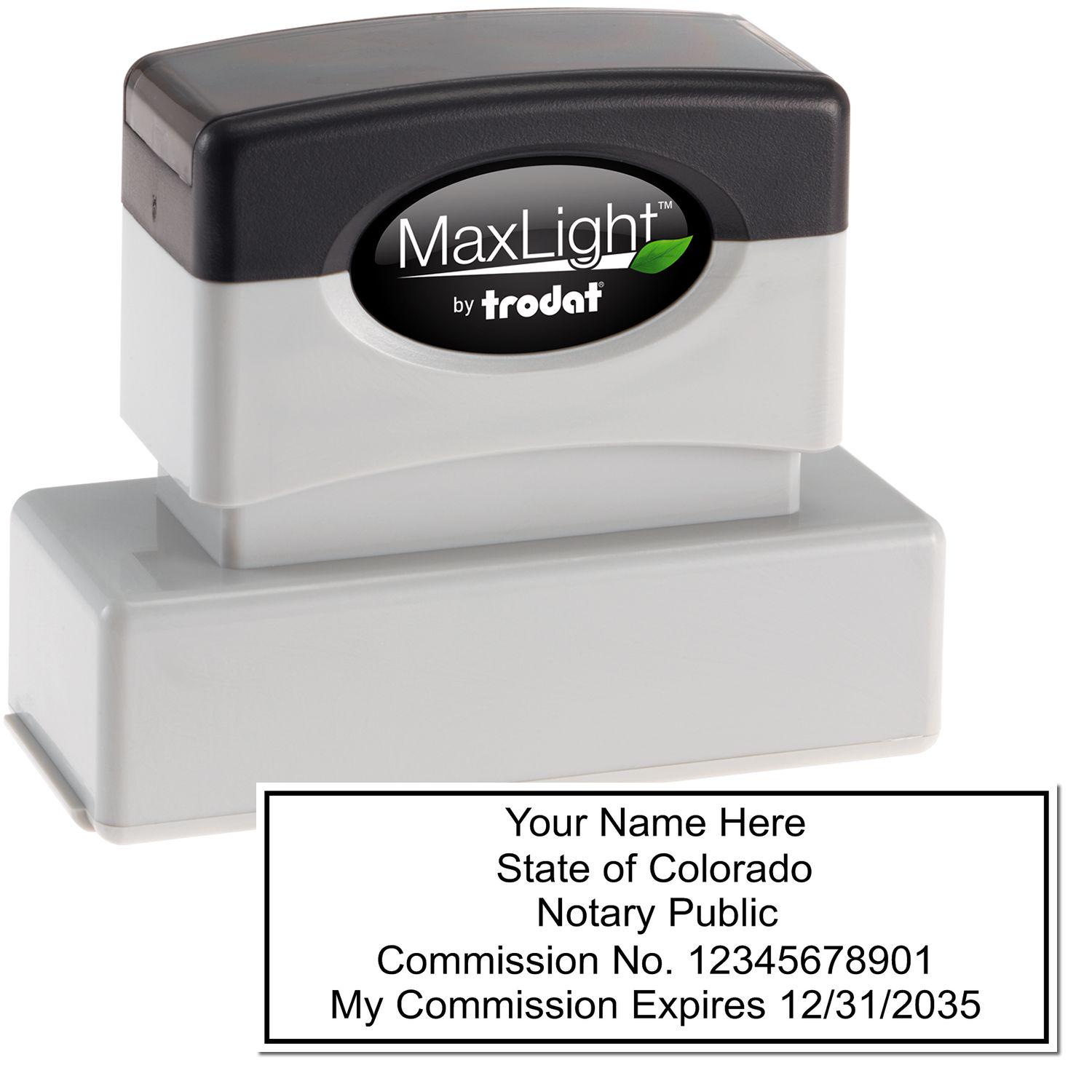
Understand Colorado Notary Seals
Colorado notary seal requirements exist to safeguard the validity and integrity of each notarized document. By following Colorado law, you help ensure that your official stamp or seal accurately represents you as a commissioned notary public. These rules also protect the public trust by preventing fraud and guaranteeing that every notarized transaction meets legal standards. Whether you are new to notarial services or have years of experience, it is important to keep the latest regulations in mind so that you deliver consistent, compliant, and professional notarizations.
What Is a Notary Seal?
A notary seal is a unique marking tool you use to authenticate and finalize the notarization of documents. In many states, including Colorado, the seal displays key identifying information, such as your name as commissioned, the words “Notary Public,” and the state you represent. The purpose of this tool is to add a clear and visible endorsement that you are the designated notary, authorized by the state to verify signatures and administer oaths.Your notary seal, which often takes the form of an inked stamp or raised embossing, is an essential part of demonstrating your legal authority. As a commissioned Colorado notary public, you carry a responsibility to keep this seal both functional and secure.
Why a Proper Seal Matters
The seal you place on a document does more than simply prove you showed up to complete the notarization. It ensures that:
- The signature and details provided on the document are official.
- The date and place of notarization are verifiable.
- You, as the notary public, were physically present to confirm identity and willingness of the signer.
A properly used seal prevents fraudulent alterations and makes it clear who performed the notarial act. Failing to follow Colorado notary seal requirements can jeopardize the validity of the notarized document, lead to legal complications, and negatively affect your professional reputation.
Fulfill Colorado’s Legal Requirements
As a Colorado notary public, you are bound by the Colorado Secretary of State’s regulations to ensure your seal meets specific legal criteria. While these regulations can change over time, you should always consult the most up-to-date guidelines upon renewing your commission or ordering a new seal.
Required Elements on Your Seal
Colorado law outlines what must appear on your notary seal. At a minimum, you will typically include:
- Your exact name as recorded on your notary commission.
- The words “Notary Public” and “State of Colorado.”
- Your notary identification number (if required by current state law).
In addition, the seal must be legible and tamper-evident. Some seals may display a border or circular pattern that helps officials verify the imprint, yet your main focus should be on clarity and compliance with the law. Your seal may be round or rectangular, but it must be consistently applied in a way that is easy to read.
Placement and Visibility
In Colorado, your notary seal should be placed near or around your notarial certificate. The seal’s placement must not cover up essential information in your certificate or on the underlying document. Always double-check that the seal impression is sharp and readable, because unclear stamps can raise questions about authenticity or validity.If you use an electronic notary seal for remote notarial acts, you will have to comply with additional requirements related to secure software and encryption. Again, it is best to review any relevant changes in Colorado laws to ensure you always meet legal expectations.
Checking Updated Regulations
Colorado notary regulations may be revised over time. As such, it is wise to regularly verify that you are still meeting every requirement. You can:
- Review updated materials from the Colorado Secretary of State’s office for announcements or changes.
- Attend training courses or webinars hosted by recognized notary associations.
- Ask your seal provider about any new design requirements that might affect your stamp or embosser.
By staying informed, you can keep your commissioning smooth, avoid costly updates or penalties, and provide accurate, lawful notarizations.
Choose the Right Seal Format
When it comes to notary seals, there are two main types you can choose from: the traditional embosser and the self-inking stamp. While both fulfill Colorado notary seal requirements, you may prefer one based on portability, clarity, and the nature of the documents you typically notarize.
The Embosser Option
An embosser creates a raised impression on paper without using ink. Some notaries love embossers for their distinctive, professional appearance, plus they are difficult to reproduce or forge. However, embossers can sometimes produce an impression that is hard to photocopy or scan clearly. If your clients need to submit copies of notarized documents, an embosser alone might cause legibility issues in reproduced versions.Despite this drawback, you may still prefer embossers if you value traditional aesthetics and think your clients will appreciate the tactile impression. Also, certain formal or ceremonial documents (such as wills or official certificates) sometimes look more impressive with an embossed seal.
The Self-Inking Stamp
Self-inking stamps are small, convenient, and typically apply a crisp ink impression with each use. These stamps are often favored in workplaces where a high volume of notarizations is required. Because ink leaves a clear contrast on the page, the authenticity of your seal is easy to confirm on copies, digital scans, and official records. In Colorado, you will want to confirm the color ink you choose meets state guidelines, if any apply, and that your stamp fits the standard size for a notary impression.Self-inking stamps often feature refillable ink pads, reducing the need to purchase multiple devices. This option can be a budget-friendly pick, especially if you operate a largely paper-based practice.
Combining Embosser and Ink
You are not limited to selecting only one type of stamp. Many notaries decide to use an embosser in conjunction with a self-inking stamp. By stamping with ink and then embossing over or near the ink impression, you reinforce the document’s security features. If a document needs to be photocopied or scanned, the inked impression remains visible and the embossed portion adds an extra layer of authenticity.
Acquire and Maintain Your Seal
Whether you rely on a self-inking stamp, an embosser, or both, you need a reliable supplier that understands your professional needs. At Acorn Stamps, we specialize in crafting Colorado notary stamps and seals that fully comply with state laws. With 60 years of service behind us, we are a family-owned and operated business that puts you, the notary, first. Our stellar customer service ensures you receive super fast turnaround times, so you can start notarizing quickly and efficiently.
Ordering from Acorn Stamps
When ordering or renewing your Colorado notary seal, it is essential to provide accurate information, including:
- Your full name as listed on your notary commission papers.
- Your notary identification number (if required).
- The type of seal (embosser, self-inking stamp, or both).
- Any specific layout or design preferences (circular vs. rectangular).
Our production process ensures every detail is checked against current Colorado laws. You will receive a notary seal that meets the highest readability standards, so you can confidently apply your stamp or embosser to every document. Since we know how time-sensitive notary supplies can be, we expedite each order to get it in your hands as soon as possible.
Storage and Security
Your notary seal is your personal responsibility. It is not only a piece of office equipment. It is a legal tool that gives you the authority to witness and certify signatures. That means you should protect your seal the same way you protect any other sensitive notarial records or confidential information.
- Lock your seal in a secure cabinet or safe when not in use.
- Avoid letting colleagues, friends, or family borrow or handle your seal.
- Inspect the impression regularly to ensure it remains crisp and legible.
- Replace the ink pad or embossing plate as soon as you notice wear.
Maintaining your seal well and keeping it away from unauthorized access can protect you from potential legal headaches, such as fraudulent document notarizations in your name.
Follow Best Notary Practices
Beyond using the correct stamp or embosser, it is equally crucial to carry out notary acts diligently and responsibly. By using best practices every time you notarize, you will stay in compliance with Colorado notary seal requirements and maintain your professional credibility.
Verify Signer Identity
Before you apply your seal, be sure you have properly identified the signer. In Colorado, you typically need to check a current government-issued ID, such as a driver’s license or passport, and verify that the name on the document matches the name on the ID. This step helps prevent fraud and ensures you are present for the entire notarization process.
Keep an Accurate Record
Colorado recommends keeping a notary journal of each act performed, in accordance with any specific state guidelines. Although not every state mandates a notary log, it is often considered a best practice for professional notaries in Colorado. Your journal should contain:
- The date and time of the notarization.
- A short description of the document notarized.
- The name and address of the signer.
- The signer’s form of identification and its expiration date.
- Your notary fee (if any).
Maintaining a neat, chronological archive of your acts can prevent confusion later, substantiate the facts of a notarization if questioned, and add an extra safeguard in case your seal or ID is ever lost or stolen.
Remain Impartial and Ethical
As a public official in a notarial capacity, your role is to validate signatures, confirm identities, and administer oaths. You are not there to advise on the legality or content of the document. You should:
- Refuse to notarize if you suspect any form of coercion or incomplete documentation.
- Avoid conflicts of interest or situations where you may stand to benefit from the notarized transaction.
- Refrain from offering legal guidance unless you are also a licensed attorney, and it fits within your professional boundaries.
By focusing strictly on verifying identity and willingness, you’ll keep the notarization process straightforward and ethically sound.
Explore Common Mistakes
Even with the best intentions, some Colorado notaries stumble into avoidable pitfalls. Here are a few mistakes to watch for:
- Using the wrong seal dimensions or layout. A seal that is too small or missing required text might be rejected by official parties.
- Failing to update your seal after a name change. If you legally change your name, you must update both your notary commission and the design of your seal.
- Overlooking recordkeeping responsibilities. If you fail to keep a proper notary log (when required or recommended), you could run into complications if your acts are ever questioned.
- Omitting the required wording on the notarial certificate. Simply stamping a page without the correct certificate language can invalidate the notarization.
These errors are easy to avoid once you familiarize yourself with Colorado’s laws and follow basic protocols. You will feel far more confident knowing your seal is up to date, your records are in order, and your notarial acts are fully compliant from start to finish.
Frequently Asked Questions
Below are five questions that many new and experienced notaries often ask about Colorado notary seal requirements, usage, and overall best practices.
1. Do I Need a Specific Ink Color for My Colorado Notary Seal?
Currently, Colorado does not strictly mandate one ink color over another. However, black ink is the most widely used because it scans and photocopies clearly. If you prefer another color, make sure it creates a readable impression suitable for official purposes. As regulations can change, always stay updated on any new requirements.
2. What If My Seal Is Lost or Stolen?
If your seal goes missing or you suspect it has been stolen, you must take immediate action. Notify the Colorado Secretary of State’s office and consider filing a police report if you believe a theft occurred. You will need to purchase a replacement seal as quickly as possible so your notarial work is not interrupted. Safeguarding your seal can prevent misuse that could complicate your notarial commission.
3. Must I Update My Seal If I Move Within Colorado?
Yes. You are required to keep the Colorado Secretary of State informed of any address change. While your seal may not always need a redesign for in-state moves, it is essential to inform state authorities of your current contact details. However, if you move out of state, you must surrender your Colorado commission and follow any new requirements if you plan to become a notary elsewhere.
4. Do I Need a New Notary Seal If I Change My Name?
Yes. Whenever your legal name changes, you must update your notary commission accordingly and then get a new seal that reflects the new name. Using a seal that does not match your most current commission name is not compliant with Colorado regulations and could invalidate your notarizations.
5. Is Training Required to Use a New Notary Seal?
Colorado may require you to complete an online training or pass a test when you first obtain or renew your notary commission. Whether or not additional specialized training is mandated, you should familiarize yourself with any updated laws covering seal usage. Being informed helps you uphold professional standards and deliver error-free services to your clients.By keeping these frequently asked questions in mind, you can maintain full compliance with Colorado’s standards, provide a seamless signing experience for your clients, and protect the integrity of every transaction you notarize.Remember, a well-cared-for seal is integral to your role as a Colorado notary public. From verifying signer identities to preserving accurate records, it all rests on having a clear, compliant imprint that meets the state’s legal requirements. And if you need a reliable supplier, Acorn Stamps has you covered with a family-owned tradition of service dating back to 1964. Whatever your notary seal needs, let us help you navigate the process with friendly support and fast turnaround times, so you can focus on what you do best: serving the people of Colorado with integrity and care.