Natural bulk mail solutions can save you time, money, and effort—no matter the size of your business or personal project. When you look for a way to streamline your mailing process, a presorted standard stamp often becomes your most powerful ally. By using this specialized stamp, you ensure your mail qualifies for presorted standard postage rates and travels through the USPS system quickly and efficiently. This approach can reduce costs and simplify your workflow, from the moment you prepare your envelopes to the minute they reach your recipients. At Acorn Stamps, our family has supplied custom made and personalized stamps for more than 60 years. We are a family owned and operated company, established in 1964, and we combine deep expertise with stellar customer service and super fast turnaround times. Whether you occasionally send out announcements or manage a steady stream of marketing materials, our goal is to make your mailings as easy and affordable as possible. Below, you will find a detailed look at what a presorted standard stamp offers, why you may want one for your bulk mail needs, and how to incorporate handy best practices that help you maximize every mailing.
Understand Presorted Standard Stamps
The Concept
A presorted standard stamp is a specialized postage marking indicating that your mail item is part of a bulk mailing eligible for lower postage rates. You generally need a permit from the United States Postal Service (USPS) to do this, and you must meet bulk mail requirements, including sorting and addressing mail correctly in bulk. The stamp itself is a substitute for standard postage, like regular stamps or metered postage. When you apply a presorted standard stamp, you signal to the USPS that the mailing piece meets certain classification criteria and qualifies for reduced postage. The term “presorted” simply means that you organize the mail before sending it to the USPS. Instead of mixing letters, postcards, or flyers in no particular order, you group and sequence them according to specified sorting requirements. Doing this up front makes it faster and easier for the postal service to process everything. Because the USPS benefits from your sorting effort, they pass a portion of that cost savings on to you. When you apply a presorted standard stamp, you confirm that these items belong to a mailing that meets the standards—hence the name “presorted standard.”
Why It’s Important
Presorted standard stamps can drastically reduce your overall mailing expenses if you consistently send a substantial volume of mail. These stamps can also streamline postage application, eliminating the need to affix individual stamps on every envelope or postcard. You’ll notice less clutter, less manual labor, and fewer chances to run short on stamps at a critical moment. Compared to launching a full-scale metering system with costly equipment, a bulk mail permit and a presorted standard stamp may feel surprisingly straightforward. You simply obtain the right permit, see that your mail qualifies under USPS requirements, and then stamp each piece with your unique presorted marking. This cost-conscious approach is perfect for direct mail campaigns, event invitations, newsletters, fundraising drives—really, any project with more than a handful of pieces.
Recognize Bulk Mailing Advantages
When you work with bulk mailing, especially using a presorted standard stamp, you reap a range of benefits that stretch beyond lower postage expenses. Consistency, speed, and brand-building can all factor in, making your mail campaigns shine in ways that typical wait-in-line postage rarely accomplishes.
Lower Costs
One of the most obvious advantages of bulk mailing is the discounted postage rate. Because the USPS processes your presorted mail in large batches, their system becomes more economical to run. Sections of your mailing that comply with the exact presort guidelines earn a discounted rate. In many cases, these savings can add up significantly, especially if you send several thousand pieces at a time. Cost benefits do not stop with postage. With a bulk mail process, you also shorten the time spent individually stamping envelopes, which may reduce labor costs if you rely on someone else to prepare mailings. A single presorted standard stamp or imprint replaces a seemingly endless supply of single domestic postage stamps.
Faster Processing
Aside from the cost savings, presorted mail typically has the potential for faster processing within the postal system. Because the USPS can scan and route groups of mail that are already arranged in a standardized format, each piece of presorted mail might proceed through sorting machines more smoothly. This fast-track approach can be particularly helpful if you have time-sensitive marketing or outreach initiatives that can't afford to get lost in a queue. Businesses often rely on timely deliveries for event invitations or seasonal sales notifications. When your mail travels as a presorted batch, you often see a more predictable arrives-by window, which can turn your direct mail into an active, strategic communication channel. You’ll also be able to plan subsequent follow-ups if you know precisely when recipients are likely to get your mail.
Choose the Right Presorted Standard Stamp
Types of Presorted Standard Stamps
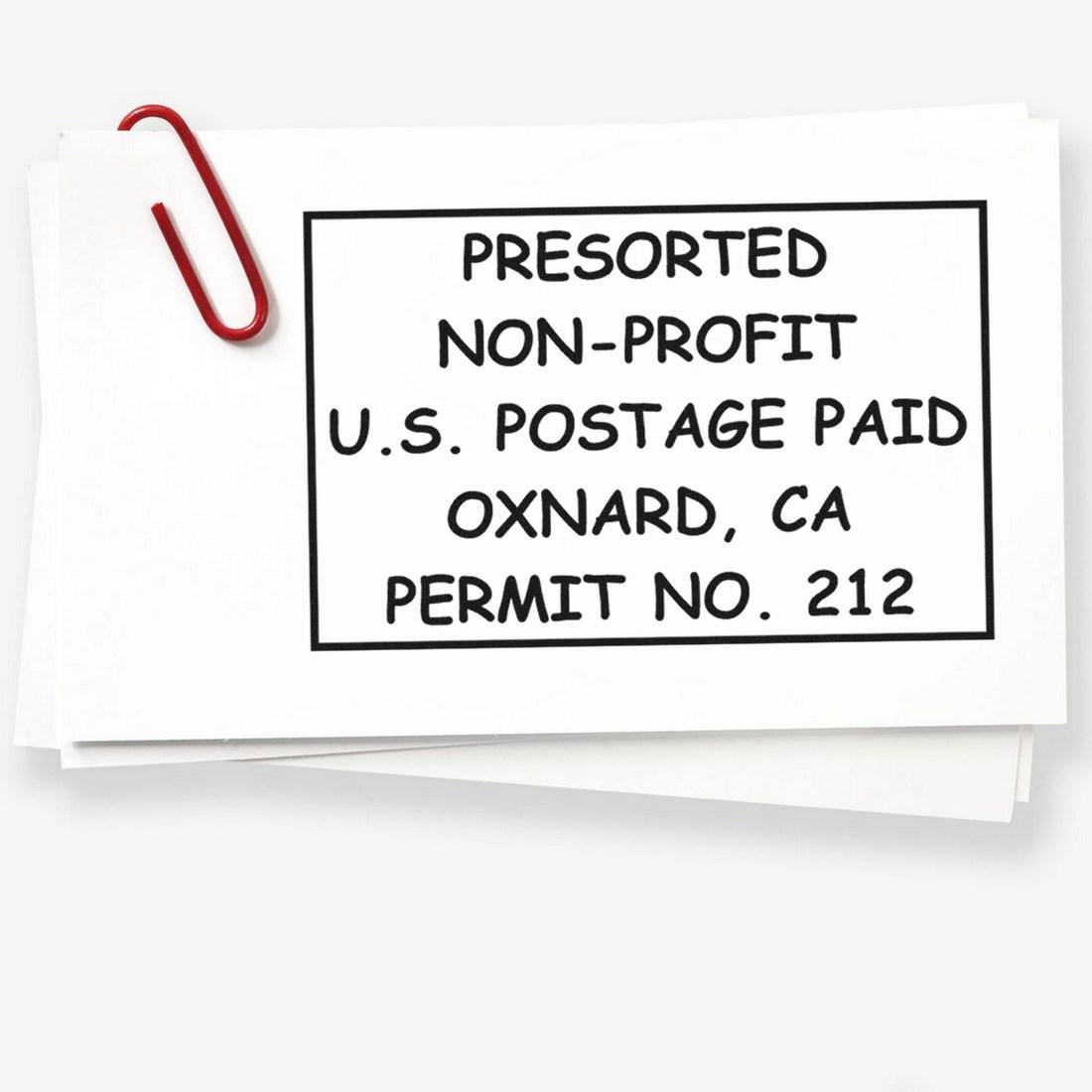
When researching presorted standard stamps, you will see a variety of layouts, designs, and messages. For example, you might see an imprint that reads “Presorted Standard U.S. Postage Paid,” potentially followed by your city, state, and permit number. This text alerts the USPS that your mail piece belongs in a particular category and that it’s paid for through your bulk mail permit. Some stamps come pre-made with a city/state/permit combination, while custom versions allow you to include your own location and permit details. At Acorn Stamps, we offer specialized designs that align with USPS guidelines while highlighting your mail piece’s presorted classification. We ensure the text is crisp and clear, so postal machines and workers never need to guess at the mail’s status.
Key Considerations
Before purchasing a presorted standard stamp, confirm that you meet the USPS volume thresholds. Presorted mail usually requires a minimum of 200 pieces (or 50 pounds of mail) per mailing. If you mail less frequently, you might question whether maintaining a bulk permit is cost-effective. However, if you plan multiple mailings over a year, the savings often outweigh the fees. Also, remember that your stamp’s design must comply with USPS regulations. Fonts, sizing, and wording must usually line up with official guidelines. It’s best to either consult the USPS website or talk directly to our team at Acorn Stamps to verify you have the correct layout. Lastly, look for a stamp that fits your overall brand aesthetic. Even though you’re applying standard text, you can still reflect your mailing’s style in terms of color or typography—especially if you create a digital imprint or consider specialized options.
Prepare Your Bulk Mailing
Meeting USPS Requirements
Once you decide to use a presorted standard stamp, it’s time to ensure your mail meets all USPS guidelines. First, get a bulk mail permit through the USPS’s Business Mail Entry Unit (BMEU). Applications sometimes require specific forms plus an annual fee. Once approved, the USPS will issue you a permit number that you include in your presorted standard marking. Next, you’ll need to confirm that your mailing meets the minimum volume requirement at the time of entry. You’ll also have to make sure your mail pieces fit standardized sizes—envelopes, postcards, or self-mailers must remain within certain length, height, and thickness parameters. If your mailing is too large or too small compared to the normal letter ranges, you may need to use a different classification.
Addressing Guidelines
Address accuracy is crucial for presorted mail. The USPS expects your addresses to be current and properly formatted. The easiest way to handle this is to use address verification software approved by the USPS, which can check your list for standardized spelling and ZIP codes. By applying these checks, you reduce the risk of returned or undeliverable mail while preserving your discount. When you label your envelopes, confirm that your return address is visible. This return address typically includes your business or personal name, plus the city, state, and ZIP code from your bulk mail permit. If you don’t want to cross-check each envelope individually, consider printing sticky labels en masse or integrating an in-house printer system. However you decide to address the mail, the important thing is ensuring the final piece meets the USPS’s precise addressing rules. That includes alignment, mandatory spaces, and avoiding extraneous text in certain areas.
Order Custom Stamps From Acorn Stamps
Why Choose Acorn Stamps
After decades in operation, Acorn Stamps has earned a reputation for delivering high-quality custom pieces that fit a variety of mailing needs. Because we’ve been family owned and operated since 1964, you enjoy a small-business feel backed by six decades of expertise. Our in-house team can guide you on everything from verifying the correct USPS labeling to designing a stamp that stands out. We know how essential it is for you to receive the right product quickly, which is why we offer super fast turnaround times. From presorted standard stamps to personalized business stamps, the hallmark of our brand is stellar customer service. Our caring staff takes the time to understand your exact requirement—no cookie-cutter solutions or one-size-fits-all designs. We want your bulk mail permit number, city, and state to display neatly and comply with USPS regulations. If you need a specialized or reimagined design, we’ll collaborate to craft one that reflects your brand identity while staying practical.
How to Order
Placing an order with Acorn Stamps is straightforward. You can explore our website to find a product page that outlines various stamp styles, including text-only formats or designs that blend text and graphics. Once you choose your layout, provide the required details: permit number, city, state, business name, or any other text the USPS demands. If you feel uncertain, our team can step in and confirm whether your arrangement meets USPS guidelines. Once your design is finalized, we produce the stamp using high-quality materials. This ensures you get crisp, consistent impressions, whether you’re stamping 10 envelopes or 10,000. Our approach eliminates guesswork, letting you focus on building awareness for your mailing campaign without worrying about flawed marks or smudges.
Apply Best Practices For Bulk Mailing
Sorting and Organizing
The moment you have your presorted standard stamp in hand, you can start preparing your bulk mailings. Although applying the stamp is easy, you must also meticulously sort your mail to satisfy USPS standards. Typically, you divide items by ZIP code, bundling or tray-lining them in ascending ZIP code order. You then label each tray with a facing slip so anyone handling that tray knows where it should go. When sorting, be sure to group letters, flats, or postcards with similar sizes together. Mixing shapes in a single tray can hinder the automatic reading process. Mark each set clearly, and don’t forget to double-check addresses to avoid errors. Keep track of piece counts so that you can fill out any necessary paperwork the USPS requires upon entry. Because bulk mail often travels together, minor errors like incorrect bundling might cause unnecessary delays.
Postage and Payment
Even though you use a presorted standard stamp, you must still account for overall postage due. The total bulk postage bill typically depends on details such as the weight of each piece, the quantity, and the sorting method. You pay either by submitting funds to your USPS bulk mail account, using a postage meter for the total, or printing a postage statement. The presorted standard stamp on each item essentially replaces the physical stamp. The post office checks your trays and confirms everything matches your statement before sending your mail on its way. To avoid confusion, maintain a record of all your postage transactions. If you prefer a digital route, check whether your local post office or BMEU has an online account system. You may be able to load money onto your bulk mail permit account, track statements, and quickly see how much postage remains. That way, you won’t end up short on the day you drop off hundreds or thousands of items.
Maintain Handy Mailing Tips
Minimizing Errors
Even the most seasoned mailers encounter slip-ups that can disrupt an otherwise streamlined process. To keep frustration at bay: Double-check your address list, verifying each record is accurate and complete. Test your stamp or imprint ahead of large-scale stamping sessions. Look for smears or incomplete impressions. Bundle, tray, and label everything clearly so that nothing gets misplaced or re-sorted. Use correct thickness for self-mailers. Thinner items can jam sorting machines, while overly thick ones may shift into a more expensive mail classification. Keeping a short quality-control checklist can drastically reduce the risk of mistakes or delays. For instance, you might designate one specific area or table to handle stamping. Another could be for labeling, and a third for bundling. By migrating items from station to station, you spread out tasks methodically and prevent confusion.
Tracking Performance
Once you send your bulk mail, you’ll want to know how well it performs. Are recipients opening your letters or postcards? Are you seeing a positive response rate or a bump in sales or website visits after a mailing? Some mailers place a unique URL or code on the mail piece so they can track who responds. Others use phone call tracking or scannable QR codes to measure how many people engage with the content. Collecting tangible results helps you refine your approach. If, for instance, you notice a certain type of mail piece yields more positive feedback, you can replicate that style in future runs. When using your presorted standard stamp, maintain a record of how many pieces you send. Compare that to the number of responses or actions taken by your audience. Keep an eye on address data as well, noting which addresses might no longer be valid. Over time, these insights make you a far more strategic bulk mailer.
Wrap Up
A presorted standard stamp can revolutionize your approach to mailing—especially if you regularly send out dozens or hundreds of items in a single run. By ensuring you meet USPS sorting requirements and have a valid bulk mail permit, you can tap into noticeable postage discounts and faster processing times. Plus, working with Acorn Stamps simplifies the entire process of acquiring a high-quality, custom mark that meets USPS guidelines. Remember to keep your address list current, bundle and tray your mailing according to USPS guidelines, and pay attention to labeling. These small steps can prevent hiccups and ensure your mail goes out with minimal delays. Whether you’re an entrepreneur aiming to expand your reach or an individual planning a large event, a presorted standard stamp is your ticket to cost-effective, efficient mass mailing. If you ever have questions regarding your custom stamp or adjoining USPS rules, our family at Acorn Stamps is ready and happy to help. We pair top-tier craftsmanship with stellar customer service, ensuring you’re never left guessing about your next mailing run. From permit verification to artistic design touches, our mission is to empower you with the best tools for successful bulk mail. All that’s left for you to do is start organizing your next batch of envelopes and let the presorted standard stamp do the rest.
Frequently Asked Questions
1. Do I Need a Special Permit to Use a Presorted Standard Stamp?
Yes. You generally need a USPS bulk mail permit (also known as a mailing permit) to use a presorted standard stamp. You can apply for a permit by filling out the official application and paying any associated fees at your local Business Mail Entry Unit. Once you have your permit number, you can incorporate it into the stamp’s design.
2. How Many Pieces Must I Mail for Presorted Standard Rates?
Typically, the USPS requires a minimum of 200 pieces or 50 pounds of mail that meet the presort criteria. This threshold ensures that the postage discount for presorted standard applies. The USPS sets firm minimums, so it’s best to confirm that your mailing volume meets or exceeds those requirements before using the stamp.
3. What Happens If I Use the Wrong Stamp Design?
If your presorted standard stamp design does not conform to USPS regulations, your mailing may be delayed or returned entirely. Fonts, text size, and wording need to match specific guidelines. When you order custom stamps through Acorn Stamps, we verify that your layout and details meet USPS standards so you can avoid potential hassles.
4. Can I Track the Mail I Send With a Presorted Standard Stamp?
Presorted standard mail does not automatically include tracking. However, you can purchase additional services or incorporate techniques to monitor performance. Some mailers place unique URLs, QR codes, coupon codes, or other identifiers on each mail piece. These measures let you track responses or traffic driven by your mailing.
5. Is Bulk Mailing With a Presorted Stamp More Affordable in the Long Run?
Yes, if you frequently send large quantities of mail. While you do pay an initial setup fee for the bulk mail permit, presorted mail generally garners lower postage rates. If you consistently send 200 or more items per mailing, the cost savings on postage can be substantial over time, easily justifying the permit and design fees for the stamp.